
New York media pulled a dirty stunt on Juan Soto after Mets' loss to Red Sox — They owe him an immediate apology
New York Mets outfielder Juan Soto probably isn't a big fan of the New York media right now. For starters, WFAN's Boomer Esiason spread a completely made up rumor on Monday that Soto doesn't fly with the rest of team to road games. ESPN's Jeff Passan cleared up the false rumor by reporting that Soto does […]


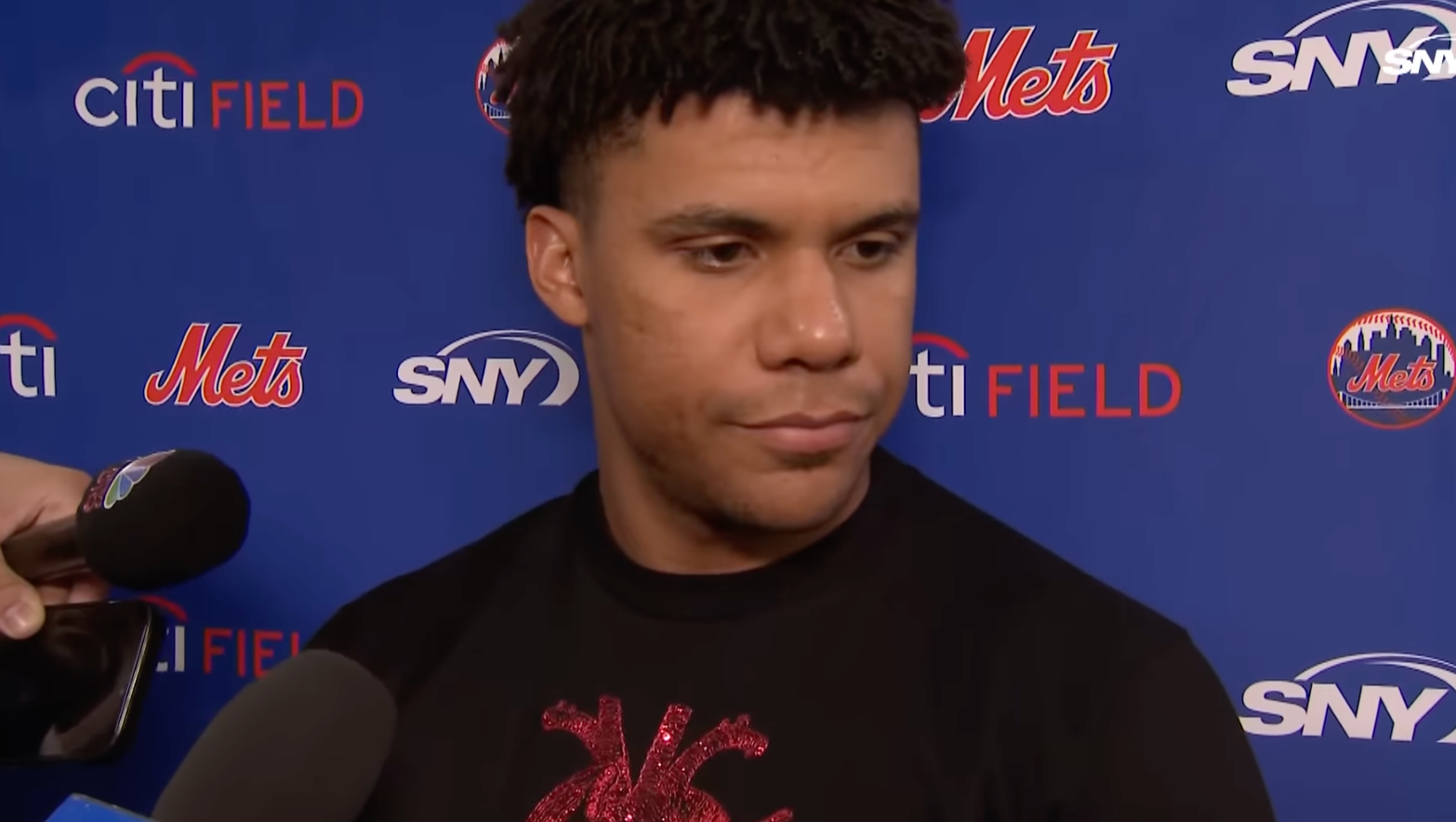
New York Mets outfielder Juan Soto probably isn't a big fan of the New York media right now.
For starters, WFAN's Boomer Esiason spread a completely made up rumor on Monday that Soto doesn't fly with the rest of team to road games.
ESPN's Jeff Passan cleared up the false rumor by reporting that Soto does not fly separately from the rest of the team.
That wasn't the only tabloid style drama that Soto dealt with on Monday.
NJ.com's Bob Klapisch (which sounds like a bad pseudonym) wrote a bizarre article with no on-the-record sources that made a bevy of inflammatory claims about Soto (many of which have been previously debunked by legitimate journalists such as SNY's Andy Martino). Klapisch even weirdly took a shot at Soto's weight.
Monday night, however, was the real kicker.
After the Mets' lost to the Boston Red Sox 3-1, the tabloid portion of the New York media drummed up some manufactured drama, which was centered around Soto's perceived lack of hustle on two plays (one against the Yankees and one against the Red Sox).
The first play was when Soto checked his swing in the 8th inning against the Yankees on Sunday night. Soto didn't bust it out of the box until he realized that second baseman DJ LeMahieu was going to have to make the play from his knees.
The second play was when Soto thought he hit a home run on Monday night, only for the ball to bounce off the Green Monster and straight to left fielder Jarren Duran.
After the game, reporters asked Mets manager Carlos Mendoza about Soto's perceived lack of hustle. Mendoza didn't make a big deal about it, even somewhat defending Soto's approach on the long single off the Green Monster, but he noted that he would talk to the superstar outfielder about it.
A few minutes later, Soto was asked about being slow getting out of the box by a reporter. He wasn't informed of Mendoza's comments when asked the question.
Soto said he doesn't think he's had an issue with a lack of hustle.
Those responses led to ridiculous headlines that suggested Soto was "pushing back" on Mendoza's comments.
Look at this nonsense from the New York Post.
Soto didn't dispute anything Mendoza said. He was never informed of what Mendoza said. It was a "gotcha" question from the reporter in an effort to generate a dramatic headline in the middle of May.
I know most folks don't take the New York tabloids seriously — nor should they — but the back page on Tuesday was absolutely laughable.
Baseball journalism isn't dead — there are some great folks out there covering the sport (including many on the Mets beat). But they tend to get overshadowed by the drama-seeking vampires that are simply out to inflict emotional pain on the athletes they cover.
Soto should've been asked about the two plays. But not in the way he was asked on Monday night.
The four-time All-Star should've been asked what he was thinking out of the box on Sunday night on the check swing. Soto started running hard after he realized that the play might be close. Did he initially think he hit the ball up the middle for a single? Or did he think it was a routine play where the only way he would be safe is if the ball was thrown away? We don't know the answer to that because an entire media scrum didn't think it should be asked. So as a result, Soto is getting slammed for a play that he was never even specifically asked about. That's because the New York Post, and others, don't care about the actual story, they just want the drama.
(By the way, running 100 percent on a routine ground out, unless you're among the top in the sport in average sprint time, which Soto is not, isn't necessary, nor is it wise. Most of the time, a runner is only going to be safe if the ball is thrown away, which is why we routinely see guys run to first the way Soto did on Sunday night.)
As for the long single off the Green Monster, I'm struggling to be too upset about that. That's something we see all the time at Fenway. There's no guarantee that Soto would've made it safely to second base anyway (Pete Alonso was thrown out at second earlier in the game trying to stretch a ball hit off the Green Monster into a double). Sure, as a baseball purist, I'd like to see more hustle in that situation. But it's not exactly a crisis situation, either — especially on a Monday night in May.
By the way, Soto stole second base on the next pitch after his long single, making it a moot point anyway. But that's a detail conveniently ignored by the tabloids.
Speaking of stolen bases, Soto has four stolen bases in his last five games. He has six stolen bases on the season (he had seven stolen bases in 157 games last season). Soto isn't a speedster, but he's clearly hustling from first base to second base and picking up unexpected stolen bases. Maybe that's what he was referring to when he said he doesn't think his hustle is an issue.
Or maybe Soto was referring to the fact that he nearly beat out a double play in the third inning on Monday night due to hustling down the line out of the box.
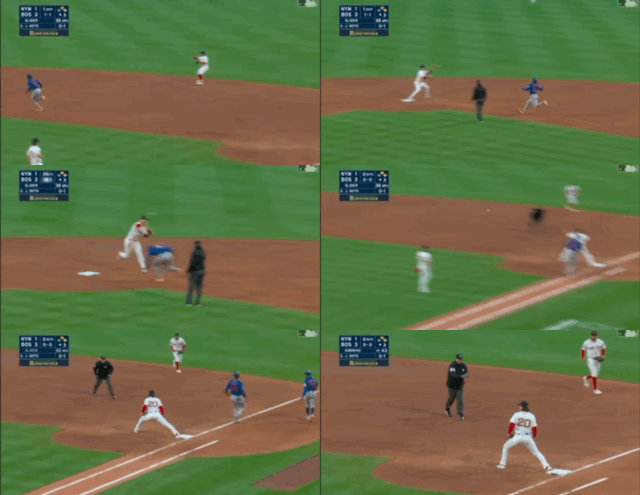
The New York media did Soto dirty on Monday night. Instead of doing their job, they chose to attack an easy target — a 26-year-old with the biggest contract in the history of North American sports, a player that is feeling more pressure than any beat writer has ever felt.
No one is feeling sorry for Soto — he knew the expectations that would come with the weight of a $765 million contract. But he's still human. And no amount of money is going to make him immune to the unfair jabs from the soulless New York media.
