
Tennessee Vols coach explains why most young running backs aren't great in pass protection
One of the biggest issues in the Tennessee Vols' 19-14 loss to the Arkansas Razorbacks last week was pass protection. Redshirt freshman quarterback Nico Iamaleava didn't have a lot time to operate in the pocket because he was constantly facing pressure. The Razorbacks' defensive line shifts combined with some unique defensive looks put the Vols' […]


One of the biggest issues in the Tennessee Vols' 19-14 loss to the Arkansas Razorbacks last week was pass protection.
Redshirt freshman quarterback Nico Iamaleava didn't have a lot time to operate in the pocket because he was constantly facing pressure. The Razorbacks' defensive line shifts combined with some unique defensive looks put the Vols' offensive line in conflict numerous times last Saturday night.
It wasn't just the offensive line, though, that had a rough game in pass protection. Tennessee's running backs had a tough night, too.
Struggling in pass protection isn't unusual for college running backs. It sounds easy — just block the guy that that is unaccounted for, right? But like most things in sports, it's easier said than done — especially when you're playing the game against SEC competition.
Still, it's an area where running backs need to excel. So why is it such a struggle?
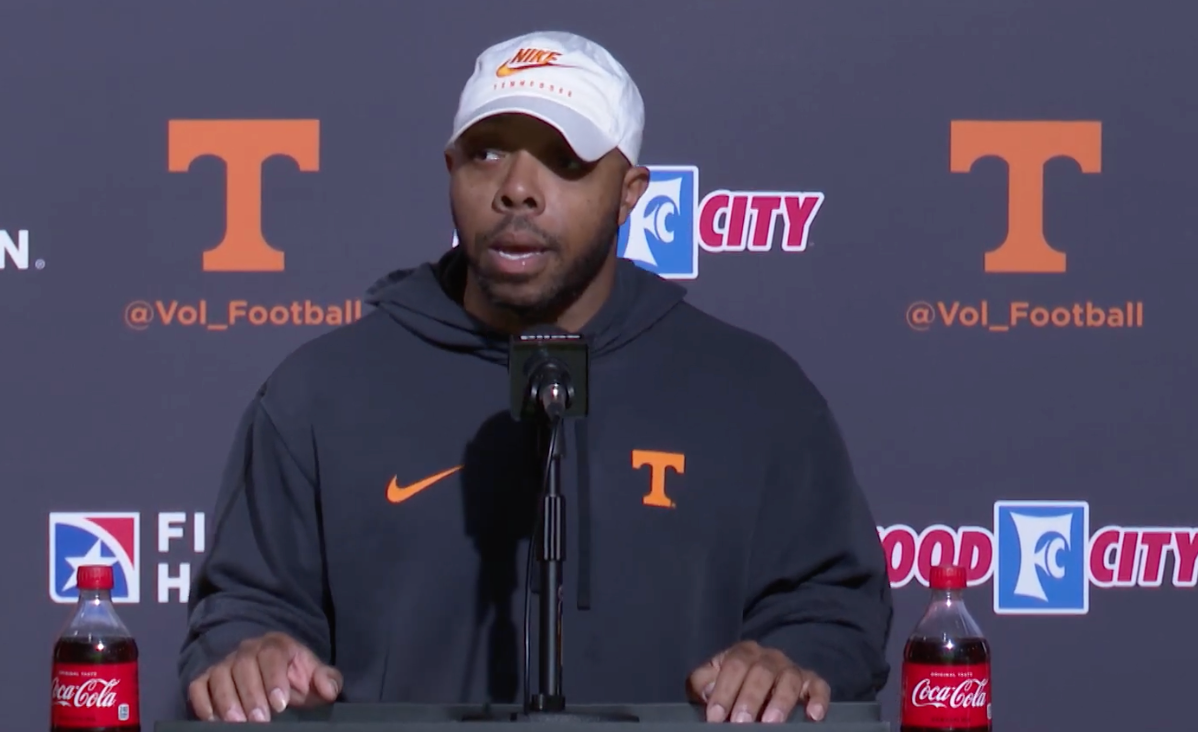
Tennessee running backs coach De'Rail Sims pointed out on Wednesday night during Vol Calls that the biggest reason why young running backs struggle in pass protection is because they're rarely ever asked to pass protect in high school. Most running back recruits — from three-star players to five-star players — are one of the best players on the field in high school. And as a result, high school coaches game plan to get the ball in their hands as often as possible, which means pass protection reps aren't a high priority in practice.
"They aren't (to pass protect in high school)," said Sims during an appearance on Vol Calls. "Usually, you're the best player on the field when you're playing running back in high school, and they're going to give you the ball any kind of way that they can."
"And, to be honest with you, the easy part about it is taking the guys that want to do it, you know, the guys that played on defense, that got that want-to," added Sims. "They've been hitting people. But also, you've got some guys who have been offensive players their whole life that do a really good job of having the want-to to go stand up there and stick their face in the fire and be able to go pass-protect. So I think that portion of it is good. The technique portion of it, it takes some time in terms of being able to teach that. But at the end of the day, they get it pretty quickly and do a really good job of gaining trust to be able to do it."
Pass protection is something that you see NFL players struggle with from time to time. It's a learned skill that takes time. Players have to trust their instincts and be assignment sound, otherwise they'll be in the pocket looking for someone to block while chaos is happening behind them (we saw some of that in the Arkansas game).
As is the case with most skills in football, it takes a lot of reps, a lot of film study, and usually a lot of failure before running backs can truly become elite in pass protection.
