
Vols reporter explains how Tennessee has avoided two big NIL problems that other schools have struggled with
NIL drama is becoming extremely common in college football lately. It seems like every week there's a new story involving a college football player and an NIL deal that's gone south. Most recently, news surfaced that UNLV quarterback Matthew Sluka plans to sit out the rest of the 2024 season over an NIL dispute. In […]

NIL drama is becoming extremely common in college football lately.
It seems like every week there's a new story involving a college football player and an NIL deal that's gone south.
Most recently, news surfaced that UNLV quarterback Matthew Sluka plans to sit out the rest of the 2024 season over an NIL dispute.
In other cases, players have allegedly threatened to sit out games (due to injury or other "reasons") over NIL compensation.
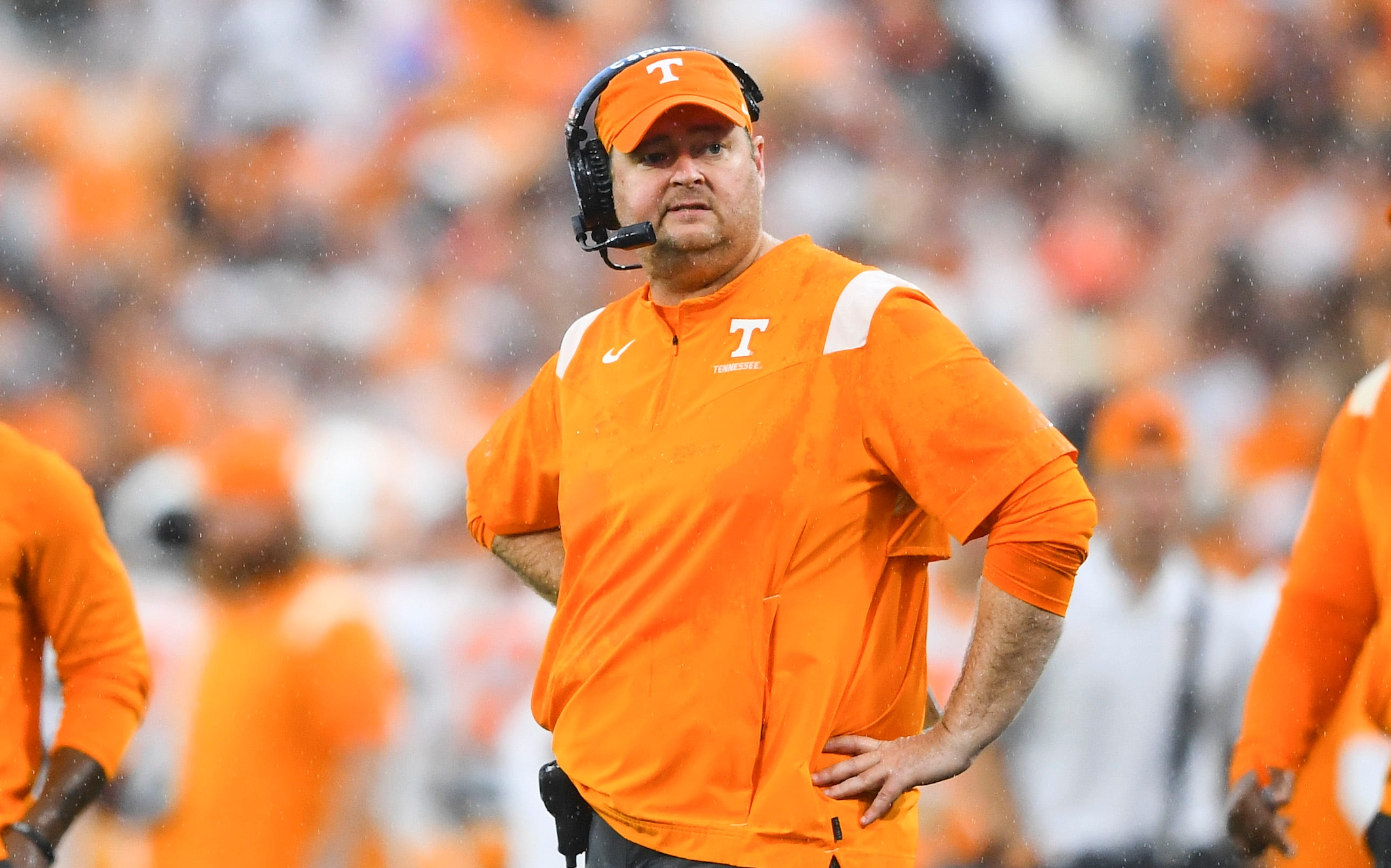
The Tennessee Vols, however, have managed to avoid both of those scenarios. According to the Knoxville News Sentinel's Adam Sparks, that's because Tennessee pays well and they pay on time.
"Here's why you haven't seen that (NIL issues) at Tennessee, they pay well and they pay on time," said Sparks during an appearance on Lamestream Sports this week. "And that's where you've gotten into problems at other schools."
"You have to pay what you say — it has to be in writing — and you have to pay on time," added Sparks. "As long as you do that, you're not going to have many issues. Also if you're winning. I think internally at any school, any locker room, there's a few chances that there's some chemistry problems because of NIL. But none of that has come to the surface at Tennessee.
"The (Matthew) Sluka thing at UNLV, when I heard that, I thought immediately [that] I've heard this 100 times before, but it's always behind closed doors. There was a Power-5 coach who I know that I talked to not too long ago. And he told me about a story where a player that he had who was a three-star player, he was a backup, and about midway through the season, he was like their leading tackler, he was playing more like a four-star or a five-star. He was going to be an all-conference guy. And he walked into the office of this coach and said 'my uncle and my old high school coach say that I need to get paid this much'. And the coach said 'yeah, you know, when we get to December, after the regular season, before the bowl, we'll have some time and we'll sit down with the collective and we'll get that taken care of'. And he said 'no, I need it sooner than that'."
Sparks said that the unnamed player then suggested that he might not be able to play if he didn't get paid before the next game.
"'Maybe I have a hamstring [injury] on Saturday, maybe I'm not dressed on Saturday', I've had coaches tell me stories like that," said Sparks. "Not at Tennessee, elsewhere. But it happens a lot, it usually doesn't get to the media…it hasn't happened at Tennessee."
It's not really a surprise to hear that Tennessee is handling the NIL era well. The Vols were proactive when NIL first became legal, quickly moving to educate student-athletes on the pros and cons of NIL deals, while also establishing a unified collective. Tennessee's proactive approach ensured that everyone at UT was on the same page from the get-go, which has helped the program operate without much drama when it comes to NIL deals.
