
Key factors for the Cowboys when figuring out Dalton Schultz's long-term deal
The Dallas Cowboys secured Dalton Schultz for 2022 by franchise tagging him last Tuesday. On the hook for $10.9M, the Cowboys and Schultz will run it back after the tight end's best two seasons of his career. As is often the case with players playing under the tag, the next question is whether or not […]


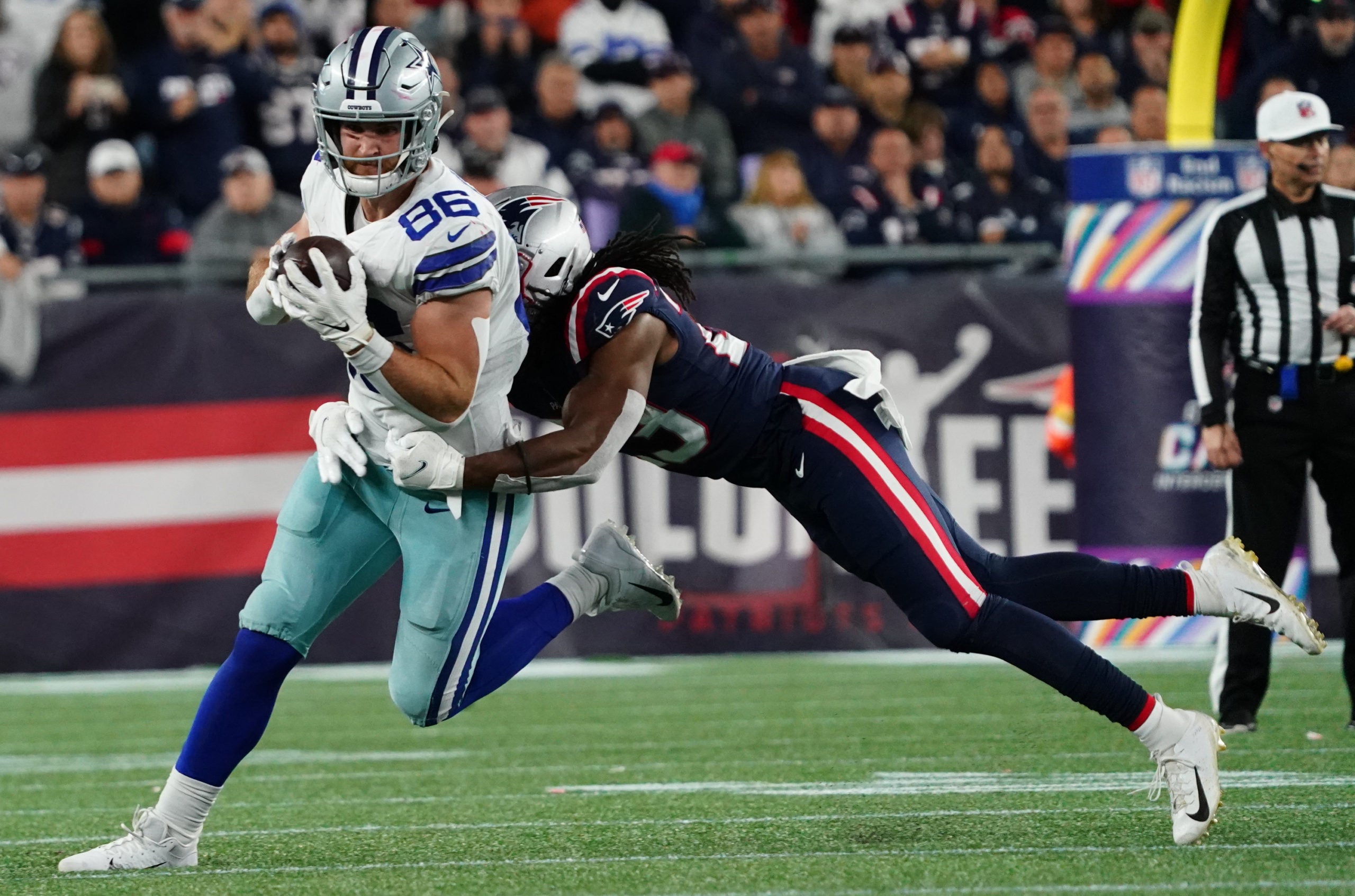
The Dallas Cowboys secured Dalton Schultz for 2022 by franchise tagging him last Tuesday. On the hook for $10.9M, the Cowboys and Schultz will run it back after the tight end's best two seasons of his career.
As is often the case with players playing under the tag, the next question is whether or not this is a long-term commitment. While some reports indicate this is the goal for both parties, it's not the easiest of decisions.
After all, the value of Dalton Schultz is difficult to assess. The Cowboys have seen firsthand how their 2018 fourth-round draft pick has evolved into a quality starter for the team. No one will deny that.
Instead, what's being debated around Cowboys Nation is if he's worth his PFF-projected value of over $12M per year. A tier of players that includes only six tight ends in the league:
- George Kittle ($15M APY)
- Travis Kelce ($14.31M)
- Dallas Goedert ($14.25M)
- Mark Andrews ($14M)
- Jonnu Smith ($12.5M)
If we're talking production, Dalton Schultz is up there. In 2021, he had one of the best seasons at the position and consistently showed up for the Cowboys.
In fact, among tight ends with a minimum of 50 targets, Schultz was No. 2 in the NFL in EPA per target, via Sports Info Solutions. He also had the third-highest success rate in the league.
Although he wasn't much of a vertical threat (more on that later), Dak Prescott and the Cowboys consistently moved the chains when targeting Schultz as his 43 first downs were tied for fourth in the NFL.
Here are Schultz's ranks within the Cowboys receiving corps, via SIS:
- EPA per target: 2nd
- Success rate: 1st
- Targets: 2nd
Then again, no one is questioning Schultz's production. Instead, especially since the Cowboys are reportedly ready to move on from Amari Cooper, it's all about figuring out how much of the tight end's production is attributed to his environment as opposed to individual effect.
What's it say that defenses aren't game-planning and focusing their coverages on Schultz? At the same time, pairing him with CeeDee Lamb, Amari Cooper, and Michael Gallup makes him a non-priority for opposing defenses.
This isn't a knock on Schultz at all. You can't blame a player for who his teammates are. But not admitting that he benefits from such an offense would be dumb. At the very least, the Cowboys have to know there's some heavy projection involved as to evaluating what Schultz can do without such support.
Another thing playing against Schultz might be that although he's been a reliable catcher down the seams, he hasn't been a vertical threat for the Cowboys. He ranks 17th among tight ends in average depth of target (6.6 yards). Four of the aforementioned tight ends rank higher.
Many bring up blocking ability when it comes to Schultz's weaknesses, but that's an overblown narrative and has been exposed recently by John Owning.
When it's all said and done, it's likely that the Dallas Cowboys' long-term decision on their tight end is heavily correlated with whether or not they draft a tight end. This is considered a heavy tight end class, particularly in the middle rounds, and the Cowboys could get a young prospect to develop as they did with Schultz in 2018.
Moving on from Schultz after one season and avoiding a long-term commitment would be in line with recent reports that offer us a peek at how the Cowboys are low-key bracing for the future in what seems to be a discrete rebuild.
Featured image via David Butler II-USA TODAY Sports
