
NCAA allegedly refused to meet with University of Tennessee leaders in December regarding NIL investigation
It looks like the University of Tennessee's leadership isn't going to take the latest news from the NCAA lying down. On Tuesday, a bombshell dropped – first from SI's Pat Forde – that the University of Tennessee is facing an investigation from the NCAA over alleged violations in regard to name, image, and likeness. It's […]

It looks like the University of Tennessee's leadership isn't going to take the latest news from the NCAA lying down.
On Tuesday, a bombshell dropped – first from SI's Pat Forde – that the University of Tennessee is facing an investigation from the NCAA over alleged violations in regard to name, image, and likeness. It's more specifically come out through a New York Times report that the center of that investigation focuses on a flight on a private charter that was arranged by a booster for current Tennessee QB Nico Iamaleava to travel to Knoxville.
Tennessee chancellor Donde Plowman responded sharply to the NCAA in a letter dated Monday January 29. In it, she notes the "two and a half years of vague, and contradictory memos, emails and 'guidance'" relating to NIL as well as the procedural and substantive flaws stemming from the NCAA's investigation.
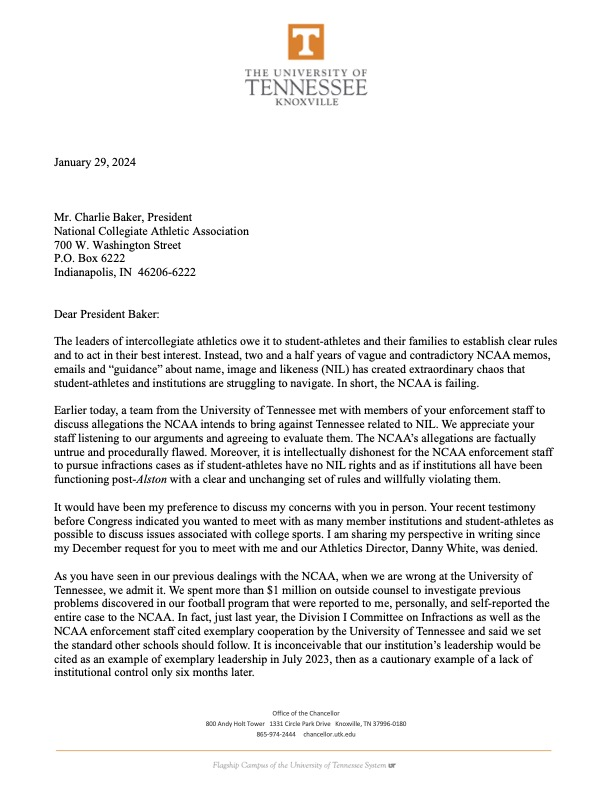
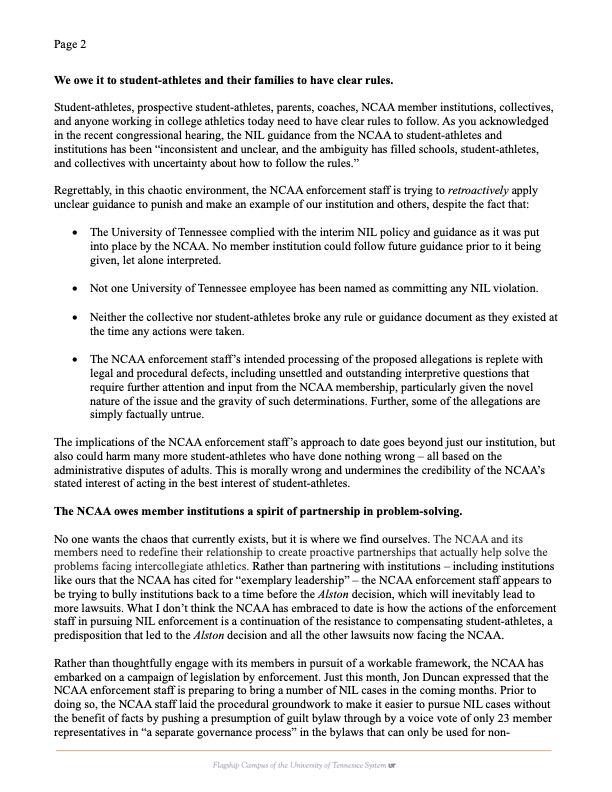
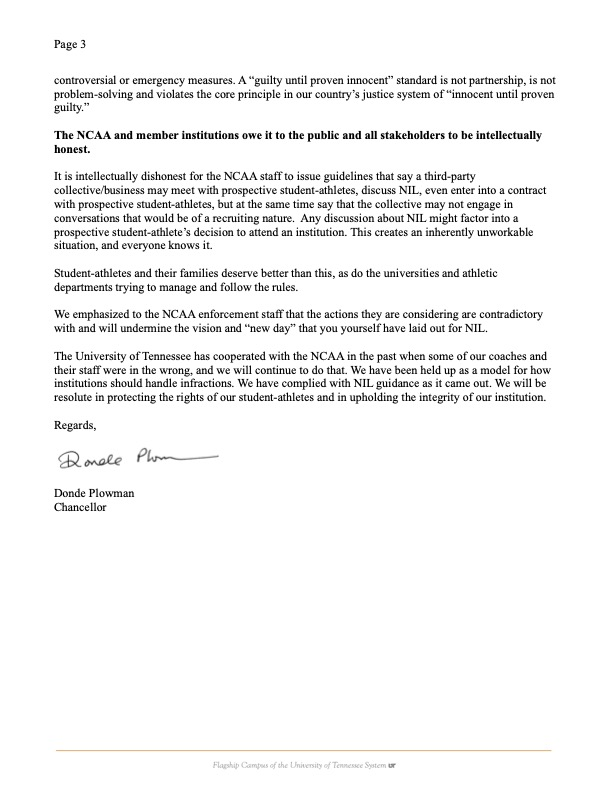
It's also interesting to note that Plowman states she was unable to share the school's position with the NCAA in person. That's because she says she requested to meet with NCAA president Charlie Baker along with Tennessee athletic director Danny White back in December, but that request was denied.
In the world of litigation, when there is a dispute between the parties, the decision maker often works to get the sides to speak to try to resolve their issues between themselves first. In some states and with some types of cases, mediation or dispute resolution is required before an action can take place. In others, mediation is mandatory during suit.
In other words, both sides talking is considered to be a good thing. It allows for the open exchange of information and an attempt to understand where the other side is coming from.
In this particular case, it would have been extremely appropriate and beneficial for a dialogue to have taken place between UT and Baker. The guidelines on NIL have been a moving target. The precedent for punishment simply isn't there, despite FSU receiving the first-ever NIL-related punishment earlier this month (which was mild, at that). In short, it's been a challenge for member universities to know what the parameters are in the new universe they find themselves in during the NIL era.
But perhaps what's most bizarre and contradictory is what Plowman notes in the first page of her letter. That Baker's recent congressional testimony indicated a willingness to meet with member institutions and student athletes to try to come up with a solution that's concrete and appropriate.
Instead, Baker and the NCAA chose the do-it-the-hard-way route, it appears, by refusing to talk with Tennessee and trying to handle the situation in a more adverse manner.
As a result, from what Plowman is saying, they could be in for a fight that they perhaps shouldn't want to be having.
