
From the Winter Meetings: MLB to Nashville feels imminent
NASHVILLE – The Nashville community has been connected to professional baseball since the very beginning. Few people know that baseball was actually the first organized sport played in Nashville with amateur teams dating back as far as 1860. Before there was even such a thing as the ‘American League,’ there was the Nashville Americans – […]


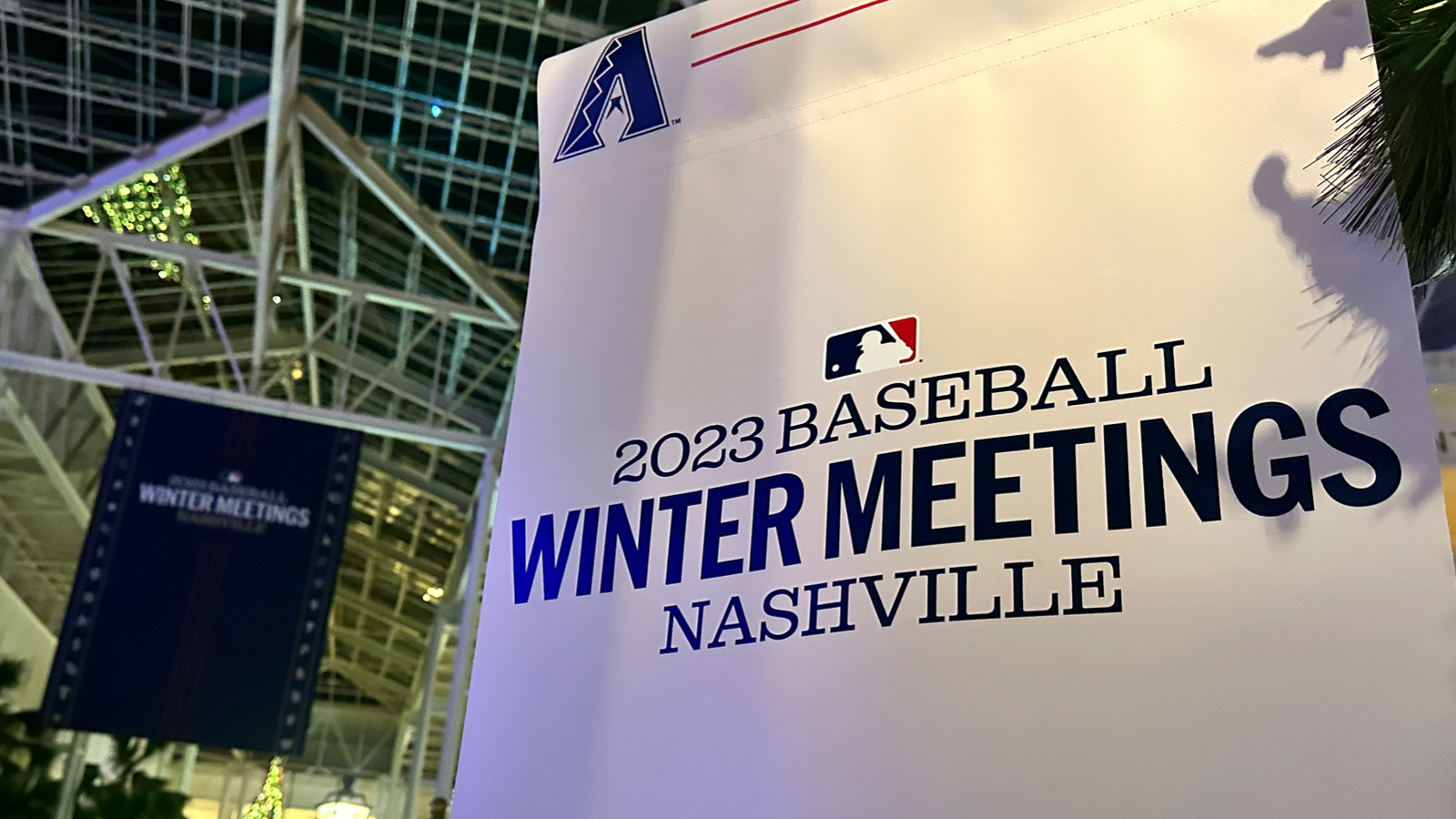
NASHVILLE – The Nashville community has been connected to professional baseball since the very beginning. Few people know that baseball was actually the first organized sport played in Nashville with amateur teams dating back as far as 1860. Before there was even such a thing as the ‘American League,’ there was the Nashville Americans – charter members of the Southern League back in 1885.
In the decades since, there have been many iterations of professional baseball in Music City. Each one fully embraced by the local fanbase. The latest and most successful version of these Nashville based teams is the beloved Nashville Sounds, which has been an affiliate of various MLB teams since 1978 and is currently the AAA affiliate of the Milwaukee Brewers.
Over the last five years, no minor league baseball team has sold more tickets than the Sounds. Perhaps that’s a sign of the times and the booming market that is Nashville. Perhaps that attendance with competing nightlife activities on every corner shows just how much Middle Tennessee loves baseball. Perhaps both. Either way, it’s not hard to see why “MLB to Nashville” initiatives are gaining traction.
Few cities around the United States are booming the way Nashville is these days. Thriving business industries and nightlife have brought people in by the masses. Every year from 1991-2020, the Nashville Metro Area population increased by at least 2 percent.
When Tennessee’s capital city first got a “Big 4” sports team with the Tennessee Oilers (Titans) back in 1997, the Nashville Metro population was just shy of 700,000 people. Today it has nearly doubled, sitting above 1.3 million people.
So what’s next for Music City? According to the players, executives, and managers I spoke with from around Major League Baseball at the 2023 MLB Winter Meetings, there is a growing sense in the baseball world that Nashville’s next big addition could be the first MLB expansion franchise since 1998.
Nashville is a 'Big League City'
It is well known by now that Major League Baseball has hopes of eventually expanding to 32 teams and opening new revenue streams for the league. MLB commissioner Rob Manfred has not been shy about his expansion agenda and even provided a shortlist of potential locations back in 2018.
Nashville, Charlotte, Las Vegas, Montreal, Portland, and Vancouver were all listed as early frontrunners while cities like Austin and Salt Lake have emerged as contenders more recently.
Maybe the most important thing when assessing these potential expansion cities is the city itself. A host city needs to have a strong TV market, tourism, booming business industries, and infrastructure among other things. Nashville checks a lot, if not all of those boxes.
According to Nielsen Media Research, Nashville was the 26th largest TV market in the United States for 2023-2024. That’s more than adequate considering it already ranks higher than Baltimore, Pittsburgh, San Diego, Kansas City, Cincinnati, and Milwaukee – all cities that are home to a major league club. It also trumps Las Vegas (40th) in TV rankings, where the league has already approved the relocation of the Athletics.
Market size is not an issue. But the appeal of adding another professional team to Nashville goes beyond the sheer TV numbers and local fanbase. Like Vegas, Nashville would instantly become a premiere travel destination for baseball fans from around the country. It would also be a city that every player circles on their calendar.
“There is stuff to do obviously all around Nashville. We love coming here,” Miami Marlins manager Skip Shumaker told me. “I played for the Memphis Redbirds for a number of years and we came here all the time. This was a place that you kind of circled on your calendar like 'I can’t wait to go to Nashville.'”
“I think, first of all, the people here are incredible. The sports fan base here in Tennessee is really really good, both college and professional. So I think it would be a destination place that a lot of people would want to come and see a professional team play.“
Miami Marlins third baseman Jake Burger, who lives and trains in the Nashville area during the offseason, had similar feelings to his manager. “I think Nashville is ready for a Major League Baseball team. We love living here. The nightlife, the food, I think it’s great all across the board and I hope to see that someday.”
Then there’s four-time World Series champion and current Texas Rangers manager Bruce Bochy, who lives just south of Nashville in College Grove. Bochy told me that he felt Nashville was “prime to get the next Major League team.”
But in case you think I only spoke to the baseball personalities with a Nashville connection, the players have already let their stance be heard. In a recent poll conducted by The Athletic, more than 100 MLB players were asked which city would be the best fit for a new franchise: Nashville, Montreal, Charlotte, Austin, Portland, Vancouver, or Salt Lake? The players responded overwhelmingly in favor of Music City, with 69 percent casting their votes for Nashville.
That number may seem high, but it’s not surprising to the baseball people who have spent a significant amount of time in Tennessee.
“Nashville is a dynamic city. It's a growing city. It’s vibrant. I think that it has to be a leading candidate for expansion. When you live here and you see what's going on, all that's involved, it's a fun place to be. There's not many places that are growing like this. They support their sports here tremendously in this community. So I think those are all reasons,” said Philadelphia Phillies General Manager David Dombrowski.
“When you travel around like we do all the time, you get a pulse of what a big league city is. This is a big league city.”
The stories and endorsements go on and on. From speaking with players and league officials at the Winter Meetings this past week, I got the overwhelming vibe that no prospective host city has had the same level of support – from both fans and players, as Nashville. That alone would likely make it the odds on favorite once expansion becomes reality.
The Obstacles of MLB in Music City
The players want it. The fans need it. The baseball world is buzzing with support for MLB to Nashville. But what are the obstacles that could stop it from happening?
For starters, the league has been firm on their stance that expansion would not be in consideration until the Oakland Athletics and Tampa Bay Rays settled their outstanding stadium deals. With the A’s building a stadium in Las Vegas and the Rays reaching a $1.3 billion agreement with St. Petersburg, those situations may be put to rest soon. Given that update, there is a growing belief around the league that 2024 will be a big year for the expansion movement.
What else? Ownership. Obviously. You can’t have an expansion team without a billionaire owner to pay the $2.2 billion expansion fee for a franchise and fund the building of a new stadium.
Music City Baseball is an ownership group headed up by former MLB All-Star Dave Stewart that has conceptualized the “Nashville Stars” joining the big leagues. Using the old Negro Leagues team nickname, the Nashville Stars would be the first MLB team to have majority black ownership and would play on 100 acres of land in North Nashville that is currently owned by Tennessee State University.
In an effort to attach the franchise to the culture of Nashville, Music City Baseball has been joined by a number of big baseball names and celebrities in advisory roles and on the board including Justin Timberlake, Darius Rucker, Luke Combs, and Eddie George. On the baseball side of things, the aforementioned Bruce Bochy and David Dombrowski were previously advisors for the group alongside Hall of Fame MLB manager Tony La Russa and Cy Young Award winners R.A. Dickey and Barry Zito.
At mlbmusiccity.com, the group has a detailed layout of the brand, history, and timeline for their efforts. They even have plans for a stadium with a retractable roof that can double as Nashville’s next hot concert venue (hence the music industry partners). They have just about everything you need…except for the hedge fund billionaire investor that will foot a $4 billion bill for league fees and stadium costs.
According to the team website and those I spoke with at the Winter Meetings, Music City Baseball is actively looking for investors in the project and is opposed to public funding. “We are in discussions to secure partners and investors to pay for the cost of (i) the baseball franchise, (ii) the ballpark/entertainment venue and (iii) the entertainment district,” the website reads.
While the group is currently directing their focus to local investors, the knight in shining armor for Nashville’s MLB movement does not need to be a Tennessee native. Just as we saw when the league expanded to Denver in 1993, recruiting an ownership group from out of state is common. It’s not about finding a Nashville billionaire to fund the expansion team. It’s about finding any billionaire that wants to own a team and sees what Nashville has to offer. It’s the same process that Stewart went through when he first set out to lead an ownership effort.
“Baseball was the determining factor for me because they named the cities,” Stewart told me when I asked him why he chose to concentrate his effort on Nashville. “[MLB] said Montreal, Charlotte, Austin, Vegas at the time, and Portland. They named the cities and when I started looking at ‘How is Nashville in comparison to Charlotte? How is Nashville in comparison to Montreal?’ Because those were considered the eastern cities. ‘How do we compare to those two cities?’ I thought it was a no-brainer that it was Nashville.”
“Sometimes it's an opportunity. Maybe I’m just driven by the opportunity,” Stewart continued. “When I first started focusing on Nashville, the things you have to look at are tourism, the corporate industries that are coming here, the migration of people here, the music industry, food, everything. When you look at the total package, the question isn’t why..it’s why not?”
I understand why there may be some skeptics out there. An ownership group without an investor has…what exactly? But the work that Stewart and the people at MCB have done is not insignificant by any means.
They’ve laid out the blueprints for a stadium, established a brand, garnered support from the public, had conversations with the city and league officials, and connected with influential community leaders. They’ve done the necessary legwork to expedite the expansion process and, very wisely, built the shell of a MLB franchise in a no-brainer expansion city. Having those ducks in a row could make this a much easier investment for any wannabe team owners, and all it takes is one to see the same economic upside that Stewart did.
Going outside of Nashville for investments may not be what Stewart and his partners had in mind, but it’s what they’ll likely need to accept if they want to make their dream a reality.
Timeline for MLB Expansion
As I mentioned before, MLB commissioner Rob Manfred has maintained that expansion would be completely put on hold until the stadium negotiations for the Oakland Athletics and Tampa Bay Rays were finalized. With those getting ready to conclude, Major League Baseball is expected to form an expansion committee sometime in 2024.
Expansion would also need to be worked into the Collective Bargaining Agreement, which would have to wait until the conclusion for the 2026 season. But that’s not to say the league could not pick cities and begin the process before then.
Music City Baseball has been looking at Spring of 2027 for an inaugural Nashville Stars season. But in an ideal world for MLB, Manfred and the committee will have selected two expansion cities by the end of 2025, expansion will be included in the CBA after the 2026 season, and Major League Baseball will be at 32 teams by the 2028 season.
When the league expanded in the early 1990s, the committee initially accepted the bids from Miami and Denver in June 1991. Both teams debuted just 22 months later in April of 1993. Two years later in March of 1995, MLB announced Arizona and Tampa Bay as the latest destinations for a team, but that didn't become reality until the 1998 season.
How quickly will it actually go down? Only time will tell. But the league officials and executives I spoke to at the Winter Meetings seemed to believe the ball would get rolling in the near future.
It Won't Be the Chicago White Sox
While most of the owners around Major League Baseball were meeting with agents, free agents, and their respective front offices during the 2023 Winter Meetings, Chicago White Sox chairman Jerry Reinsdorf was meeting with Nashville Mayor Freddie O’Connell.
On Wednesday, the White Sox confirmed the meeting via a group text message sent to a number of the local beat writers, but would not disclose the topics discussed. Naturally, baseball fans began to wonder…Could the White Sox move to Nashville?
It’s no secret that the Sox are Chicago’s second team with the Cubs receiving the lion’s share of attention and revenue. Could Reinsdorf uproot his team and enjoy the tax breaks in Tennessee while owning his own stadium for the first time? Impossible.
For starters, Major League Baseball would never allow it. With Nashville looking like a leading candidate for expansion, why would the league allow a team in the third largest market to leave for the ideal expansion location they were going to anyways? This isn’t the Tampa Bay Rays or Oakland Athletics we’re talking about. This is Chicago. Even without ownership of their own stadium and the Cubs raining on their parade, the White Sox are still valued in the top half of the league at over $2 billion by Forbes.
The last time a White Sox owner tried to move the franchise was in 1968 when Arthur Allyn areed to bring the team to Milwaukee. League owners emphatically blocked that move, because “leaving Chicago was bad for business”…duh. It’s still bad for business today.
A move to Nashville also doesn’t seem to make much sense for Reinsdorf. The 87-year-old owner has been adamantly against sitting through another Chicago “rebuild” at his age. Reinsdorf recently fired longtime front office executive Kenny Williams after 31 years with the organization due to performance issues. That’s something that wouldn’t (and didn’t) happen 10 years ago, but Resindorf doesn’t have the same patience he used to. Why would he want to move his team to Tennessee when it wouldn’t become reality until five or six years from now?
Reinsdorf is also known for being a rather stingy owner that doesn’t like to break out his checkbook, especially for the market his team plays in. The White Sox are one of three teams in the sport – along with the Kansas City Royals and Oakland Athletics – to never dole out a contract worth over $100 million in total value. Outfielder Andrew Benintendi’s five-year, $75 million contract is the largest in franchise history. Mayor O’Connell has said publicly that the city of Nashville would not be funding a new baseball stadium and Reinsdorf smashing his piggy bank to spend billions on the project would be nothing shy of a miracle.
So why the meeting? It’s possible it’s a leverage play from Reinsdorf and the Sox. The team’s current lease at Guaranteed Rate Field in Chicago is expiring in six years. Similar to the ongoing situation with the Chicago Bears, Reinsdorf could be using Nashville as a pawn to get a better deal in the Windy City.
I also have reason to believe that Reinsdorf could also be helping with the Music City Baseball initiative. Reinsdorf might just be the most influential owner in the sport, and Stewart is a personal friend of his. We also know that Tony La Russa, a former White Sox manager (1979-86, 2021-22), current team advisor, and good friend of Reinsdorf, is an advisor for Music City Baseball and well connected to Stewart himself.
From 1986-1992 then again in 1995, La Russa managed Stewart with the Oakland Athletics. Fast forward nearly 20 years to May of 2014, and we have La Russa being hired to the newly created position of chief baseball officer with the Arizona Diamondbacks. Later that year, La Russa handpicked Stewart to be the team’s general manager. They go back a long way.
“I happen to know personally that the one group would be a humongous asset if they get it,” La Russa told me when I spoke to him at the Winter Meetings.
Anyone who knows Jerry Reinsdorf (or Tony, for that matter) knows that he always takes care of his guys. If being the longest tenured controlling owner in baseball and sitting down with the Mayor of Nashville can help his friends out, Resindorf is going to do it. If he can keep the details of that meeting private and gain some leverage in future stadium negotiations at the same time, Reinsdorf is going to do that too.
Any notion that the White Sox will end up in Music City is a silly one. But the Nashville Stars? Most people I spoke to told me that it feels like more of a “when” than an “if” at this point.
