
New England Patriots: Ranking the AFC East's Secondaries: Volume 4
After three long volumes, we have arrived at the finish line. This is the fourth and final volume of my series where I rank the AFC East secondaries. If this is the first installment that you're reading, go check out the other ones here: 1.) Miami Dolphins, 2.) New York Jets and 3.) New England […]

After three long volumes, we have arrived at the finish line. This is the fourth and final volume of my series where I rank the AFC East secondaries. If this is the first installment that you're reading, go check out the other ones here: 1.) Miami Dolphins, 2.) New York Jets and 3.) New England Patriots.
4.) Buffalo Bills
Although the Buffalo Bills may have landed in the fourth and final spot in my rankings, they possess a top-12 secondary in the NFL that has shown elite upside in previous years. In fact, the Bills have finished with a top-12 coverage team(per PFF) in each of the last six seasons. That just speaks to how dominant the AFC East secondaries are. The Bills' secondary finished in the fourth position due to the challenges posed by an aging unit that has been plagued by injuries in recent seasons.
The leader of the cornerback room is seventh-year player Tre'Davious White, who is coming off a year cut short by injury. White has been one of the better corners in the league when healthy, but he hasn't played a full season since 2018. In 2022, White only played 307 total snaps in six games. While White was solid when he played, he struggled a bit against Garrett Wilson in week 14. If White can stay healthy, he should be amongst the top-ten best cornerbacks in the league.
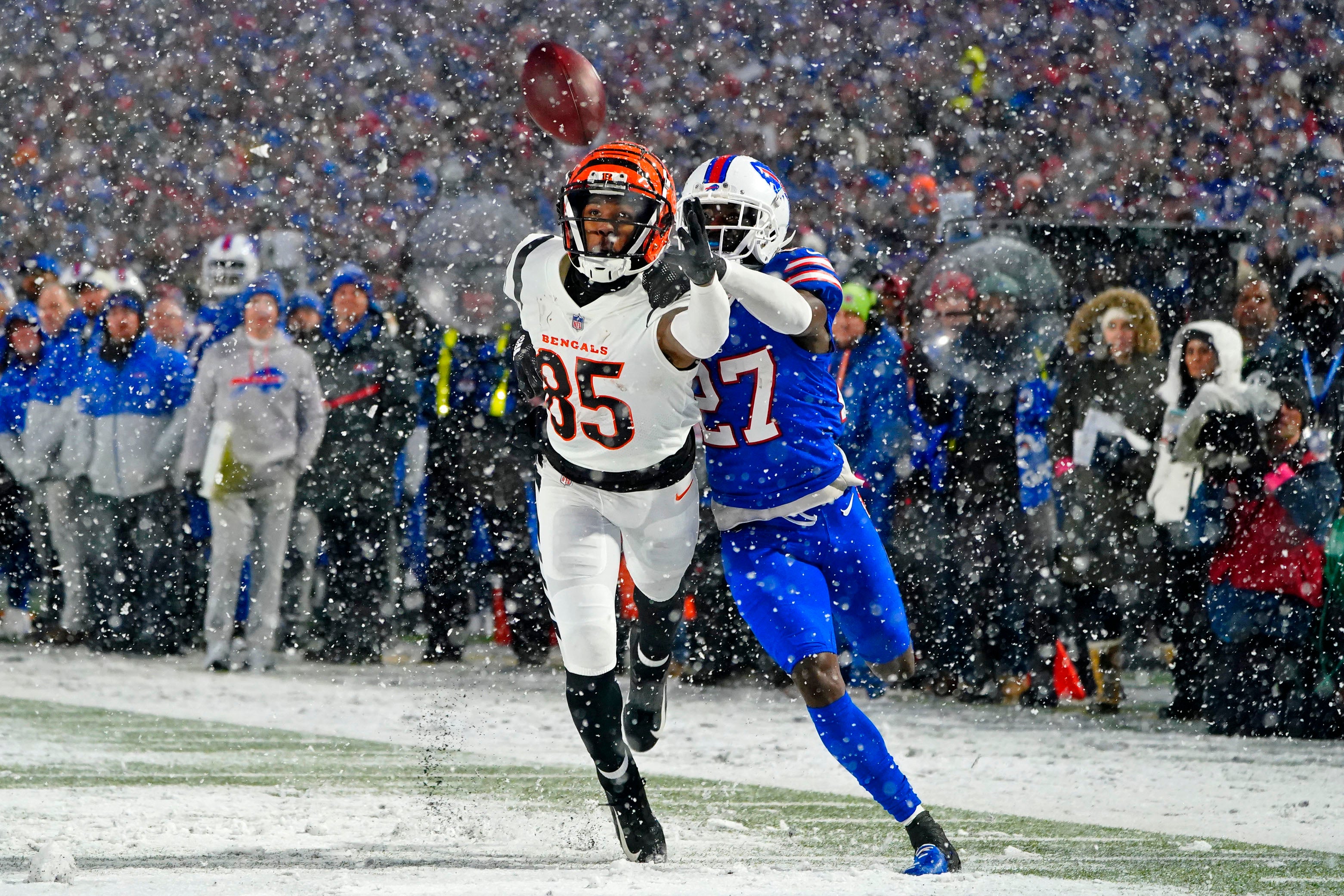
On the boundary opposite White, there is uncertainty. The team drafted cornerback Kaiir Elam in the first round of the 2022 NFL draft. As a rookie, Elam faced some challenges and struggled with injuries. Obviously, his rookie season does not solely determine the course of his career. However, it is not ideal that he allowed a 75.6% completion percentage in coverage. In week five, against the Pittsburgh Steelers, Elam was heavily targeted. He was targeted 13 times and allowed 126 yards. There is a silver lining for the Bills, though. Elam was lights out in the playoffs, only allowing eight yards on five targets across two games. The team has to hope he can extrapolate his playoff performance across an NFL season and develop into a more consistent player.
As a result of injuries to White and Elam, cornerback Dane Jackson was bumped into the starting rotation. Ideally, the Buffalo Bills would prefer to have Jackson as a backup option. However, he was serviceable during his opportunities on the field, with opposing quarterbacks completing 61.1% of their passes against him.
Taron Johnson, the team's slot cornerback for the past five seasons, has shown some inconsistency in his performance. On one hand, he finished with the third-highest number of touchdowns allowed among all cornerbacks. However, according to Pro Football Focus (PFF), he was ranked 19th out of 73 eligible players in coverage, based on a minimum of 350 coverage snaps. Admittedly, I haven't honed in on Johnson's film, but I have seen enough from watching other players' film to feel confident in my evaluation. He is a serviceable slot cornerback who is not likely to be a significant liability on the field. However, he may not be a game-changing corner who consistently forces turnovers or stresses above-average slot receivers.
For the majority of the past five years, the Buffalo Bills defense has heavily relied on the outstanding safety duo of Jordan Poyer and Micah Hyde. If we were assessing the secondary a few years ago, this dynamic pair would likely have warranted a higher ranking. However, both players are now entering the later stages of their careers. Poyer is 32 years old, while Hyde will turn 33 during the season. Thankfully for the Bills, safeties tend to age well compared to players in other positions. Renowned figures like Rod Woodson, Charles Woodson, Devin McCourty, and Ed Reed demonstrated the ability to play safety at a high level well into their mid-to-late 30s.
Both players are also coming off down years. Starting with Micah Hyde, there isn't much to mention due to his limited playing time. He only participated in two games, totaling 101 snaps. Despite his brief appearances, Hyde was solid. However, he suffered a significant injury—a herniated disc in his neck—that necessitated surgery. It is worth noting that Hyde has had at least four documented neck injuries dating back to 2015. While he has been cleared for contact and can resume football activities, it remains uncertain if he will be able to regain his previous form.
As for Jordan Poyer, he encountered a series of smaller, more nagging-type injuries that caused him to miss six games spread out across the entirety of the season. These injuries included his elbows, ribs, and knee. Nevertheless, Poyer performed well when he was able to play. In fact, among 63 eligible players (with a minimum of 700 total snaps), Poyer ranked as the 12th-best safety in the league, per PFF.
For the Buffalo Bills' secondary to reach its peak, it will be crucial for the aging stars to remain healthy and sustain their high level of performance while minimizing the effects of age-related regression. If Poyer, Hyde, and White can all perform at their best, they form a formidable trio that can make opposing offenses uncomfortable. Additionally, if Elam can build upon his impressive playoff performance and maintain that level of play throughout a full season, he could become a valuable asset in the secondary. All of that said, it is hard to ignore the question marks surrounding this unit, there are numerous "if's", which is the leading factor for why I ranked the Bills as the worst secondary in the AFC East.
Featured image via Gregory Fisher-USA TODAY Sports
