
Cowboys' Pro Bowler is going to make a whole lot more money in 2023
The Dallas Cowboys will have to pay up when it comes to cornerback Trevon Diggs in 2023. And I'm not talking about a contract extension although that certainly is on the table if the team wants to lock him up before he's up for free agency next year. I'm talking about the so-called "Proven Performance […]


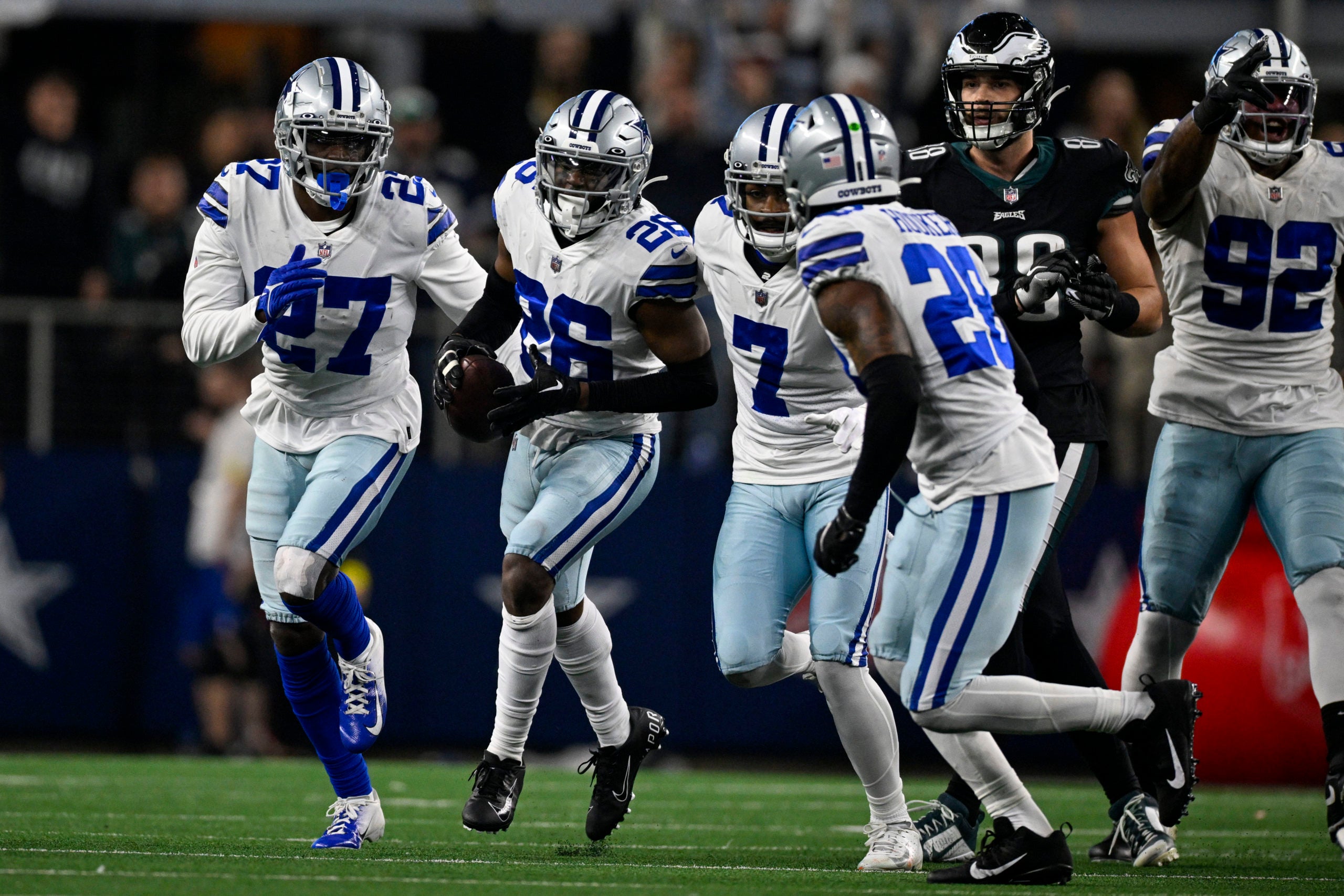
The Dallas Cowboys will have to pay up when it comes to cornerback Trevon Diggs in 2023. And I'm not talking about a contract extension although that certainly is on the table if the team wants to lock him up before he's up for free agency next year.
I'm talking about the so-called "Proven Performance Escalators" included in every drafted player's contract. It's essentially a fourth-year raise for players drafted between the second and seventh rounds of the NFL Draft.
The Proven Performance Escalators kick in if the player exceeds a determined playing time and playing quality (measured by Pro Bowl eligibility).
There are levels to the PPE and Trevon Diggs reached the highest one after his first three years in the NFL because he made the Pro Bowl. The Cowboys cornerback actually has been selected twice to the fan-voted event.
Per Over the Cap, the Level Three PPE will raise the base salary to a projected $4.3 million. It's determined as such because it's the equivalent of the second-round tender used on restricted free agents.
That means that Diggs' salary in 2023 goes from $1.4 million to $4.3 million. Almost a three million dollar difference!
The Cowboys cornerback has definitely earned it. He's been a huge part of what defensive coordinator Dan Quinn has built as Diggs takes on a lot of responsibility in his defense. He followed an 11-interception season with more refined coverage in 2022.
But that's not all.
Center Tyler Biadasz and defensive tackle Neville Gallimore also reached a Level One PPE, which bumps their salaries from $1.01 million to $2.6. The requirement for Level One PPE is to average a 35% snap count over a player's first three years in the NFL (second-rounders require a 60% average).
Featured image via Jerome Miron-USA TODAY Sports
