
Bengals: Identifying likely NFL Draft targets at running back
Here's what I know: The Cincinnati Bengals are drafting a running back early. How early? No later than the fourth round, and that would be a worst case scenario for them. The Bengals don't hide their draft intentions well. Picking so late in the first round opens the door for numerous possibilities, but their reputation […]


Here's what I know: The Cincinnati Bengals are drafting a running back early.
How early? No later than the fourth round, and that would be a worst case scenario for them.
The Bengals don't hide their draft intentions well. Picking so late in the first round opens the door for numerous possibilities, but their reputation for attacking needs in the following rounds precedes them. A running back joining the team before Saturday, April 29 is all but a formality based on the current roster.
Knowing the position is half the battle. What we really care about are the specific players Cincinnati will be targeting. Fortunately, they've left enough breadcrumbs for us to figure that out as well.
When the Bengals are serious about developing a rookie running back, they address the position in the second round. Even after regrettably making Chris Perry a first-round pick in 2004, they've taken four second-round running backs since. Kenny Irons (who ended up never playing a down of NFL football) in 2007, Giovani Bernard in 2013, Jeremy Hill in 2014, and Joe Mixon in 2017.
A lot has changed within the organization since the days of Perry and Irons, and the same can be said just looking at the past 10 years since Bernard was drafted 37th overall. Until they break tendencies, it's wise to honor them as valuable baselines. Their trends are only strengthened by director of player personnel Duke Tobin and his core staff having been here for all that time.
In the last decade, the Bengals have drafted four running backs between rounds two and four, the exact range where they'll look this year. This group consists of the aforementioned Bernard, Hill, Mixon, as well as Mark Walton, an early fourth-round pick in 2018.
A few attributes stand out when it comes to those four: Workload (career carries and receptions), age, size, and production relative to age and competition (MSA). An MSA score for a running back represents how much he produced in terms of yardage compared to the team total during his best season, all relative to his age and strength of schedule faced, and then compared to every running back prospect going back decades. For more information, check out NFL Draft analytics guru James Cobern's Patreon and Twitter.
Here's what all of them look like side-by-side:
| Player | Giovani Bernard (2013) | Jeremy Hill (2014) | Joe Mixon (2017) | Mark Walton (2018) |
|---|---|---|---|---|
Height | 5-8 | 6-1 | 6-1 | 5-10 |
Weight | 202 | 233 | 228 | 202 |
Rookie age | 22 | 22 | 21 | 21 |
MSA score | 59.3 | 92.2 | 86.7 | 90.4 |
Carries | 423 | 345 | 300 | 395 |
Receptions | 92 | 26 | 65 | 56 |
So, what are the takeaways?
Workload: This is what caught my eyes initially. Cincinnati's three-most recent early-round picks all had fewer than 400 career carries in college, and all three second-round picks each played just two years and then left for the NFL at a young age. Bernard's carries went just over 400, but again, in just two years of playing. Receiving experience is also notable. Look for running backs that weren't starters for more than two years, or had fewer than 500 carries to be safe.
Age: It's smart to invest in young running backs considering their shelf-life. The Bengals would agree, as all four backs were 21 or younger when they were drafted, and no older than 22 during their rookie seasons. This goes hand in hand with workload. Look for running backs no older than 22 this year.
Size: Hill and Mixon have been the two most-recent bell-cow backs with similar builds, but those aren't too common nowadays, especially not in this class. Bernard and Walton were each barely over 200, so we can treat that as a loose threshold. Look for running backs that weigh 200 pounds or more.
Production (MSA): Bernard's a bit of an outlier, but he still had an above average mark. Hill, Mixon, and Walton all produced near or above the 90th percentile. Remember, MSA just looks at a player's best season, so career production doesn't hold much weight. Look for running backs with high-quality production.
With those takeaways in mind, let's look at some running backs ranked in the top 150 of the consensus big board who show up with red flags.
Not eliminated entirely, but unlikely
| Consensus Rank | Player | Reasoning |
|---|---|---|
5 | Bijan Robinson | All but confirmed to be pick beforehand. Career carries barely exceeds 500 but they’d probably ignore that anyways for him. |
61 | Zach Charbonnet | 566 career carries in four years of workload albeit just 19 carries as a sophomore. Checks all other boxes, however. |
67 | Devon Achane | Size hurts him. 188 pounds is pretty light for them, but still 21, great production (89.1), and light workload of 369 career carries. |
107 | Tank Bigsby | Heavy workload of 540 carries in three years. No red flags anywhere else. |
118 | Chase Brown | 676(!) career carries in five years of workload. Illinois ran him into the ground lol. Already 23. |
123 | Eric Gray | Age and workload should eliminate him from first four rounds. Already 23 with 549 career carries. Light on production (59.3) as well. |
131 | Sean Tucker | Still 21 and insanely productive (95.9) but 589 career carries in three years. |
135 | Kenny McIntosh | Also 23 with a very low production score (42.1). Negative of having too light of workload. |
Pro Football Focus, James Cobern's Patreon
A few players listed above could end up being outliers, such as Charbonnet or Robinson if the latter somehow falls in the first round. The overall sample size we have to work with isn't large, but it's what we got.
This leaves us with seven running backs inside the top 150 who fit the Bengals' criteria. The number listed in parenthesis is their current rank on the consensus board.
Jahmyr Gibbs, Alabama (26)
- Height: 5-9
- Weight: 199(!)
- Rookie age: 21
- MSA score: 90.9
- Career carries: 383
- Career receptions: 103
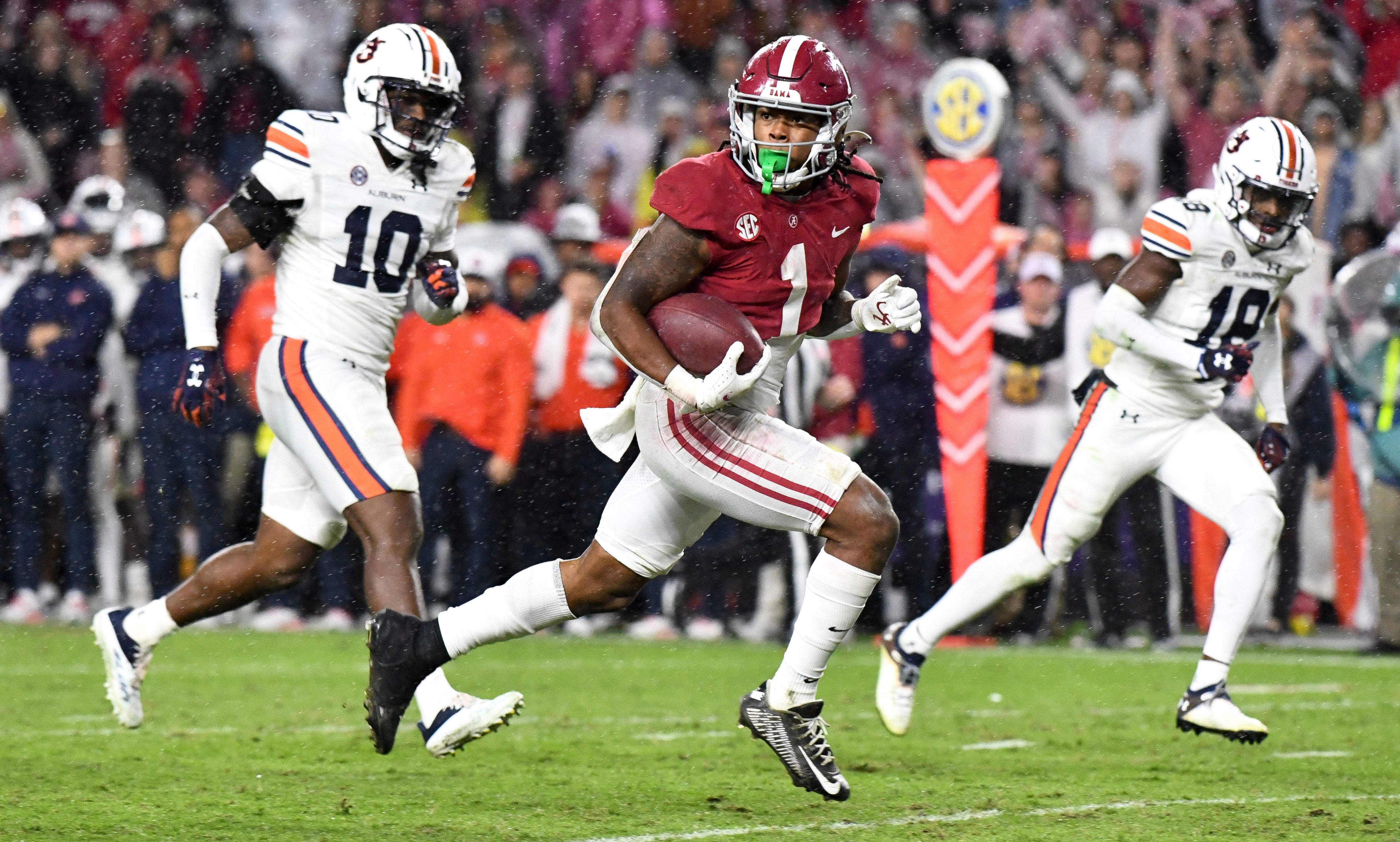
What stands out: Entering the league at such a young age with so much experience as a receiver just screams Gio. Gibbs forced 19 missed tackles on 43 receptions in his lone year with the Crimson Tide. He'll be a plus athlete in space immediately. He's but a Popeyes biscuit away from 200 pounds, so that shouldn't completely turn them off from him.
When would they draft him: It would have to be the first round, right? Gibbs falling to the 60th overall pick would be an absolute best case scenario for Cincinnati. Trading back into the 30s to acquire extra capital while picking him may be the optimal realistic path.
Tyjae Spears, Tulane (76)
- Height: 5-10
- Weight: 201
- Rookie age: 22
- MSA score: 81.6
- Career carries: 427
- Career receptions: 48
What stands out: Pro Football Focus stats do Spears' production justice. He graded out at 93.1 when running gap-scheme concepts and finished with a career elusive rating of 157.7. For context, that's absurd.
When would they draft him: The depth of this class should push Spears into late-third round territory. That happens to be right where the Bengals pick.
Zach Evans, Ole Miss (98)
- Height: 5-11
- Weight: 202
- Rookie age: 22
- MSA score: 74.2
- Career carries: 290
- Career receptions: 30
What stands out: Just 320 career touches, yet produced at a solid rate with experience against quality competition. An impressive 48% of Evans' yards came on runs of 15 yards or more. He's on the lighter side in terms of size, but we can't discount his meeting their criteria. Bengals Twitter is sleeping on him right now as a target.
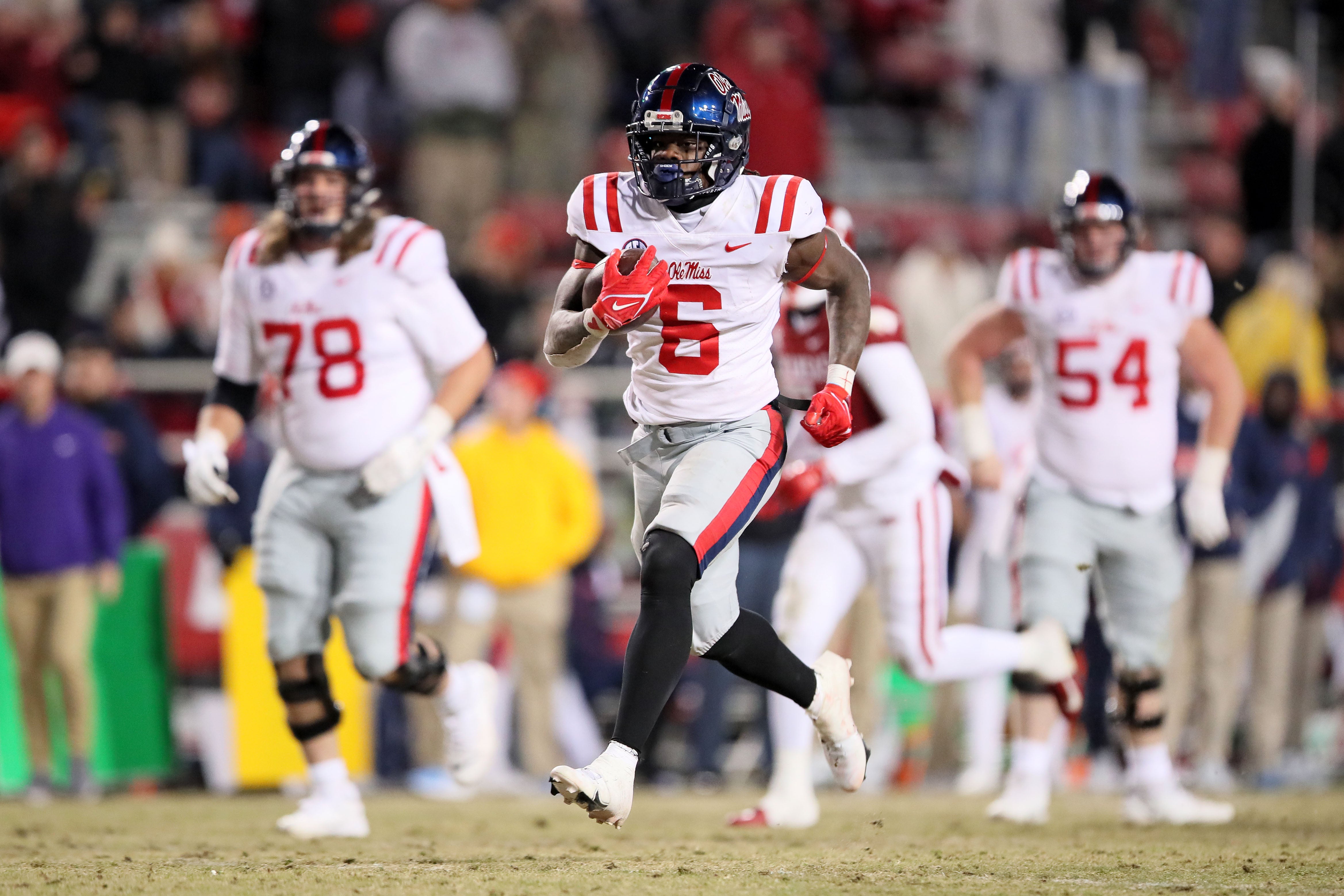
When would they draft him: You'll notice a theme here. Evans is rated right where the Bengals would pick in the third round. He could be there in the fourth round, but you never know.
DeWayne McBride, UAB (115)
- Height: 5-10
- Weight: 209
- Rookie age: 22
- MSA score: 78.2
- Career carries: 484
- Career receptions: 5(!!!)
What stands out: A career elusive rating of 177.6, goodness gracious that's bonkers. McBride forced 175 missed tackles in three years with 54% of his yardage coming on breakaway runs. He's a PFF darling for these reasons, but his utter lack of receiving history can't be dismissed.
When would they draft him: Either rounds three or four. I'm not taking that lack of receiving production lightly, but everything else is phenomenal.
Israel Abinikanda, Pitt (116)
- Height: 5-11
- Weight: 216
- Rookie age: 21
- MSA score: 90.1
- Career carries: 392
- Career receptions: 38
What stands out: Massive production at such a young age without being overworked. Combine that with his size, and you got a clear target. What's interesting is he doesn't have a ton of yards after contact (2.95 career average) or on explosive runs (39.1%). His production was consistent as he outran tackling angles, but not always for long gains.
When would they draft him: The consensus still sees Abinikinda as a early fourth-round pick, but he'll go earlier than that; his profile is far too clean to last that long. The latest the Bengals will likely be able to get him is in the third round, and I see that as where'd they most likely target him. If they land him in the fourth, that's a massive win.
Kendre Miller, TCU (120)
- Height: 5-10
- Weight: 215
- Rookie age: 21
- MSA score: 93.9
- Career carries: 361
- Career receptions: 29
What stands out: Pretty much everything. Miller is one of the youngest players in this draft along with Abinikinda, and is even slightly more productive against quality competition. An elusive rating of 124.6 combined with a gap rushing grade of 86.4 make for a perfect fit for what Cincinnati is looking for.
When would they draft him: Third round appears ideal. His consensus rank seems very low, but is likely a product of the class as a whole. Interestingly enough, Miller and Evans split carries for two years before Evans transferred to Ole Miss in 2022. Perhaps that explains Miller's low ranking for some analysts.
Roschon Johnson, Texas (129)
- Height: 6-0
- Weight: 219
- Rookie age: 22
- MSA score: 75.1
- Career carries: 392
- Career receptions: 56
What stands out: Much like Miller, Johnson was second fiddle for most of his career at Texas, only he was behind the best running back prospect since Saquon Barkley. Despite playing with Robinson, Johnson still produced at a solid level and comes into the league without a huge workload. He's also the closest in terms of size to both Mixon and Hill, which helped him break off 139 tackles in his career. An average of 3.99 yards after contact. Receiving experience is surprisingly high.
When would they draft him: The pre-draft buzz has been strong for Johnson. It's entirely conceivable he won't last until the Bengals' fourth-round pick now. Could they trade up for him from that spot? A trade down for 92 would be more palatable.


