
LSU's 'Swiss Army knife' and 2025's biggest x-factor named as top college player for Olympic flag football team
A star was born as soon as Harold Perkins touched ground at LSU. The hyper-athletic defensive weapon raced out to 72 tackles and 7.5 sacks as a freshman, proving to be a Jamal Adams-like presence despite being a teenager in the SEC. The future looked amazingly bright. Perkins continued to flourish in his sophomore season, […]


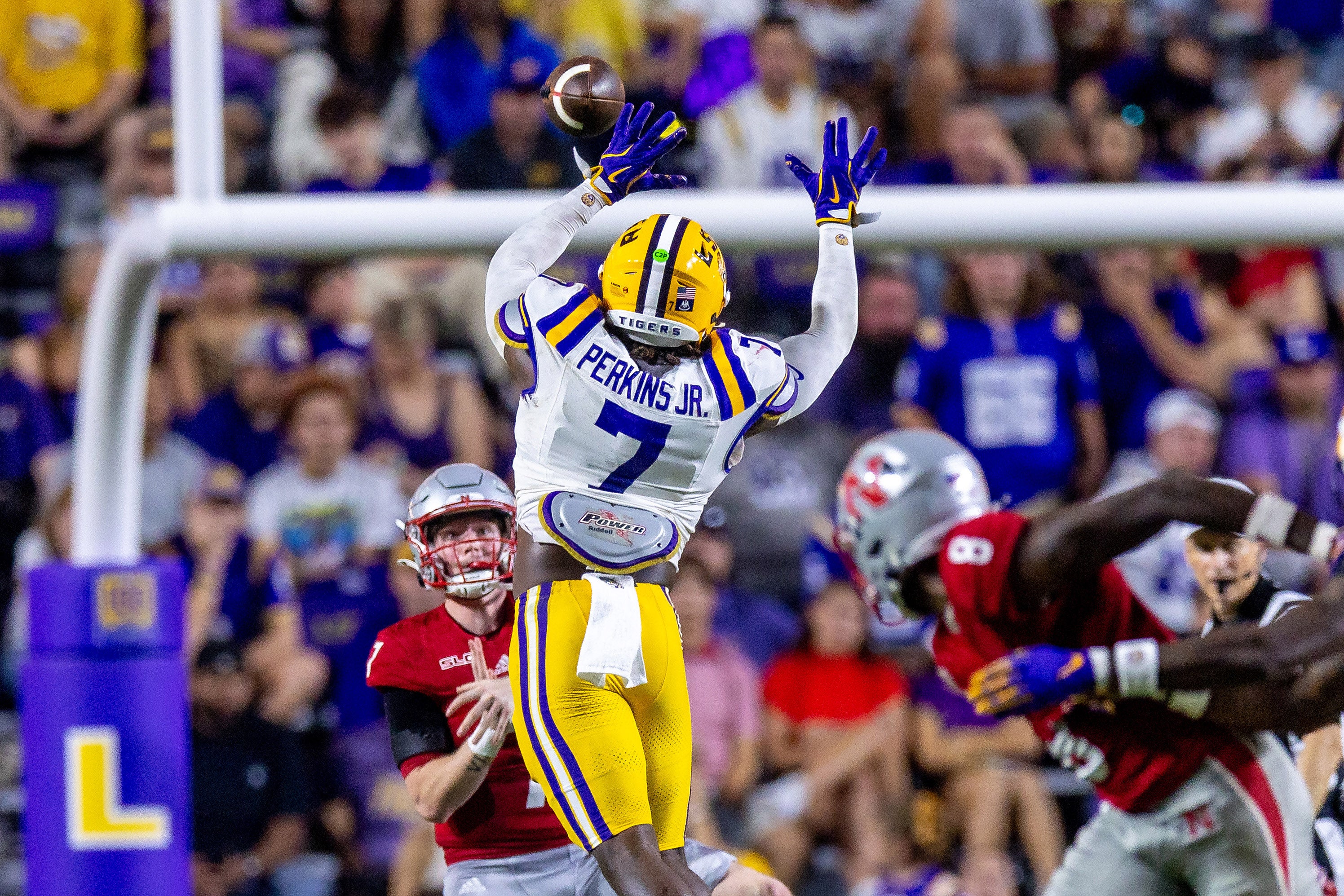
A star was born as soon as Harold Perkins touched ground at LSU. The hyper-athletic defensive weapon raced out to 72 tackles and 7.5 sacks as a freshman, proving to be a Jamal Adams-like presence despite being a teenager in the SEC. The future looked amazingly bright.
Perkins continued to flourish in his sophomore season, even though he spent more snaps at linebacker in hopes of LSU transitioning him to more of a traditional role. However, at 6-foot-1, 225 pounds, and an ace pass-rusher with great closing speed and contact balance, Perkins' physique didn't match his game.
He and LSU tried to get ahead of his NFL conundrum entering 2024, moving him to an off-ball linebacker role so he could practice more run keys and shedding blocks.
It was as rough a transition as it could be in 2024 before a torn ACL ended Perkins' junior season four games in.
But with the NFL moving toward allowing its players to compete in the 2028 Olympics' flag football team, Perkins appears to be an excellent possible addition as a defensive weapon. Here's what CBS Sports analyst Shehan Jeyarajah said.
Might we have finally found the perfect football role for Perkins? In college, he has struggled to play his natural position of pass rusher because of his smaller frame. In the flag football universe, that would be far less of a concern.
Rushers have to start off the ball, giving extra benefit to speed and agility. Additionally, rushers have to be able to respond to potential running plays or drop back into coverage. Perkins has spent the last two years refining both of those skill sets. Drop him into a flag football defense and he has the potential to be a Colin Simmons-type Swiss Army Knife.
Perkins struggled with the position's physicality, seeing his missed tackle rate skyrocket above 21 percent and proving to be a liability in coverage. Without the ability to handle blockers at the point of attack or be confident in coverage assignments, Perkins' NFL Draft stock was plummeting.
Now, coming off a torn ACL, Perkins enters 2025 as LSU's biggest x-factor for success on his side of the field. At his finest, he's a stellar leader and game-changer. But last year was ugly, and his athleticism is a big key to his success.
It's fun to think how well Perkins would translate to a more free-flowing environment of flag football. Hopefully, we get the best of Perkins this fall and he fulfills his potential.


