
‘They’ve got a lot of big fish to fry’: Jim Tressel opens up about NCAA after Michigan’s punishment sets in
Jim Tressel’s era as head coach of the Ohio State Buckeyes left an indelible mark on college football. Now, he’s hoping that his story is one that has spurred change for the better of the sport. During his time in Columbus, he achieved an impressive winning percentage exceeding 82%, captured a national championship in 2002, […]

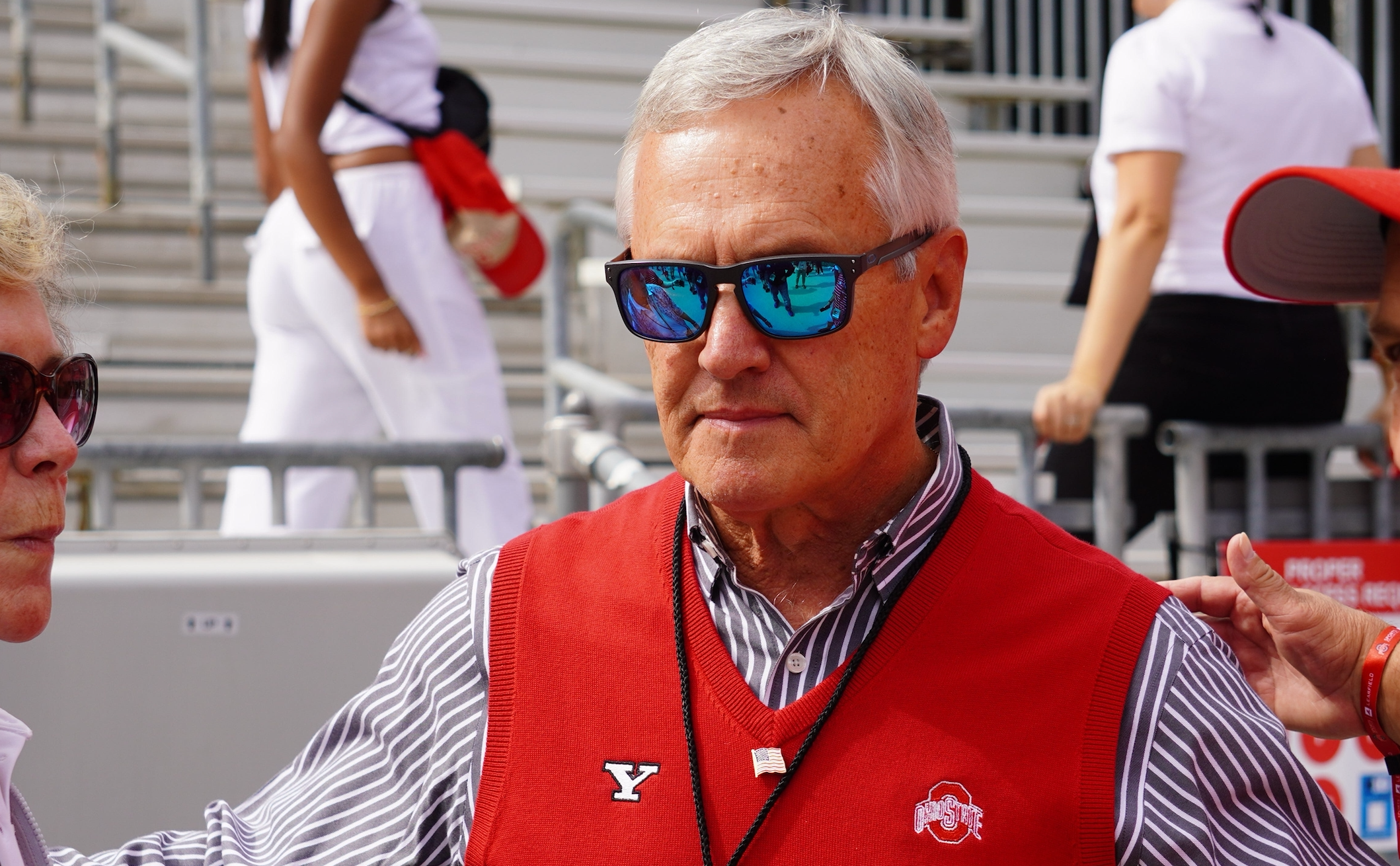
Jim Tressel’s era as head coach of the Ohio State Buckeyes left an indelible mark on college football. Now, he’s hoping that his story is one that has spurred change for the better of the sport.
During his time in Columbus, he achieved an impressive winning percentage exceeding 82%, captured a national championship in 2002, and guided the team to two appearances in the BCS National Championship Game. Yet, despite these accomplishments, Tressel’s departure from the program was marred by controversy.
In May 2011, he stepped down amid NCAA infractions tied to the infamous Tattoogate scandal, which involved players trading team memorabilia for tattoos and other benefits. This violation triggered severe sanctions for Ohio State, including scholarship reductions and a postseason ban for the 2012 season—coincidentally, the inaugural year under new coach Urban Meyer.
The trajectory for the Buckeyes might have unfolded quite differently if the incident had occurred in the current era of college athletics.
Fast forward to August 2025, when the NCAA finalized its penalties against Michigan following an extensive probe into the Wolverines’ sign-stealing operation. Although the governing body imposed substantial fines—totaling up to $35 million, including a $50,000 base penalty, 10% of the football program’s operating budget, and an amount equivalent to 10% of scholarship costs for the 2025-26 season—along with an extra game suspension for head coach Sherrone Moore, it notably refrained from enforcing a postseason ban.
The NCAA acknowledged that such a ban would have been warranted under traditional guidelines but opted against it, emphasizing a shift in philosophy: avoiding penalties that harm current student-athletes for the misdeeds of prior administrations or staff.
This leniency highlights a profound evolution in NCAA enforcement, driven by mounting legal pressures and a recognition that punishing innocent players undermines the spirit of collegiate sports. In Tressel’s case, the 2012 ban directly impacted a roster largely uninvolved in the violations, potentially costing the team a shot at a Big Ten title or bowl game.
By contrast, Michigan’s outcome allows the program to compete fully in the expanded College Football Playoff, focusing on financial hits and individual accountability. This approach not only reflects growing empathy for athletes but also underscores the NCAA’s diminished leverage amid antitrust lawsuits and athlete empowerment movements.
“There’s so much change,” Tressel said Thursday. “There’s so much up and down. I think I really don’t have an opinion on how they’re doing right now. I think we’re a little bit up in the air as to what do we really think college athletics needs to be all about.
“But you have to run the path. There’s another season. There’s another decision and so forth. I don’t really have an opinion on how they’ve been consistency-wise or anything like that. They’ve got a lot of big fish to fry. Hopefully we’ll get working on it.”
The Michigan resolution has sparked broader debates about the NCAA’s waning authority in an era of rapid transformation. With the advent of Name, Image, and Likeness (NIL) deals since 2021 and the transfer portal facilitating easier player mobility, the traditional amateurism model has crumbled. Adding to this, the landmark House v. NCAA settlement, finalized in June 2025, ushers in direct revenue sharing: Division I schools can now distribute up to $20.5 million annually to athletes starting in the 2025-26 academic year, with the cap rising to about $32 million by the end of a 10-year period.
This includes $2.8 billion in back damages paid out over a decade to past athletes dating back to 2016. While this levels the playing field by compensating players for their contributions to a multibillion-dollar industry, it introduces complexities around equity—particularly how funds are allocated across sports, genders, and conferences to comply with Title IX and avoid further litigation.
Amid this uncertainty, numerous athletic directors and conference leaders have advocated for federal intervention to standardize rules and prevent a patchwork of state laws from further fragmenting the system. Such calls stem from fears that without uniform oversight, wealthier programs could dominate recruiting through superior NIL collectives and revenue shares, exacerbating competitive imbalances between Power Four conferences and smaller institutions like those in the Mid-American Conference (MAC).
Tressel, now Ohio’s lieutenant governor under Gov. Mike DeWine—a role he assumed in February 2025 after a nomination and confirmation by the state legislature—brings a multifaceted viewpoint shaped by his coaching history, administrative experience as president of Youngstown State University, and current political involvement. His position allows him to bridge the worlds of sports and governance, especially as policymakers grapple with these issues.
“I really think that, like anything else, we first have to come up with what is the plan,” Tressel said. “I think what’s hard right now is I don’t know that anyone feels as if, ‘OK, I know exactly where we want to go with intercollegiate athletics.’
“… I think once we can get that plan that everyone says, ‘Aha, I think that’s the way to go,’ then we might get the federal help and get some of the decisions for how it will affect the Bowling Greens, the Mid-Americans, the FCS and the Ohio States of the world.”
Tressel’s emphasis on a cohesive strategy resonates amid recent federal actions. In July 2025, President Donald Trump signed the “Saving College Sports” executive order, which directs agencies like the Department of Justice and Department of Labor to scrutinize NIL deals, prohibit overt pay-for-play arrangements, and safeguard scholarships for women’s and non-revenue sports. The order also threatens to withhold federal funding from non-compliant institutions, signaling a potential shift toward national oversight. While critics argue it could stifle athlete earnings, proponents see it as a step toward stability, protecting smaller programs and ensuring Title IX compliance in the revenue-sharing age.
Ultimately, these developments suggest college athletics is at a crossroads. The leniency in cases like Michigan’s, combined with revenue sharing and federal encroachment, could foster a more professionalized yet equitable model—if stakeholders align on Tressel’s advocated “plan.” Without it, ongoing lawsuits and disparities may continue to erode the NCAA’s relevance, pushing the industry toward a future where athletes are treated more like employees than amateurs.


