
Ohio State is the latest to fall victim to a rule that college football can’t get right and has to fix
Arguably the most controversial rule in all of sports is college football's rule of targeting. The rule of targeting is defined by the elements below: If the player leaves their feet to launch themselves at an opponentIf the player crouches before making a tackle to create maximum forceIf the player leads with their helmet, shoulder, […]


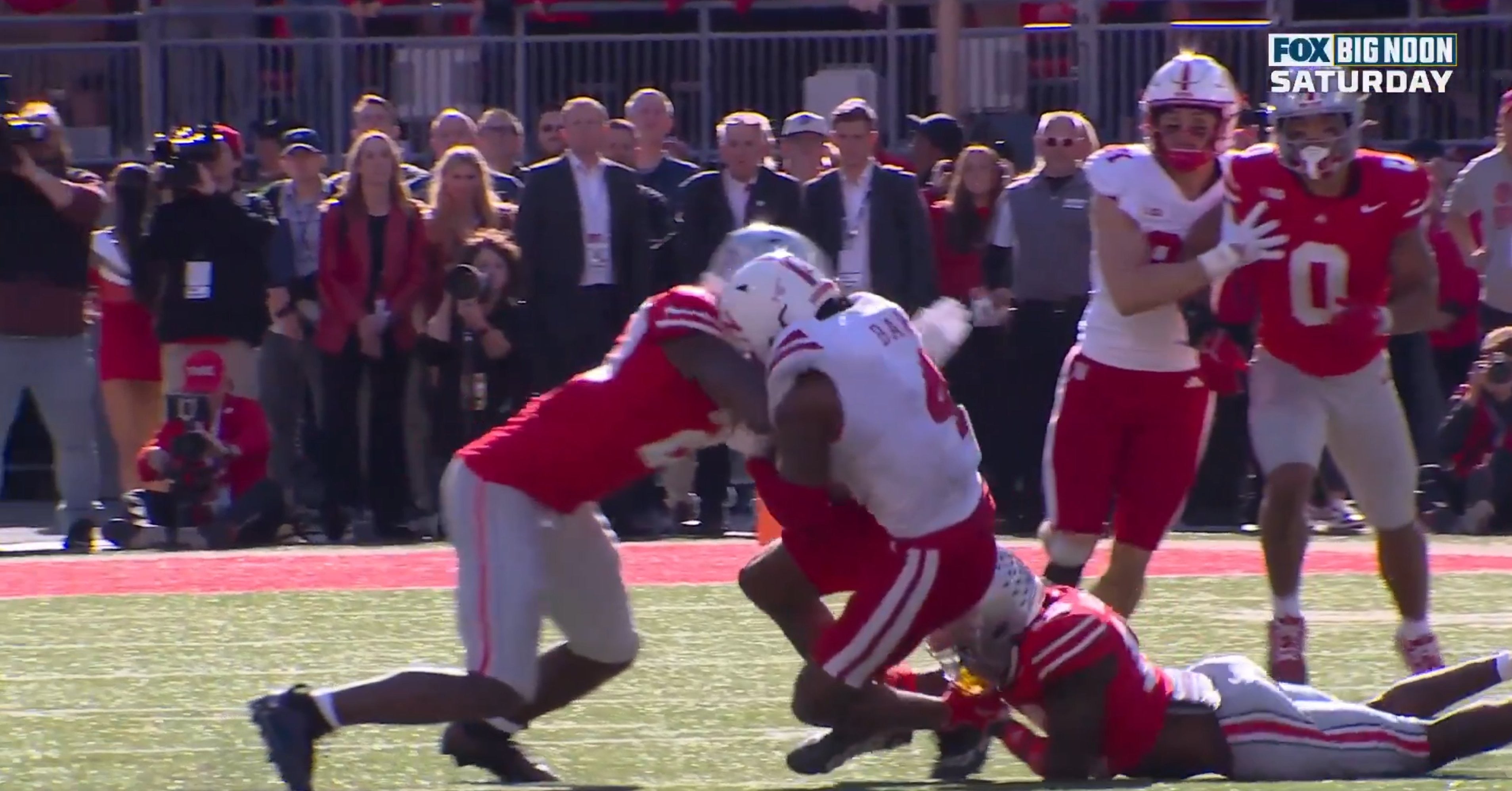
Arguably the most controversial rule in all of sports is college football's rule of targeting. The rule of targeting is defined by the elements below:
- If the player leaves their feet to launch themselves at an opponent
- If the player crouches before making a tackle to create maximum force
- If the player leads with their helmet, shoulder, forearm, fist, hand or elbow to attack with forcible contact the head or neck area of an opposing player
- If the player lowers their head before making a tackle and makes forcible contact with the crown of the helmet
When targeting is called on the field, it comes from dirty hits from the game and protects players from concussions and other injuries. Unfortunately, college football has a targeting problem and it's not with the players, it's with the enforcement.
Nearly every time you see a targeting call, there is zero consensus on whether or not it's targeting or not. The rules also don't allow for any wiggle room when it comes to targeting, which ends up ejecting players that don't have the intent to hurt. The latest example of targeting not making sense came at the end of Nebraska vs. Ohio State.
By rule, that is targeting because the defender led with his shoulder and made contact with the head and neck of the wide receiver. This is one area where the rule fails. What else can he do better? He doesn't launch into the receiver but rather braces for contact and he's ejected from the game.
How are we doing things right by these college kids? The goal is to prevent egregious hits on players but in what world is this either egregious or worth an ejection? Not only does the defender get ejected, but because it happened in the second half, he won't be able to play in the first half of next week's game against Penn State, which is a huge one for the Buckeyes.
For context, this is a play worthy of an ejection. The defender launched himself into the quarterback with intent to hit him in the head.
However you look at it, something needs to be done. One example of a change that has been floated around is that of the flagrant foul in the NBA. Per the NBA rulebook, there are two levels:
Flagrant one: Unnecessary contact committed by a player against an opponent
Flagrant two: Unnecessary contact committed by a player against an opponent
They can also be reviewed to determine what level of foul it is with these parameters.
- Whether the personal foul should stand or be ruled a flagrant 1 or flagrant 2 (thus ejection) or a technical foul
- Whether any other players committed unsportsmanlike acts or unnecessary contact immediately prior to and/or immediately following the foul
- Whether a flopping violation proximate to the called foul should be assessed or rescinded
The penalty for both results in two free throws and the ball for the team that was fouled. A flagrant two also carries an ejection. There are different levels of targeting. In this instance, the Ohio State player wouldn't have been ejected. The ejection gave Nebraska new life and allowed them to try and win the game. Thankfully, the Buckeyes were able to pull out the win instead of having this mar their season.
The NCAA needs to do something to fix this and they need to do it fast, because this could have been a huge impact in the College Football Playoff when that should be left to the players. The intent is good from the NCAA but the lack of consistency with enforcement has put them in an awful spot.


