
Arch Manning’s fourth-quarter reawakening saved Texas from collapse in Starkville
After multiple games in a row of subpar performances, Arch manning finally found his rhythm against Mississippi State.


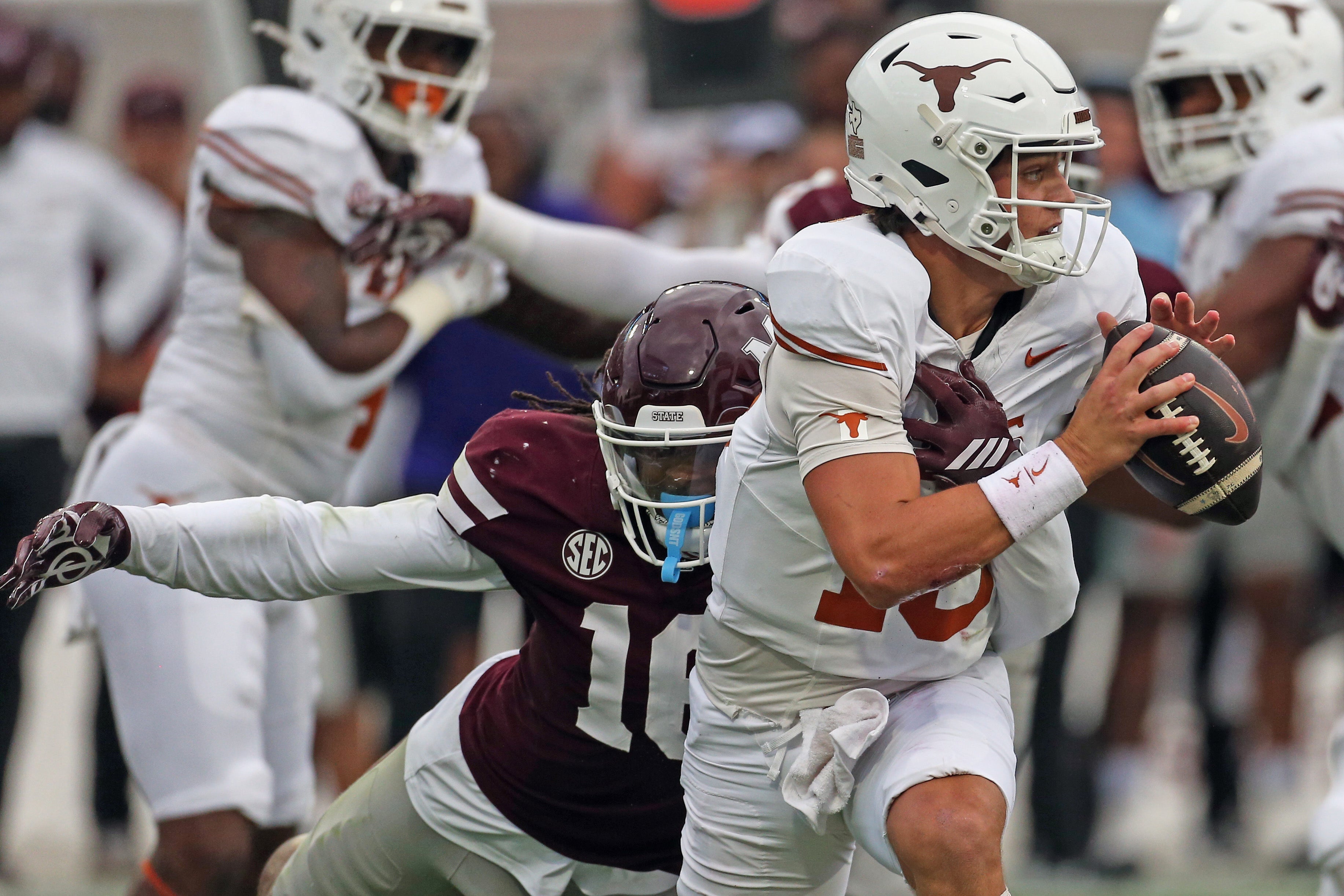
For nearly three quarters, Texas looked lifeless. The offense sputtered, the rhythm was gone, and Arch Manning appeared frustrated, hemmed in by a Mississippi State defense that refused to bend. Then came the final 15 minutes, when the sophomore quarterback turned a 17-point deficit into a defining moment in his still-young career.
Texas’ 45–38 overtime victory over the Bulldogs wasn’t just a win to salvage the Longhorns’ season; it was the first true glimpse of Manning as a field general who can drag a program back from the edge.
A Quarterback Who Refused to Break
By the start of the fourth quarter, Texas trailed 38–21, having been outplayed at nearly every level. Manning had been sacked three times and picked off once, while Mississippi State’s Blake Shapen was carving up the Longhorns’ secondary with four touchdown passes. Yet Manning never unraveled.
Instead, he found his tempo—one quick read, one decisive throw at a time. His 21-yard touchdown strike to Emmett Mosley with 9:34 left cut the lead to 38–28. Six minutes later, he capped another drive with a 26-yard field goal from Bert Bouwmeester, pulling Texas within seven.
Then, the moment that changed everything: freshman Ryan Niblett’s 79-yard punt return touchdown tied the game at 38. Manning didn’t throw the pass, but he orchestrated the energy that made it possible—calmly commanding the sideline, steadying a team that had spent three quarters chasing shadows.
When overtime began, the game was already Manning’s to finish. On the Longhorns’ first possession, he needed only three plays to deliver the dagger—connecting twice to Parker Livingstone, including a red-zone strike for the go-ahead touchdown.
He finished 29-of-46 for 346 yards and three touchdowns, adding another score on the ground. His most reliable target was Ryan Wingo, who caught five passes for 184 yards, including two deep shots that reignited Texas’ vertical attack when it needed it most.
Those numbers only tell part of the story. What mattered more was how Manning responded when the season teetered. In a road environment built to rattle even the most experienced quarterbacks, he found rhythm, patience, and resolve.
What It Means for Texas Moving Forward
The offense that looked fractured in September showed resilience, adaptability, and a willingness to trust its young quarterback in chaos.
For Manning, the performance marks a turning point. He’s had cleaner statistical outings, but none more meaningful. Facing relentless pressure, he carried Texas through a 24-point fourth quarter and an overtime finish that kept the Longhorns’ season alive.
As Mississippi State’s sideline fell silent, Manning walked off without fanfare—helmet tucked under his arm, head slightly bowed. The comeback wasn’t about flash. It was about finding a way when every option seemed gone.
For the first time in his Texas career, Arch Manning didn’t just manage a game. He defined one.
Texas Longhorns News
The hidden factor in Arch Manning’s struggles: Texas’ offensive line and supporting cast
Arch Manning’s 2025 struggles stem from Texas’ young offensive line and receivers still finding rhythm, shaping his growth and future outlook.


