
After Jerrick Gibson’s exit, can Wisner, Clark, and Simon carry the load for the Longhorns?
After Jerrick Gibson’s departure, the Longhorns face a big question: can young backs Quintrevion Wisner, Christian Clark, and James Simon keep the run game steady, or will Steve Sarkisian turn to the transfer portal for help?


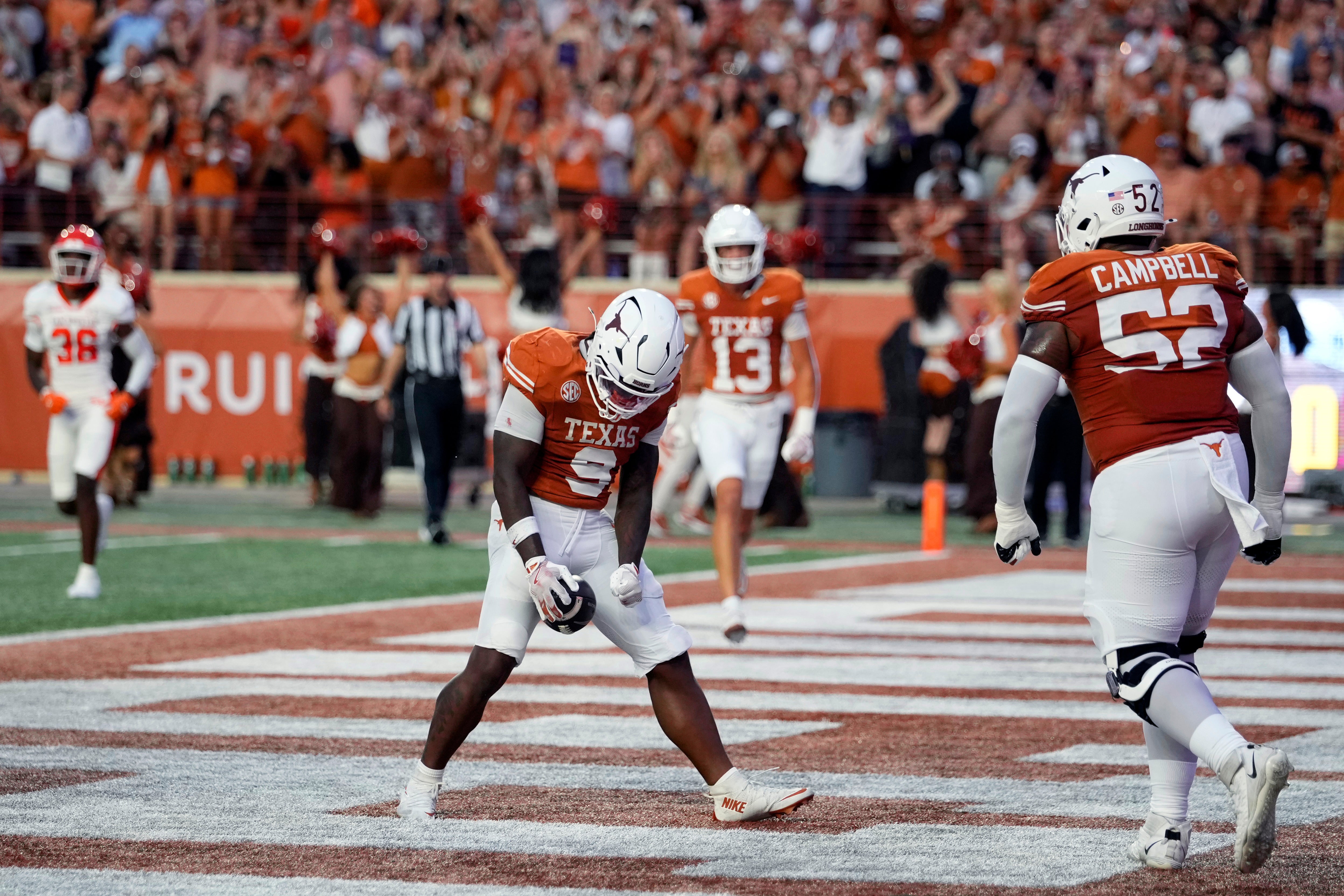
The Texas Longhorns are threading a fine line in 2025. They’re talented enough to stay relevant, but their erratic play is leaving fans unsettled. With a 4–2 record (sitting at No. 5 in the SEC), Texas feels like a team in flux: flashes of dominance, moments of stalling, and too many self-inflicted setbacks.
The recent departure of Jerrick Gibson on Tuesday only compounds that feeling of ambiguity. Gibson gave Texas a compact, physical runner with sudden bursts of speed, someone you could trust in short-yardage situations. That said, his limited touches — 37 carries for 152 yards and one touchdown — and recurring concerns over his ability to pass protect and secure the football restricted his role.
Now, Texas coach Steve Sarkisian must put together a strategy that will answer the questions on everyone’s mind: can Quintrevion Wisner, Christian Clark, or freshman James Simon step up and fill this backfield void? Or should the program cast its eyes toward the transfer portal for a plug-and-play solution?
Transfer portal or homegrown: which RB fits best for Texas now?
When CJ Baxter was injured earlier this year and Wisner missed games, Gibson became more critical to the rotation. Unfortunately, he couldn’t fully seize that moment. That begs the question: Did the staff overcommit early to Gibson’s flash potential without enough depth insurance? Faced with Gibson’s exit, Sarkisian has to decide between betting on internal continuity or chasing immediate impact from outside.
Although Texas’ ground game hasn’t shown the consistency we’d expect from an elite program, it’s not entirely broken. Their backs still average over four yards per carry, and the offense finds life when it leans on the run to set up play action.
Fortunately for the Longhorns, losing Gibson is only a minor setback. If used to their full potential, each of their four main rushers has admirable skills that could balance their rushing attack.
Quintrevion Wisner
As of Week 8, Wisner has rushed 46 times for 185 yards and one touchdown this season, averaging about four yards per carry. When healthy, Wisner is the closest thing that Texas has to a lead back.
He’s already seen usage in early games — in Texas’ 31–27 win over Ohio State earlier this season, Wisner carried 16 times for 80 yards. His 94 yards against the Oklahoma Sooners last Saturday were essential to Texas securing the win. His quickness and ability to navigate space in the open field set him up for success in zone schemes. If coach Sarkisian makes the proper O-line adjustments, we could see Wisner produce big numbers in the coming games.
CJ Baxter
Baxter has been out of the lineup since the third week of the season after suffering a hamstring injury on the first play of the game against the UTEP Miners. Before the injury, Baxter had been the Longhorns’ leading rusher with 104 yards on 24 carries through the first two games. Baxter’s return to the lineup could negate what’s been lost to Gibson’s exit.
Baxter brings a physical, north-south running style that can improve Texas’ short-yardage and red zone efficiency, complementing Wisner’s east-west style. His return from injury is expected to create a more balanced and dynamic rushing attack, while also taking pressure off quarterback Arch Manning.
Christian Clark
Clark, who’s rushed 29 times for 116 yards and one touchdown this season, averaging just over four yards per carry, is built more like a grinder: strong between the tackles, good in contact, and a steady presence in power-down sets. Although he doesn’t turn heads as much, his style is complementary in a backfield rotation.
James Simon
Simon, who’s rushed 29 times for 122 yards this season (averaging about 4.2 yards per carry), brings his best attributes as a receiver out of the backfield. He has the soft hands, route nuance, and flexibility that make him an intriguing target in nickel sets or on misdirection. That said, he’s yet to prove himself in high volume.
Possible RB Transfer Portal Option
Sarkisian’s offensive strategy prizes balance, sustained tempo, and vertical threat off play action. Texas will need a back who can pass protect, stay fresh over three quarters, and threaten defenses when given space. That’s where the portal becomes tempting.
One name already circulating is former Tulane RB Makhi Hughes. Hughes carried 265 times for 1,401 yards and 15 rushing touchdowns in 2024, averaging 5.3 yards per rush. He also added 19 receptions for 176 yards and two scores, showing his chops as a dual-threat option. Hughes’ consistency and heavy usage make him a plug-in candidate who can immediately elevate the backfield.
The tradeoff, of course, is disruption. Portal pickups may not mesh with locker room chemistry, and giving big carries midseason can stir friction among more established backs.
Still, credit must be given to Sarkisian’s roster design. Even without a dominant lead back, Texas continues to average over four yards per carry overall, and the offense continues to move when the run game is clicking.
The structure of layered backs means that when one headliner exits, others can step into a competitive rotation. Under Sarkisian’s system, Texas has the raw materials needed to reshape this backfield. Whether that comes via internal restructuring or a portal acquisition will set the tone for the rest of the season.
Texas Longhorns News
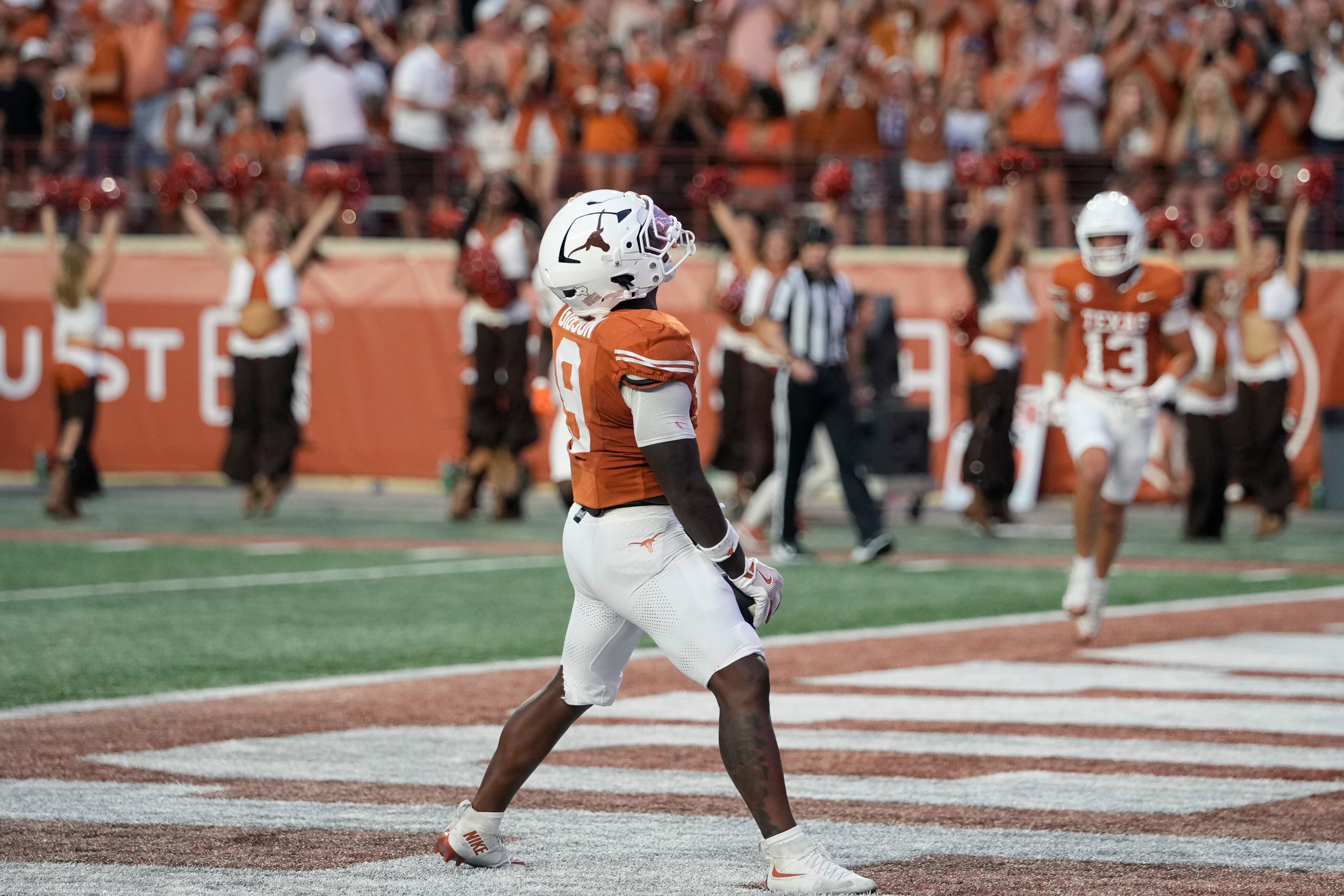
Jerrick Gibson’s exit from Texas Longhorns will ultimately be remembered as a story of lost potential
Four-star running back Jerrick Gibson’s departure from Texas marks the end of a promising yet unfulfilled chapter.


