
Texas just flipped a three-star running back from Minnesota, and it might matter more than the ranking suggests
Austin native Jett Walker backed off his Minnesota commitment to join Texas’ 2026 class, giving the Longhorns a badly needed answer to their most glaring offensive question.



After a weekend visit in Austin, three-star 2026 running back Jett Walker backed off his Minnesota pledge and committed to Texas, giving the Longhorns a badly needed recruiting win at a moment when the future of their backfield has become one of the biggest questions surrounding the program.
And this one hits close to home. Walker is an Austin native, a Georgetown High product who found the end zone 37 times in 2024 and built a reputation as a rugged, downhill scorer who keeps drives alive. He’s ranked No. 74 among running backs and No. 172 nationally in the 2026 class per 247Sports, but his production suggests he could be a rising star.
Texas saw that upside, Minnesota saw it too, and so did West Virginia, Houston, and Bowling Green — but the weekend in Austin flipped the script entirely, and by Sunday, Walker traded maroon and gold for burnt orange in a move that solves more than just a recruiting battle.
Why this matters more than the ranking suggests
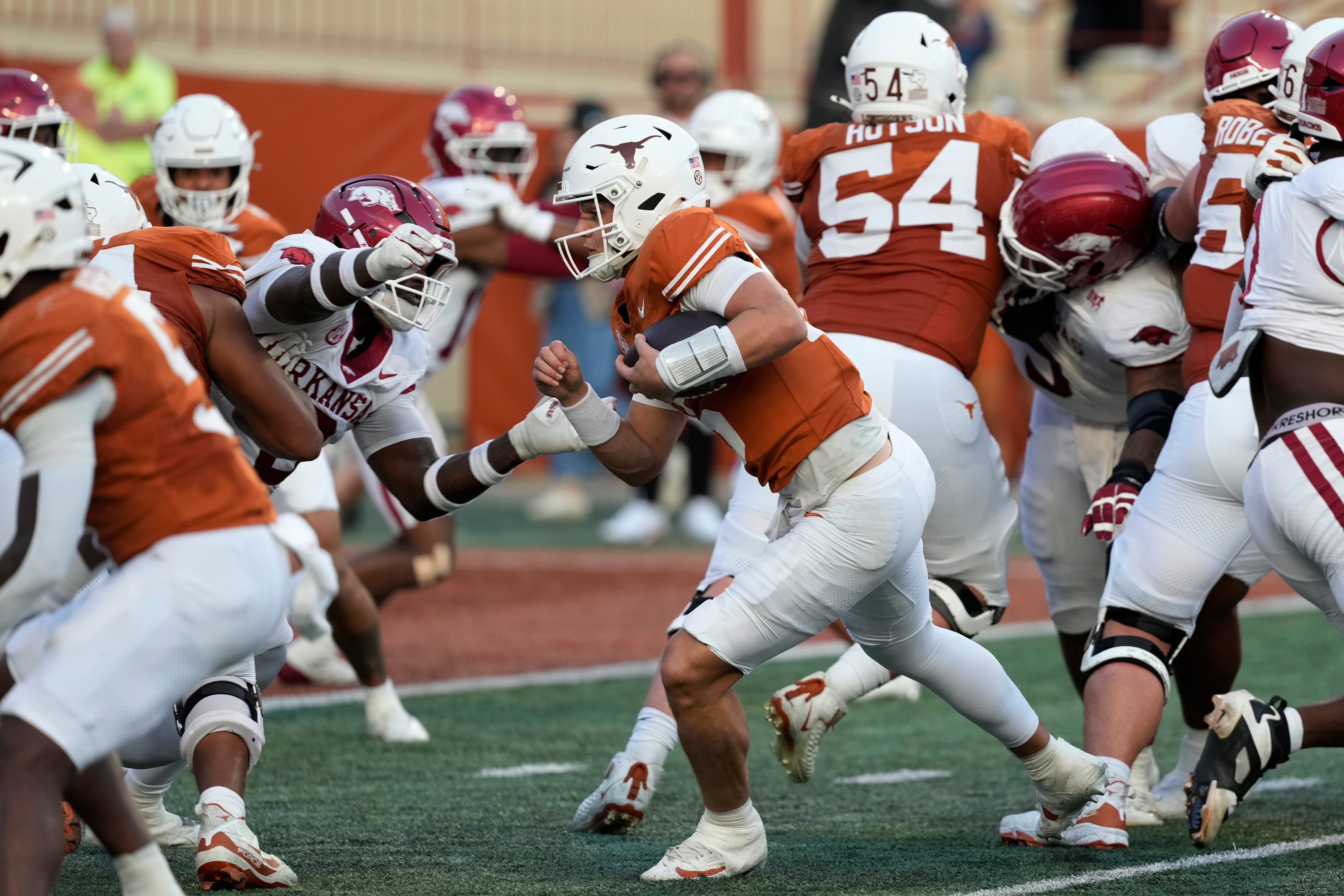
The Longhorns haven’t been shy about their biggest offensive flaw: the run game hasn’t looked like Texas football. Too many stalled drives. Too much pressure on Arch Manning.
Walker doesn’t fix that today — but he’s part of the long-term answer.
He joins a 2026 haul that’s shaping up to be one of the strongest in the country, headlined by five-stars Dia Bell and Jermaine Bishop, plus a wave of four-star talent in Tyler Atkinson, Kosi Okpala, Richard Wesley, Samari Mathews, and Derrek Cooper. A Cooper–Walker backfield has the makings of a one-two punch Texas hasn’t had in years — power and burst, volume and scoring.
This is a major win for Texas. With roster turnover looming and the SEC only getting tougher, Walker removes one question mark from the future depth chart and gives the Longhorns a local cornerstone to build around.
What this flip says about Texas’ recruiting momentum
Texas doesn’t have many glaring holes on the roster right now, but the ones that do exist are loud — and the recruiting trail is where those structural problems get solved before they become existential crises. Sarkisian’s staff has been aggressive throughout this cycle, staying connected to some of the top remaining targets in the 2026 class, and Walker’s flip signals that the momentum isn’t slowing down even as other programs try to make up ground. It’s another reminder of the difference between staying in the mix for elite recruits and actually owning your home state the way a program like Texas is supposed to. The Longhorns didn’t just add a running back to the class. They took one from another Power Four program, kept him home in a state where every recruiting loss gets magnified and questioned, and continued building a 2026 class that looks less like a standard reload and more like a legitimate runway toward competing for championships in the SEC.
Texas Longhorns News
Shannon Sharpe says Arch Manning just sent a message to college football — ‘you got to give it kudos’
Shannon Sharpe praises Arch Manning’s historic performance against Arkansas—six touchdowns, record-breaking stat line—and says he finally delivered the breakthrough moment the Longhorns needed.


