
Texas moves quickly after portal losses, retaining a five-star CB and reloading for 2026
Texas wasted no time after portal losses, reinforcing its defense and backfield with proven veterans while retaining key young talent — a response that reveals how Sarkisian plans to keep the Longhorns in the 2026 title conversation.


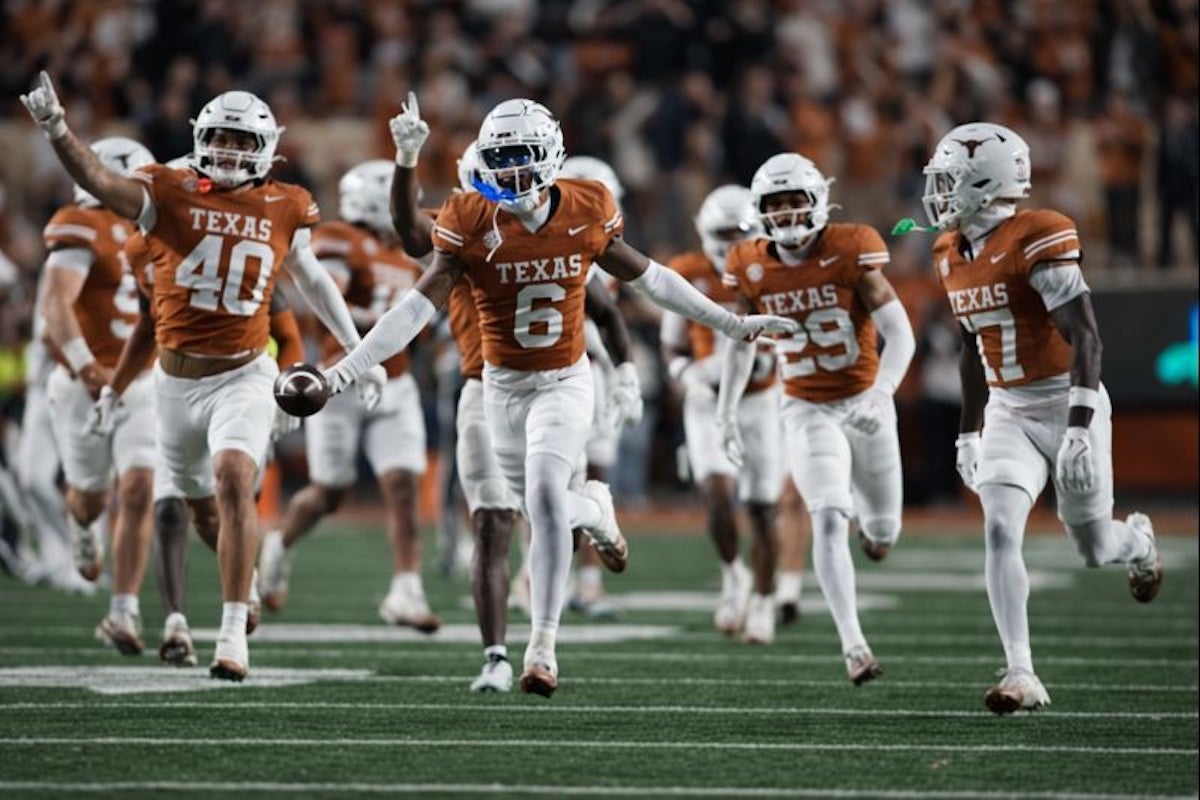
In a matter of days, Steve Sarkisian and his staff reshaped the spine of the team, turning uncertainty into structure as the Longhorns pivot toward 2026. The most important move came on defense, where Texas landed Pitt linebacker Rasheem Biles — an All-ACC performer and one of the most plug-and-play defenders in the portal — at a moment when replacing Anthony Hill Jr.’s production felt daunting.
Texas rebuilds the spine of its defense
Biles isn’t a developmental swing. He’s a ready-made solution. Physical and experienced, he steps into a linebacker room that suddenly needed stability, leadership, and proven instincts. Texas didn’t try to replace Hill with a clone. It replaced him with a stabilizer — someone who can align the front, clean up mistakes, and keep the defense aggressive without unraveling — a theme which has continued up front.
To fortify the interior, Texas added Arkansas nose tackle Ian Geffrard, a 388-pound anchor whose presence alone changes how opponents have to block. This wasn’t about flash. It was about mass, leverage, and eating space. After cycling through defensive line depth over the last two seasons, Texas made it clear it wanted fewer questions on early downs and more control at the point of attack.
Amid portal noise in the secondary, the Longhorns made a quiet but crucial stand. According to reporting from Chris Hummer, Texas successfully retained sophomore cornerback Kobe Black after significant external interest. That matters. Black isn’t just another body. He’s a former five-star with NFL traits, and keeping him in Austin preserves continuity in a defensive backfield that already had enough moving parts.
You don’t build elite defenses by constantly replacing your corners. You build them by holding onto difference-makers — and Texas did exactly that.
Sarkisian rebuild’s Longhorns’ offense
After watching its entire veteran running back room walk out the door — including leading rusher Quintrevion Wisner — Texas made landing a proven back a non-negotiable. Enter Raleek Brown. The All-Big 12 runner arrives from Arizona State off a 1,141-yard season, bringing burst, contact balance, and immediate credibility to a backfield that suddenly leaned young.
Brown doesn’t need to be sold on opportunity. He’ll get it. His presence stabilizes the offense and takes pressure off Arch Manning, while also allowing redshirt freshman Christian Clark — who flashed in the Citrus Bowl — to continue developing without being rushed into a lead role.
This is what functional roster management looks like in the portal era.
Texas lost stars. It lost depth. It lost experience. And instead of panicking, it replaced leverage with leverage. Veteran linebacker. Massive nose tackle. Retained five-star corner. Proven running back. Each move connected to a specific hole. Each answer arrived quickly.
The portal window isn’t about winning headlines. It’s about solving problems. And right now, Texas looks like a program that understands exactly which problems matter — and how to fix them.

Texas Longhorns News
Texas loses five-star WR as portal volatility tests Sarkisian’s margin for error
Texas ended the 2025 season with a statement Citrus Bowl win, but the offseason turned quickly as five-star receiver Jaime Ffrench entered the transfer portal, putting pressure on Steve Sarkisian’s push to build a CFP contender around Arch Manning.


