
The hidden factor in Arch Manning’s struggles: Texas’ offensive line and supporting cast
Arch Manning’s 2025 struggles stem from Texas’ young offensive line and receivers still finding rhythm, shaping his growth and future outlook.


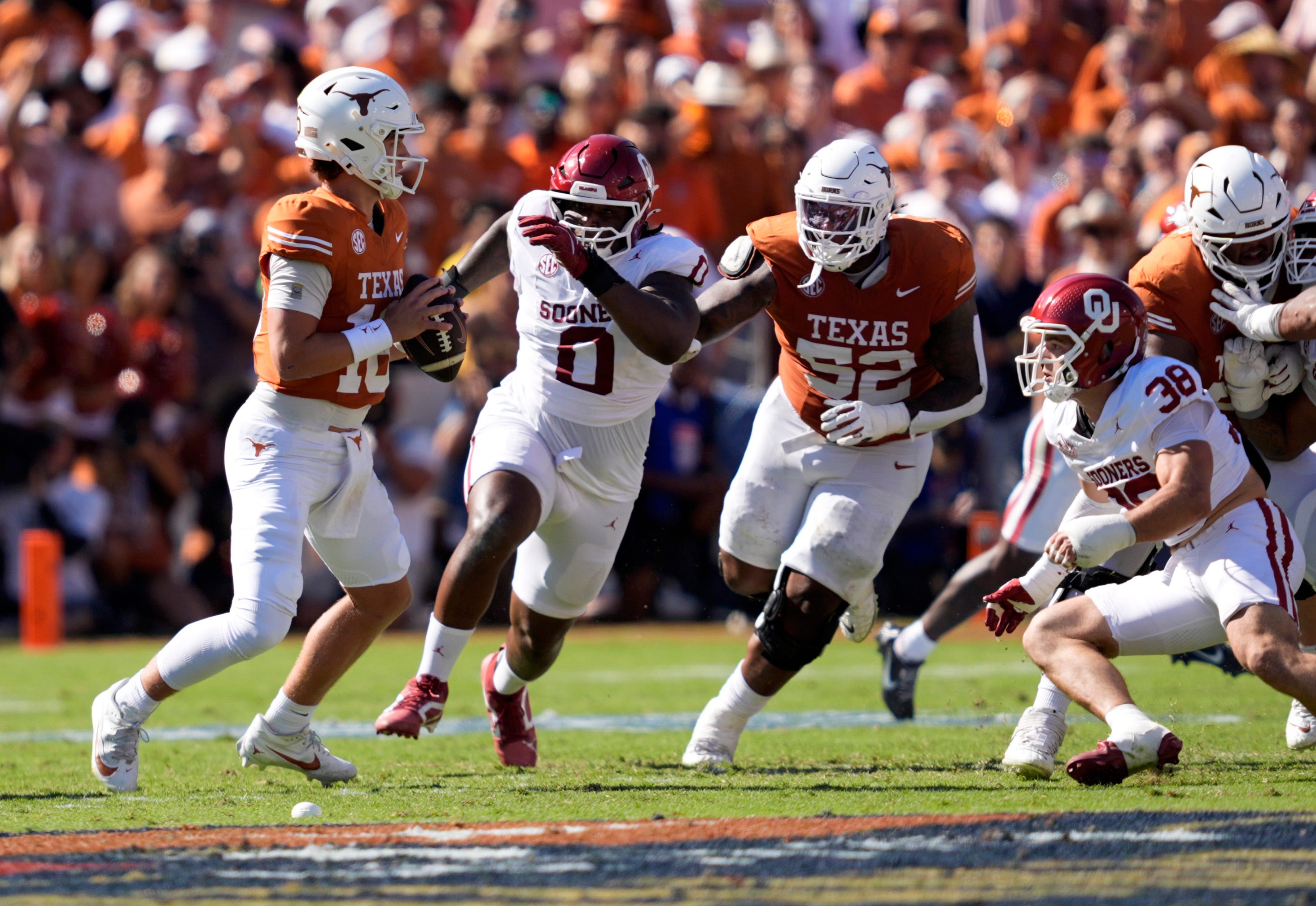
Arch Manning’s sophomore season has been picked apart from every angle—his mechanics, his decision-making, his ability to handle pressure. But one factor remains under-discussed: the system around him. For all the talk about what Manning hasn’t done, Texas’ protection and personnel have quietly shaped the story of his season more than any throw he’s made.
Protection problems are defining manning’s learning curve
Through seven games, Manning has been pressured on nearly 40 percent of his dropbacks, one of the highest rates among SEC quarterbacks. The departures of four starting offensive linemen from last year’s playoff team left the Longhorns scrambling for chemistry. Steve Sarkisian’s offense thrives on timing and trust, but those rhythms break down fast when the pocket collapses in under three seconds.
Manning’s slow release isn’t just about hesitation. It’s often about survival. The young QB has been sacked 13 times this season (including six times against Florida). The line’s inexperience has forced him to drift backward, extend plays, and rely more on mobility than mechanics. When he’s had a clean pocket, his accuracy jumps to 71 percent, a number that mirrors the form he showed last spring.
A young cast still finding its footing
The receiving corps has been just as inconsistent. After losing Xavier Worthy and Adonai Mitchell to the NFL (their departures leaving a major void in the passing game entering the 2025 season), Texas handed major roles to underclassmen like Johntay Cook and DeAndre Moore Jr. Their talent is undeniable, but their chemistry is still forming. Missed routes and mistimed cuts have turned potential completions into incompletions, fueling the perception that Manning’s accuracy has regressed.
That inconsistency affects everything. It limits Sarkisian’s ability to open up the playbook and forces Manning into quick, short reads—a far cry from the deep-shot aggression the staff envisioned in August.
System over struggle
For all the criticism Manning receives, the problem isn’t just under center. It’s systemic—a young line still learning protections, a receiving group still learning spacing, and an offense still learning how to protect its most scrutinized player. Manning’s ceiling remains high, but until the group in front of him stabilizes, his growth will be measured in survival, not statistics.
Texas Longhorns News
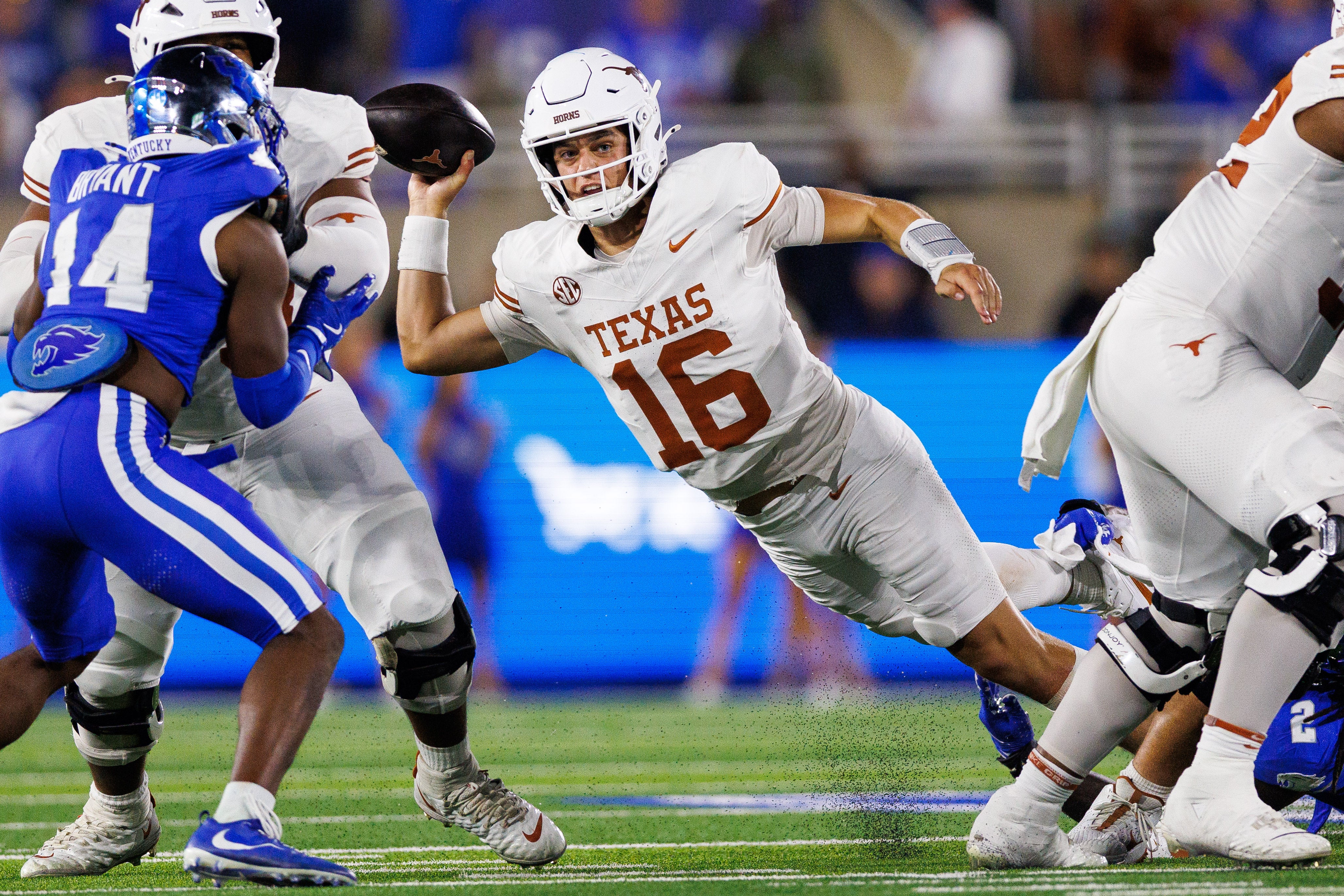
Despite having a down year, Arch Manning will most likely be a first-round draft pick
Arch Manning’s 2025 season has been uneven, but his arm strength, poise, and NFL traits keep scouts intrigued. Despite the criticism, his draft stock remains strong.


