
How much money are high school recruits being paid to commit?
College football programs have been paying players behind the scenes for a long time. Until this past year, when the rules were changed to allow players to profit off their name, image, and likeness (NIL), college programs had to work in the shadows to pay players. They often relied on intermediaries, AKA "bag men", to […]


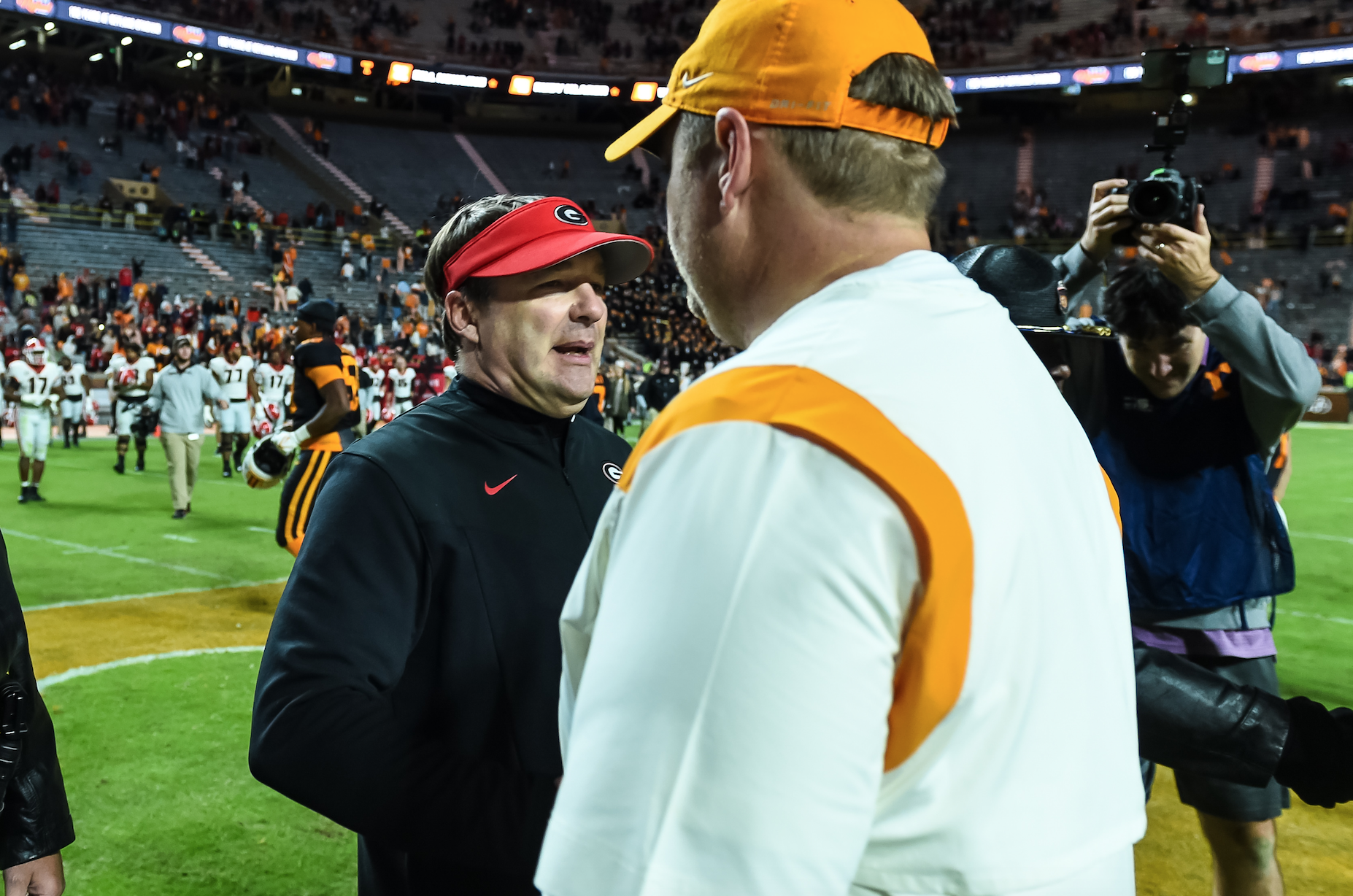
College football programs have been paying players behind the scenes for a long time.
Until this past year, when the rules were changed to allow players to profit off their name, image, and likeness (NIL), college programs had to work in the shadows to pay players. They often relied on intermediaries, AKA "bag men", to work out payments and distribute money.
But now that players can legally profit off their NIL, the paying of recruits has become a topic that more folks are willing to talk about publicly (for the record, colleges directly paying players is still prohibited by NCAA rules).
The biggest question usually asked is "how much money are high school recruits being paid to commit?"
That's a tough question to answer because it's a constantly moving number. There are a lot of factors involved. Are we talking about a three-star player or a five-star player? Who is footing the bill? What is the player's family situation?

Thanks to a recent report from 247Sports, we have a little more insight into what kind of cash high school players are receiving in exchange for their signatures on National Signing Day.
2022 four-star offensive lineman Earnest Greene, the No. 44 overall player in the nation (247Sports composite), gave 247Sports some insight into this recruitment.
Greene, a California native who signed with Georgia in December, told 247Sports that one SEC West team offered him $50k to sign.
According to his 247Sports recruiting profile, Greene held offers from three SEC West programs: Alabama, LSU, and Texas A&M.
It's been fairly well-publicized that the Aggies were paying some serious cash to recruits — rumors suggested that Texas A&M boosters committed $25 million to help with NIL deals.
Greene's comments seem to suggest that the $25 million figure is inaccurate, which would make sense.
It's hard to imagine paying a million bucks to a high school player who might not pan out.
Four-star cornerback Julian Humphrey noted that some schools — like Florida — focused more on the financial aspect in recruiting. While other programs — Georgia, where he signed — put the focus more on football while still mentioning NIL possibilities.
“When I was at Florida they were just saying, ‘NIL deals we can do this and we can do that,’” explained Humphrey. “A lot of schools did that. And I was listening, but mostly I’m going for football. Georgia, it was 'We need you here. But don’t forget we have Atlanta so NIL deals are here, too'. They had the right tone.”
Four-star quarterback Devin Brown, an Ohio State signee, is rated as the No. 5 quarterback in the nation. He's a kid that would definitely be on the upper end of any monetary offers from colleges.
Brown indicated that around $100k is as much as a high school recruit will likely see during the recruiting process.
“People are worrying about $100,000 at the most right now when, if you put the head down and work and go out and win the job, you can go make $30 million in four years," said Brown to 247Sports.
Programs are likely paying much more to keep players out of the transfer portal. That market truly is the wild west right now.
Paying recruits, however, is a market that was set a long time ago. This has been going for longer than most folks realize — and not every recruit is looking for a payday to commit — so it's not quite as crazy as the NCAA transfer portal has been over the last two years.
Featured image via Bryan Lynn-USA TODAY Sports


