
Should the Nashville Predators retain salary as part of a rebuild?
Earlier this week, Alex Daugherty wrote an article discussing a five-step plan to fix the Predators. One topic he covered was unloading bloated contracts using "sweeteners"–packaging a promising prospect with alongside a player with a hard-to-move contract to make the trade more palatable. We also discussed this on our "On The Preds" podcast. When Alex […]

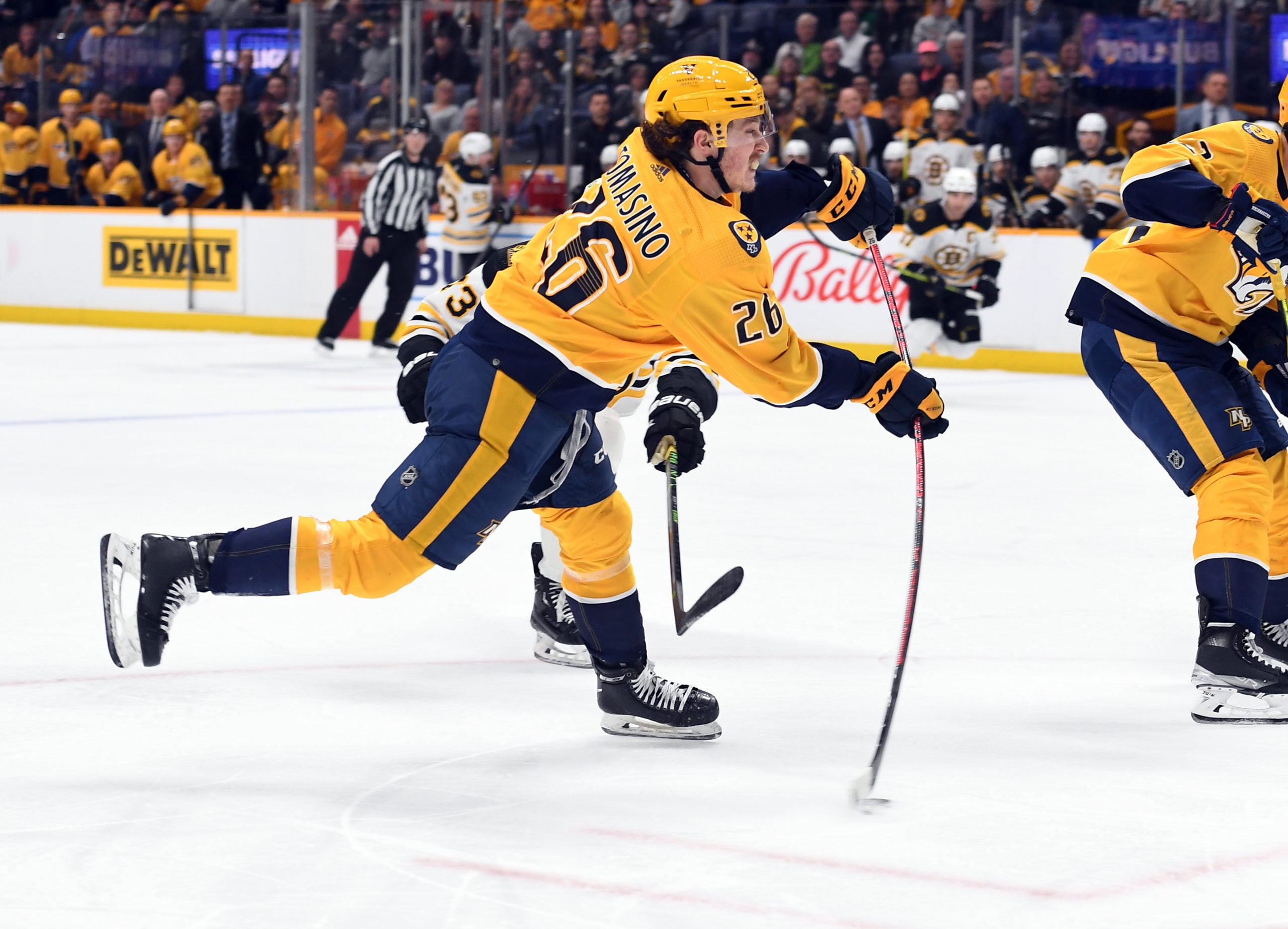
Earlier this week, Alex Daugherty wrote an article discussing a five-step plan to fix the Predators. One topic he covered was unloading bloated contracts using "sweeteners"–packaging a promising prospect with alongside a player with a hard-to-move contract to make the trade more palatable. We also discussed this on our "On The Preds" podcast. When Alex mentioned names like Egor Afanasyev and Luke Evangelista, it hurt me…right in the heart. Faced with the prospect of losing some quality prospects, my brain got to work. How could the Predators go through with Alex's fix without losing some players I can't wait to see at the NHL level? Then, it hit me like a ton of bricks–retained salary.
Retained salary sounds like it's a pretty bad thing for the Predators, right? When teams make a deal for a player and the sending team has to retain salary, it comes with a lot of negative connotations. There are several scenarios that result in salary retention. And, while none of them look very good when they happen, retaining salary can turn into something positive.
Let's look at how that's true.
First, you need to know that up to 50% of the AAV can be retained in any situation. For example, if a player with a $6 million AAV gets traded, the most the sending team can retain is $3 million. That's for the life of the contract. If the player is under contract for the remainder of the season, and then is set to become a free agent, that retained salary goes away at the end of the season. If the player has three years left, the sending team is on the hook for that $3 million in each of the remaining years of the contract.
Of course, that means it counts against the team's cap space. That's why it sounds so bad up front. Now, that can also reflect on the player and the general manager responsible for the deal. At some point, the player was performing at a high level, the general manager felt like it was sustainable and deemed the player a valuable part of the team for years to come. That's when a big contract happens. After awhile, something goes wrong: production drops, an injury could nag the player or get worse over time, coaching changes cause issues. Any number of reasons could lead to similar results.
At the end of the day, if another team is interested in the player, but not for the price, one of the easiest things a general manager can do is offer to retain salary. It lowers the price to a point the new team is willing to pay, but it also gets the contract, if not all the money, off the books. It may sting a little, but in the situation the Predators are in right now, it's for the best. Let me explain.
The Predators aren't performing up to the standard expected by the fans, the coach seems frustrated, and the General Manager seems ready to make deals. One criticism fans have had over the past few seasons is that young, talented players are misused. One example is Eeli Tolvanen, who's been doing quite well in Seattle after being waived in December. But the biggest outrage recently has been over Philip Tomasino, who played a full season in Nashville last year, only to be sent to AHL to start the season. One of the reasons given for this was that he needed top minutes to develop and the team couldn't give him top minutes at the NHL level.
This is where the appeal of biting the bullet and retaining some salary can really pay off. There are several long-term contracts with high AAV on the Predators books. Following that link will tell you all you need to know. But consider this, even retaining 50% on a few of those contracts frees up quite a bit of cap space. And, while the team may not have all of the cap space, they'll have enough to start playing Cody Glass, Philip Tomasino, Egor Afanasyev, Luke Evangelista, and Joakim Kemell in situations where they can develop offensively by playing more than 4th line minutes. Of course, it's because their contracts will be a mere fraction of what they've been paying for the other forwards to underperform. And, retaining salary instead of sending those prospects away as sweeteners, allows this to happen!
If the Predators truly want to rebuild, this is what it will take. Swallowing a bit of pride and carrying some retained salary on their books for a few years while the youth develop at the NHL level. That's an on-ice product I think people would want to see. There would be no "tanking", just young, talented players improving as we watch. Think about the New Jersey Devils and how they've turned around since beginning a rebuild. There's quite a bit of excitement around a young, talented team, even if they missed the playoffs for a couple of years.
As those retained salary contracts expire, the cap space will open up for the team to sign some bigger deals to complement the young core or keep the more valuable members aroudn even longer. That's what a rebuild is. Sure, there will be some higher draft picks that come along with this as well, but what should emerge is a strong, talented core of players that have developed together and have a desire to win.
The only thing that stands in the way is finding some teams that are willing to take a chance on a few players that have a lot to offer, just at a reduced price.
You can clear room at the NHL level while losing some up-and-coming talent, which will save you some cap space. Or, you can keep that young talent, save a little less cap space, and endure a few years of retained salary. At the end of the day, you just have to ask yourself, do you want 3-4 more years of what you've seen so far this season? Or do you want to see something different? Based on the reactions I've seen from fans recently, I think their minds are already made up. The only question is which path the team takes forward.
-featured image via Christopher Hanewinckel/USA Today Sports–


