
NCAA rule that could make Tennessee Vols' offense even more prolific has officially been passed for the 2024 season
A couple of new rules are officially coming to college football in 2024. On Friday, the NCAA announced that the two-minute warning and in-helmet communication rules have been approved. From On3: One player for each team can be on the field and wearing a helmet with the communication technology at a time. The helmets with […]


A couple of new rules are officially coming to college football in 2024.
On Friday, the NCAA announced that the two-minute warning and in-helmet communication rules have been approved.
From On3: One player for each team can be on the field and wearing a helmet with the communication technology at a time. The helmets with the communications tech in them will be marked by a green dot sticker on the back of the helmet, exactly how the NFL manages the identification. And in a final similar to the NFL, the communication from sideline to player will cut off at 15 seconds left on the play clock or when the ball is snapped, whichever comes first.
When news first broke that college football would be moving to this system, my first thought was that the Tennessee Vols, due to their up-tempo offense, wouldn't really utilize the system. The Vols are able to go fast because every player on the field is getting the signal at the same time.
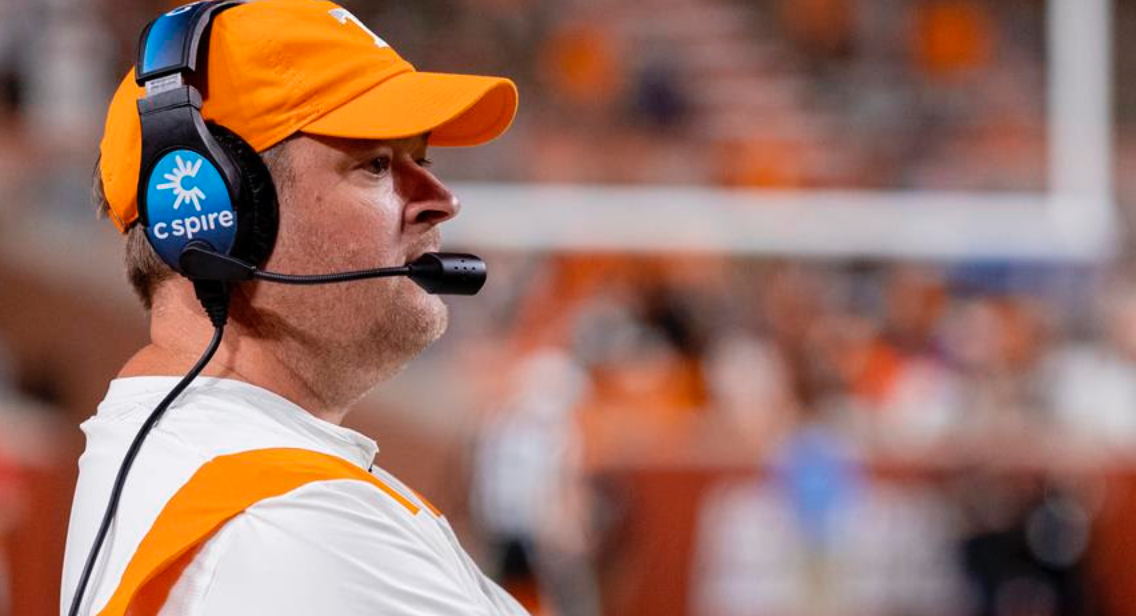
Tennessee head coach Josh Heupel was a bit coy earlier this spring when he was asked about the Vols' plans for the new system.
"Really have an idea, going to try and tinker with it on both sides of the football," explained Heupel in March. "Don't have as many available right now. I think that's true across college football, as what you'd like to be able to work it on both sides of the football every single day, every rep, with all the guys that are potentially going to be wearing it. But a little bit of trial and error. That will happen in practice and scrimmages, kind of figure out how to navigate it, where it is most advantageous to our program that it can be."
Ole Miss Rebels head coach Lane Kiffin was a bit more candid earlier this offseason when discussing the in-helmet devices, suggesting that it's like a "cheat code".
“It’s here and we utilize it in practice and [it's] our first time getting used to it," said Kiffin. “I think differently, especially after using it. I think it’s really like having a cheat coach in Madden, offensively. I don’t know if they’ve really thought, defensively, of what exactly that means. I think the assumption is, ‘Oh, you talk to the quarterback.’ There’s really more to it than that, especially the way we run our offense. Without giving too much into that, what it allows us to do with signals, with the whole process. I think it’s a cheat code, offensively. If you do certain things offensively.”
Ole Miss, like Tennessee, utilizes tempo. And while each program likely signals plays a bit differently, there are a lot of similarities between both programs and the way their offenses operate.
So you can bet that if Kiffin has figured out a way to make the process even more efficient, then Heupel (and likely anyone else that runs an up-tempo offense) has probably figured it out as well.
Kiffin didn't detail the specifics of how the new system is a "cheat code", but it seems likely that it involves a hybrid system of talking to the quarterback while also using sideline signals for certain players on the field.
We could see offenses that go even faster in 2024 thanks to the new rule. Additionally, the play-calls could become more efficient, reducing in the amount of missed signals that happen (which is bound to happen when teams are going that fast).
Buckle up. The Vols' offense in 2024 could be the most exciting offense we've seen yet under Heupel.
Former 4-star recruit who transferred from Florida throws major shade at the Gators
Not a good look at all for the Gators


