
Ohio State's championship run confirms there's a big change Josh Heupel must make in order to win a championship at Tennessee
The Tennessee Vols are getting closer to being a championship program under Josh Heupel, but as we've seen over the years in college football, getting over that final hurdle — going from a team that reaches the playoff to a team that dominates in the playoff — is the hardest part of the championship journey. […]

The Tennessee Vols are getting closer to being a championship program under Josh Heupel, but as we've seen over the years in college football, getting over that final hurdle — going from a team that reaches the playoff to a team that dominates in the playoff — is the hardest part of the championship journey.
Lots of coaches have flirted with national championships in the last 10 years — Brian Kelly, Chris Petersen, James Franklin, Marcus Freeman, Steve Sarkisian, etc — but only three active college football coaches have actually won national championships (Ohio State's Ryan Day, Georgia's Kirby Smart, and Clemson's Dabo Swinney).
Winning a national championship in college football is one of the hardest things to do in all of sports.
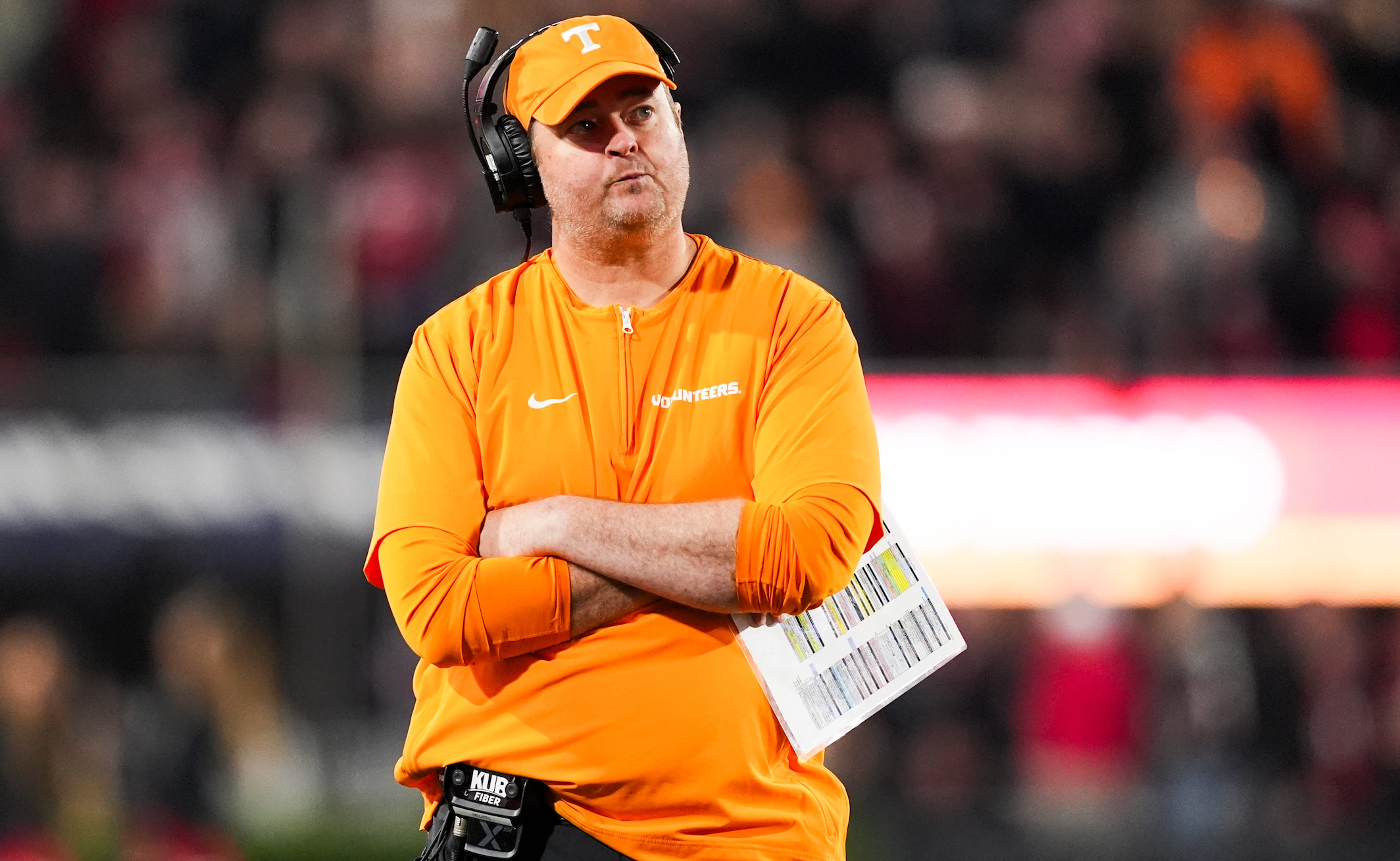
And if Heupel is going to win a national championship at Tennessee, there's a major change to his process that he needs to make.
Heupel needs to hand over play-calling duties to someone else.
Ohio State's national championship run, which concluded on Monday night with a win against Notre Dame, is proof that Heupel needs to make that change.
Ohio State's national championship run in 2024 coincides with Buckeyes head coach Ryan Day's decision to give up play-calling duties. Day hired former Oregon/UCLA head coach Chip Kelly to handle play-calling duties in 2024, clearing the way for Day to be more of a CEO head coach.
Ahead of the 2024 season, The Athletic detailed Day's decision to give up offensive play-calling.
From The Athletic: In this era of college football, it’s getting harder for head coaches to justify the time that goes into game planning on top of running a program, recruiting, dealing with the transfer portal and fundraising for NIL. It’s why Chip Kelly left his head coaching position at UCLA to become Day’s offensive coordinator at Ohio State. He wanted to focus on the football side.
Day knew that if he was going to achieve the level of success he demands of himself and fans expect in Columbus, he had to change. He had to look himself in the mirror, put his pride aside and give up play-calling. Not because he wasn’t capable, but because he needed to shift his focus elsewhere.
That decision has had a domino effect throughout the program. A loaded roster and coaching staff changes have Ohio State positioned to make a run at its first national championship since 2014, so much so that 16 writers and editors at The Athletic predicted the Buckeyes to win the national championship out of 28 surveyed in the preseason before the Buckeyes’ opener on Saturday against Akron.
“I think at the end of the season, you have to take a deep breath and think about what is going well and what needs to change in order to get where we want to be,” Day said.
Day knew that for Ohio State to take the next step, he had to give up play-calling. There's simply too much for head coaches to keep up with in this current era of college football while also calling plays (managing the roster is now a 24/7/365 job).
It's not a surprise that Day's decision led to Ohio State's first national championship in a decade. The last head coach who was his team's primary offensive play-caller to win a national championship was Florida State's Jimbo Fisher in 2013 (it helped that the Seminoles had the No. 1 defense in college football in 2013, thanks to Jeremy Pruitt).
Day isn't the only head coach in the last two years who has given up play-calling and seen his team have more success as a result.
Missouri Tigers head coach El Drinkwitz gave up play-calling after the 2022 season, leading to significantly more success for his team. Before he relinquished play-calling duties, Missouri averaged 5.6 wins per season. In the two seasons since Drinkwitz gave up those responsibilities, the Tigers have averaged 10.5 wins per season.
"I wasn't giving us the best advantage that we could have offensively to be successful," said Drinkwitz before the 2023 season. "And so it was my estimation that I needed to embrace my role more as the head coach and do the things that needed to be done there and turn over the play calling to somebody else."
Tennessee's two best offensive seasons under Heupel came in 2021 and 2022 when Alex Golesh was calling plays for the Vols.
Golesh confirmed after leaving Tennessee for USF in late 2022 that Heupel had "turned over" play-calling duties to him.
"Our relationship (Heupel and Golesh) was really good because there was no ego," said Golesh after taking the USF head coaching job. "There was a complete trust in each other. And when he turned over the play-calling to me, I think for him, it was a level of trust that he showed in me. I think I earned that trust. There's no time to talk in between plays. So generally I would get, if it was good, like a 'hell yeah' or if it was bad, a "what are you doing?'. But the relationship was awesome."
Quarterbacks coach Joey Halzle replaced Golesh as Tennessee's offensive coordinator ahead of the 2023 season. But according a report from ESPN's Chris Low last summer, it's Heupel who has been the main play-caller for the Vols the last two seasons.
I don't know Tennessee's exact process when it comes to play-calling, but it's obvious that the offense performed at a higher level when Golesh was serving as the primary play-caller. And we've seen evidence at other programs that head coaches giving up offensive play-calling leads to better results. Missouri quickly improved when Drinkwitz gave up those duties and Ohio State got over the hump and won a national championship (after several seasons of coming up short despite having a talented roster).
One reason Ohio State was able to reel off four straight wins in this year's College Football Playoff was because of Day's ability to motivate his team after a late-season loss to Michigan.
Getting every single player on the same page and keeping them motivated/locked in for big games is tough. It's arguably the most important thing a head coach can do. Nick Saban was great at it. Kirby Smart is great at it.
Heupel is good at it, too. But he's going to have to be even better at it to win a national championship (UT's had a couple of big games where they didn't seem completely locked in during the Heupel era). It's something that coaches have to nail every single moment of every single day during the season (motivation and utilizing bulletin board material is the one thing you hear almost every championship team in any sport talk about after a big win). Preparing as play-caller during the week while also trying to provide hourly motivation is a tall task for any coach. There are only so many hours in the day.
The results over the last 10 years in college football show that a head coach giving up play-calling duties yields better results. Heupel, just like Day, is always going to be heavily involved in the offense. However, having someone other than the head coach call plays is clearly the best approach.
So, what does this mean for the Vols? That’s a question that only Heupel can answer. Perhaps he needs to place more trust in Halzle. Or maybe Tennessee needs a new voice in the play-calling process. Whatever the solution is, it’s on Heupel to figure it out.
ESPN’s Kirk Herbstreit confirms suspicion about the role that Tennessee Vols fans played in Ohio State’s championship run
Well, now Vols fans know for sure


