
The one call against Tennessee that proves the Vols faced a hopeless situation with officials in Alabama game
There were plenty of frustrating calls — specifically some of the "no-calls" against Alabama — in the Tennessee Vols' loss to the Crimson Tide last weekend in Tuscaloosa. The questionable officiating led to a silent response from Vols head coach Josh Heupel that said more than enough. One of the more bizarre calls that went […]


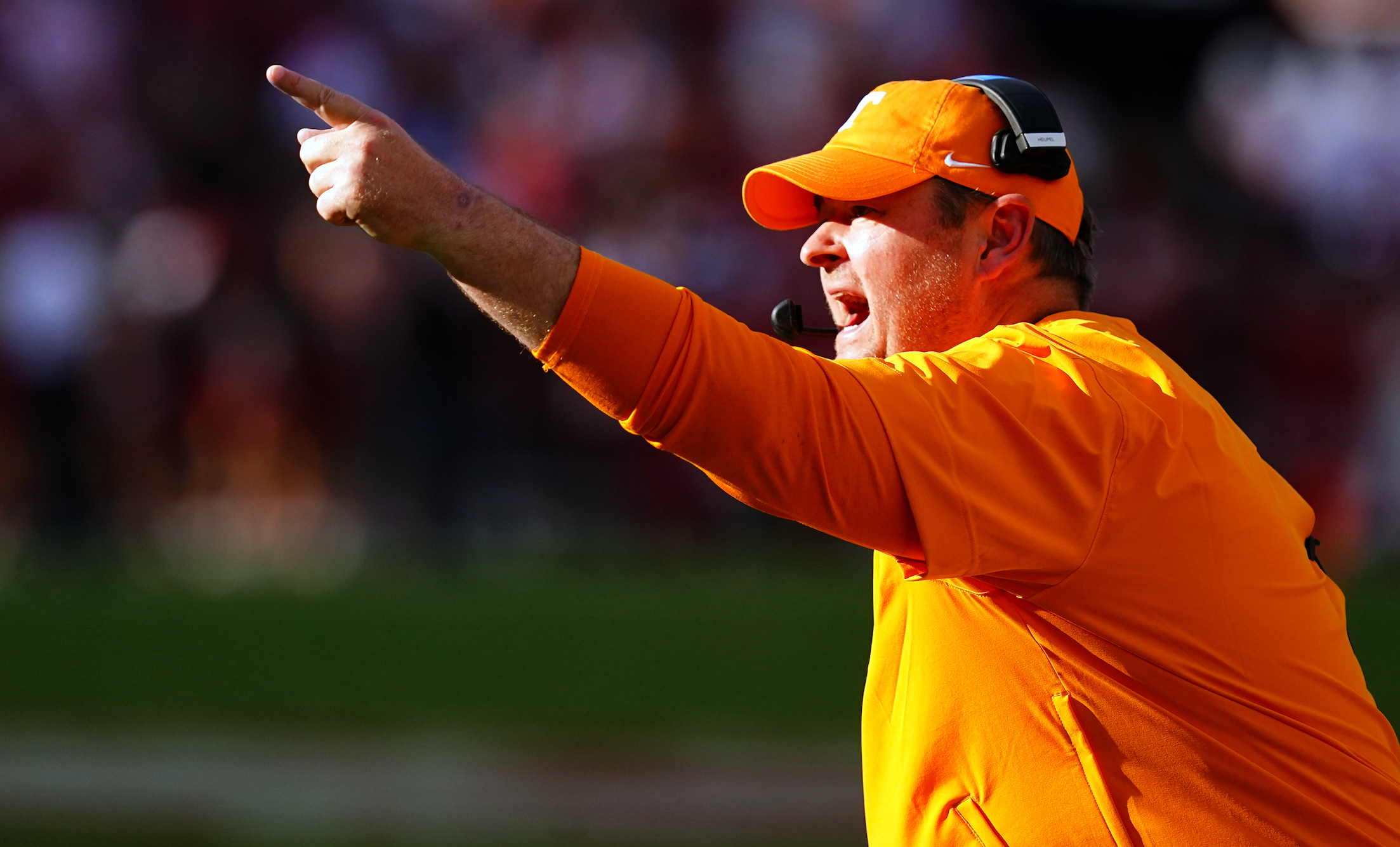
There were plenty of frustrating calls — specifically some of the "no-calls" against Alabama — in the Tennessee Vols' loss to the Crimson Tide last weekend in Tuscaloosa.
The questionable officiating led to a silent response from Vols head coach Josh Heupel that said more than enough.
One of the more bizarre calls that went against Tennessee was a "fair catch" on the Vols' first possession of the second half.
Tennessee true freshman running back Cam Seldon appeared to return a short kick to the 23 yard line. The ball was actually spotted close to where Seldon was tackled and the head official signaled first down (which would begin Tennessee's possession).
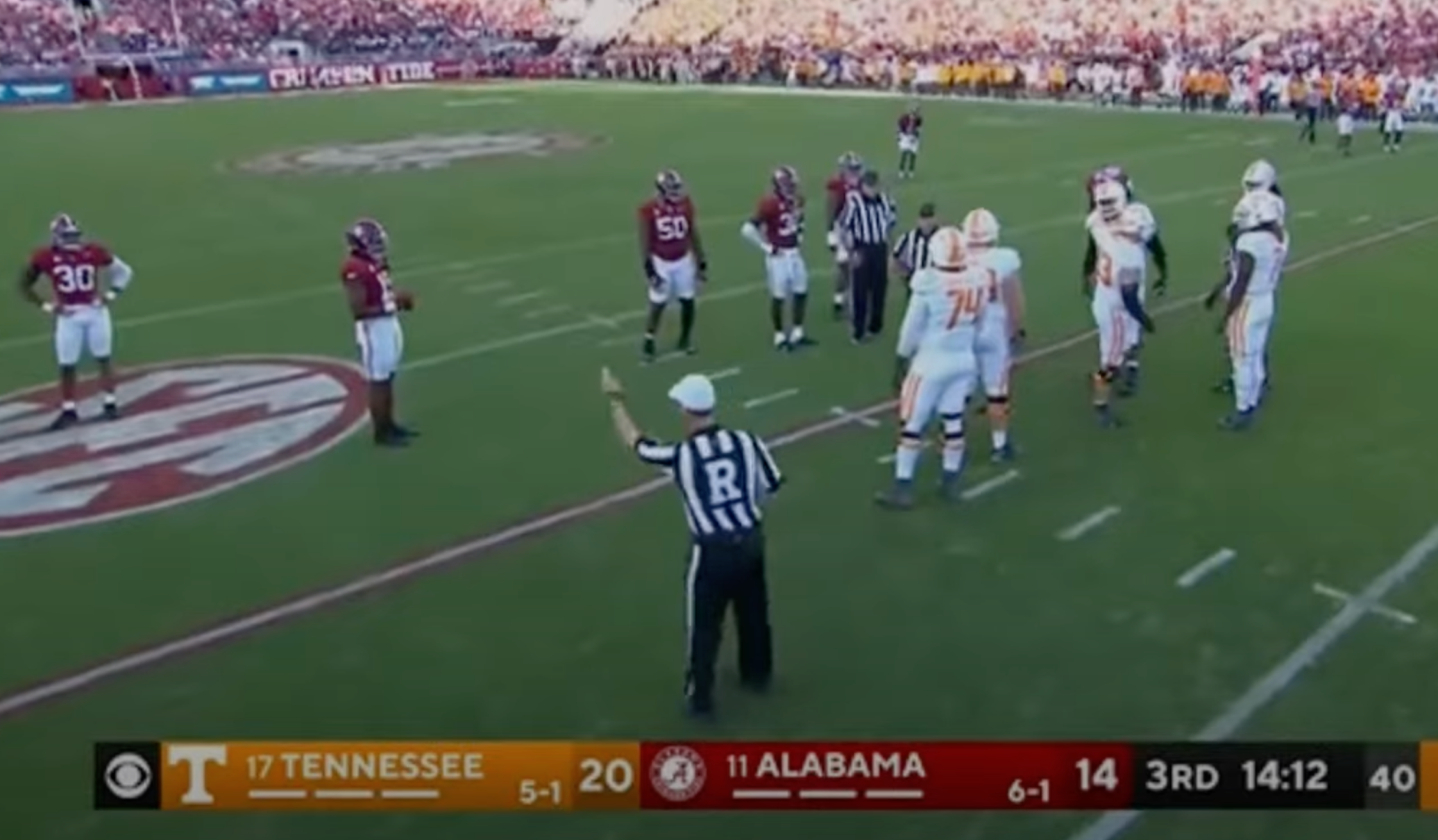
It's unclear exactly how things transpired from there because the CBS broadcast cut to various cameras, but it appeared that multiple officials put their hands to their ears after the first down signal had been made (to be clear, it seems that the fair catch was initially called on the field by the officials because the whistle blew before Seldon was tackled). The officials eventually walked the ball back to where Seldon made the catch and the play was then reviewed on the sideline. The official then noted that the call on the field was confirmed (which was that another player had signaled for a fair catch).
A player on the front line of Tennessee's kick return apparently pointed toward the ball and that's what was called by the officials.
"Letter of the law, anybody puts their hand up above the shoulder, that would signify a fair catch," said Vols head coach Josh Heupel on Monday when asked about the play. "We had a front-line guy that put his pointer finger up slightly above his shoulder."
Normally a fair catch caught inside the 25 would result in the ball being placed at the 25. But because Seldon attempted to return the ball (because he was completely unaware that a teammate had pointed at the ball) after the "fair catch" signal from his teammate, the ball was placed where he caught it.
Oddly enough, the same thing (pointing at the ball) happened on the first kickoff of the game (which was a touchback).
This is the exact same thing as getting a speeding ticket for going 46 MPH in a 45 MPH zone.
Everyone on the planet that watches football knows that the player on the front line wasn't signaling for a fair catch. But an official decided to make that call anyway. I'm not trying to breathe life into a conspiracy — though I'm pretty sure that's already happened — but it's pretty clear that Tennessee had more than just poor play in the second half to overcome if they were going to have a shot at beating Alabama last weekend.
Mark Stoops isn’t buying national narrative about Tennessee ahead of Kentucky’s game against Vols
Mark Stoops isn’t falling for it


