Tennessee needs to alter one aspect of their offseason approach if they want to compete for a national championship in 2024
If the Tennessee Vols are going to compete for a national championship in 2024, the first year of the expanded College Football Playoff, they'll need to alter one aspect of their offseason approach under Josh Heupel. The second half of Tennessee's season has revealed that depth, which was thought to be a strength for the […]


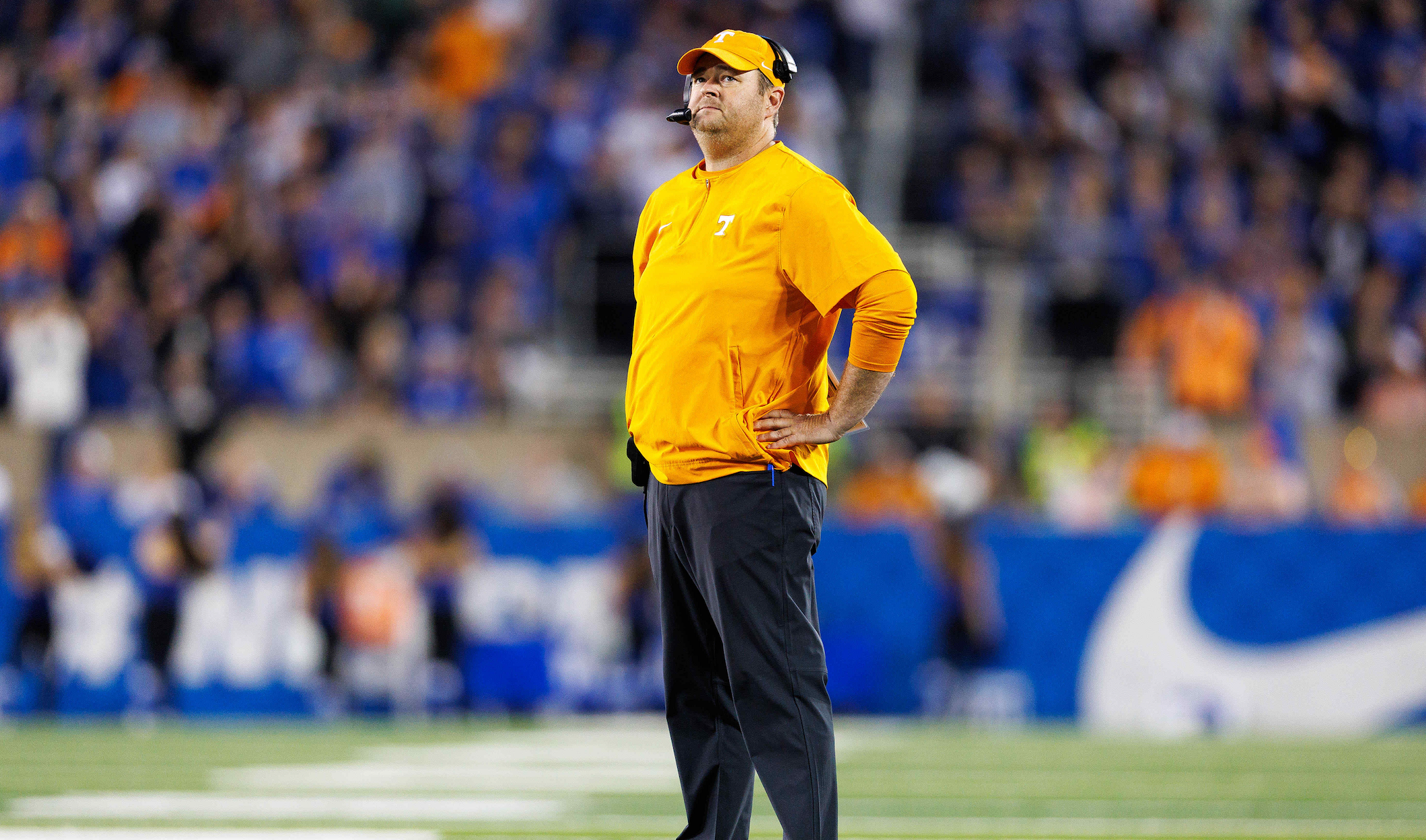
If the Tennessee Vols are going to compete for a national championship in 2024, the first year of the expanded College Football Playoff, they'll need to alter one aspect of their offseason approach under Josh Heupel.
The second half of Tennessee's season has revealed that depth, which was thought to be a strength for the Vols entering 2023 season, is still a major issue for the program.
And that's to be expected. Remember, the cupboard was completely bare when Heupel and his staff took over in early 2021. Tennessee has recruited well since Heupel's arrival, but the program simply isn't in a position where depth can be quickly built through high school recruiting.
The Vols have lightly utilized the NCAA transfer portal under Heupel. It's been mostly used to supplement the roster at obvious positions of need. And even then, Tennessee has been very selective in which players they take from the portal — mostly to preserve the "culture" that's been built at UT under Heupel.
That's somewhat understandable. Culture is certainly important. But it's not more important than the talent that's on the roster — especially in the SEC.
Deion Sanders, a Hall of Famer and currently the head coach at Colorado, put it best earlier this offseason.
“I don’t care about culture," said Sanders. "I don’t even care if they like each other, I want to win. I have been on some teams where the quarterback didn’t like the receiver, but they darn sure made harmony when the ball was snapped."
I'm not suggesting that Tennessee should view the importance of culture the same way that Sanders does, but those comments put its importance in perspective.
If the Vols want to compete for championships year after year, they either have to land top three recruiting classes every year — like Alabama and Georgia — or they have to heavily utilize the portal. It's that simple.
It's nearly impossible to depend on high school recruiting for depth in the portal era. And programs are showing that it's much more likely to find success with junior/senior transfer players as opposed to freshmen or sophomores that programs hope can develop into key players.
We saw in Tennessee's loss to Missouri how the lack of depth hurt the Vols. For example, UT relied on sophomore linebacker Elijah Herring, a lower rated three-star recruit out of high school, to play significant snaps against the Tigers. And it hurt Tennessee. Herring's lack of speed was obvious. And he was often in the wrong place in coverage. That was a major reason for Missouri running back Cody Schrader's historic day (over 300 total yards).
To be fair, it's not like the Vols are completely ignoring the portal. They signed eight players from the portal this past offseason, including linebacker Keenan Pili, who suffered a significant injury in Tennessee's season-opening win against Virginia (Herring was playing in Pili's place, essentially, against Missouri).
It's the Vols' approach to the portal that needs to change. Tennessee needs to look at every player in the portal and (for example) if there's a safety or a cornerback in the portal that's better than the players UT has on their roster, then the Vols need to heavily pursue that player. Just because the Vols might like the players they have on their roster doesn't mean they should ignore more talented players in the portal. And that should go for every position — especially on the defensive side of the ball.
It should also be the case at quarterback. In retrospect, handing Joe Milton the job after the 2022 season was a mistake. For one, it eliminated competition from the quarterback room since true freshman quarterback Nico Iamaleava was never going to be a viable option (at least early in the season). We already knew that Milton was a risk given his lack of consistency during the first five years of his career. And while he hasn't been bad this season, he hasn't been the playmaking type of quarterback that's required to win games in the SEC.
Other SEC programs have been better at adding to their quarterback room. And those moves have paid dividends. LSU added Jayden Daniels to their quarterback room ahead of the 2022 season despite having Garrett Nussmeier, Walker Howard, and Myles Brennan on the roster. The move was viewed as puzzling at first, but it proved to be one of the best decisions that Brian Kelly has made since arriving in Baton Rouge.
There are no sure things at quarterback (that applies to Nico, too…the ceiling is high, but like every quarterback, he'll have to prove it on the field). And not bringing in a quarterback to compete with Milton (a true competition…it's obvious that no one was going to transfer to be an obvious backup) likely cost the Vols some wins this season.
Tennessee has to be more active in the transfer portal this offseason. They can't roll with players just because they've been with the program for several years. Rewarding loyalty doesn't equal wins in the SEC. Having elite talent is the only way to win championships. Scheme is important, but the best talent is almost always going to win. The Vols are going to continue to come up short if they rely almost entirely on high school recruiting. Tennessee has no choice this offseason but to drastically alter their approach to the transfer portal if they want to be a serious contender in 2024.