
Tennessee Vols' win against Kentucky Wildcats highlighted a frustrating officiating issue that needs to improve
The Tennessee Vols' 28-18 win against the Kentucky Wildcats this past weekend highlighted a frustrating officiating issue that needs to be fixed. This isn't necessarily a complaint about calls vs non-calls — I understand and appreciate the human element of the game (sometimes). Instead, it has more to do with the consistency of officials and […]


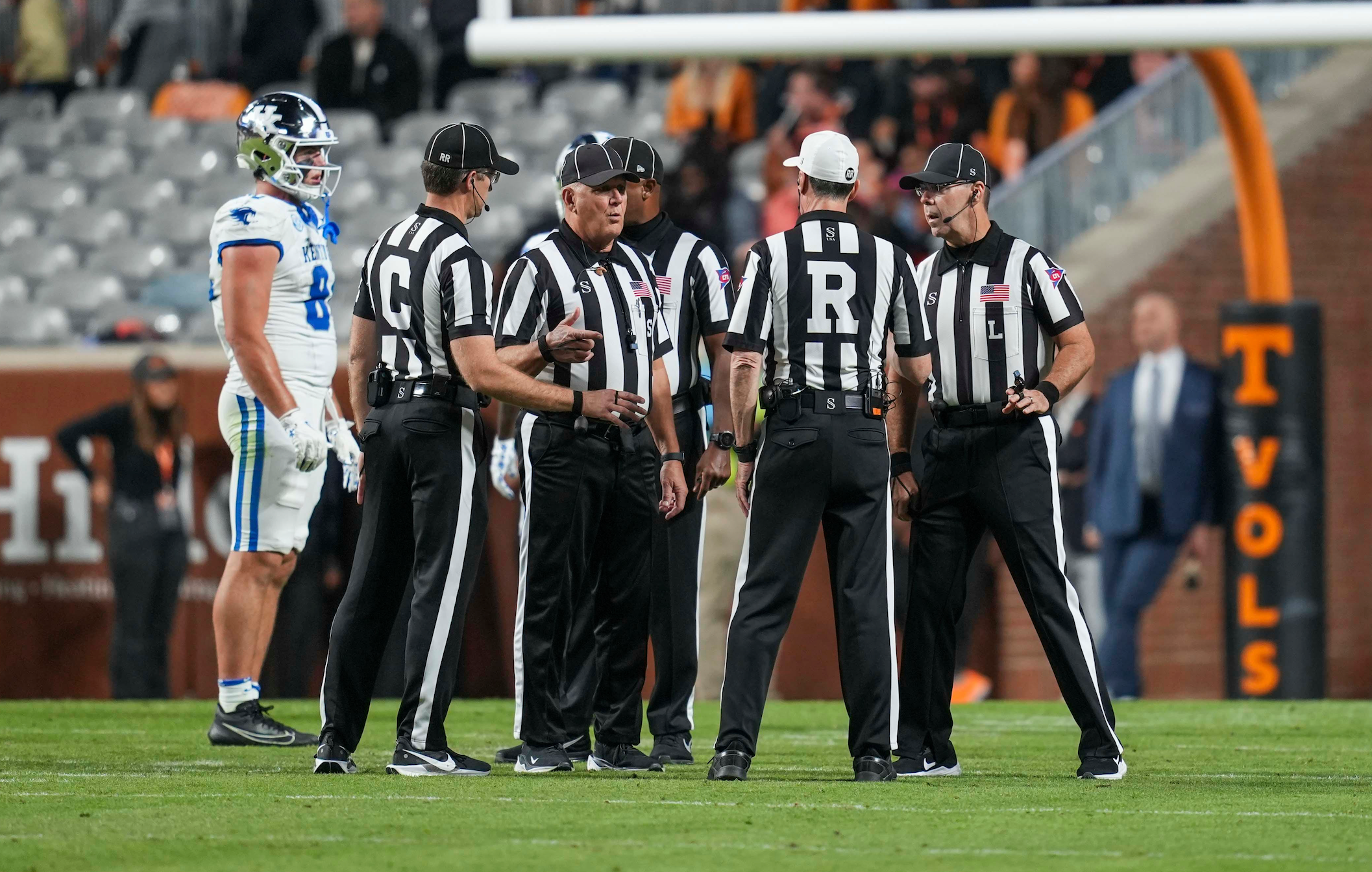
The Tennessee Vols' 28-18 win against the Kentucky Wildcats this past weekend highlighted a frustrating officiating issue that needs to be fixed.
This isn't necessarily a complaint about calls vs non-calls — I understand and appreciate the human element of the game (sometimes). Instead, it has more to do with the consistency of officials and the amount of time they waste (which makes college football games much longer than they need to be).
Late in the first half of the Vols' win against the Wildcats, Tennessee got the ball back with less than a minute remaining on the clock. The Vols quickly went to work offensively with the hope that they could get in field goal range or at least get off a Hail Mary attempt.
Vols quarterback Nico Iamaleava completed a short pass to running back Dylan Sampson that appeared to be close to a first down. The officials, however, completely botched the play. After initially spotting the ball close to the first down marker, an official backed the ball up a full yard, which meant the clock didn't stop for the first down (moving the ball back a yard also cost Tennessee an extra second or two on the clock).
Sampson was probably just short of the first down marker, but he definitely wasn't as short as the official thought he was. When it's that close, there should be a review. That would have given the officials a chance to make sure a critical spot was correct, while also preserving a few seconds on the clock. If they stop for a review when Sampson goes down, there would've been about 15 seconds left on the clock. The clock would've then restarted when the ball was spotted, which means Tennessee could've easily got off two more plays (maybe they're even able to get into field goal range).
Instead, Tennessee wasn't able to snap the ball until there were seven seconds left on the clock. Iamaleava picked up a first down, but time ran out once the clock started (that second or two that was wasted on re-spotting the ball would've allowed Tennessee to run one more play at the end of the half).
It's a long shot that the Vols would've scored in that situation even if the officials would've handled the end of the half cleanly, but at least they would've had a shot.
A much different scenario played out in the second half.
With the Vols clicking on offense late in the fourth quarter, the officiating crew stopped play for a review after Tennessee wide receiver Bru McCoy clearly picked up a first down.
It was obvious that McCoy picked up the first down — he was already past the first down marker when his foot went out of bounds. Stopping the play for a review wasted just over a minute of real time and it gave Kentucky's defense a break. The Vols ended up scoring on a Sampson touchdown, so it didn't cost Tennessee any points. But it easily could have. The officials interrupted the Vols' tempo for no reason in that situation. They couldn't be bothered to review an obvious bad spot in the first half as the Vols were frantically trying to move down the field, but they had no reservations about stopping play and unintentionally aiding Kentucky's defense late in the game.
If you watch many SEC games, you'll notice that officials are consistently inconsistent. And they often waste a significant amount of real time because they seemingly have no clue what they're doing.
For example, just before Tennessee got the ball back near the end of the first half, the officiating crew horribly botched an offsides call on Tennessee. After Vols edge rusher James Pearce jumped offsides, officials whistled the play dead with 46 seconds left on the clock. Within 10 seconds the head official made the offsides call, which moved the ball up five yards for Kentucky. Easy stuff, right?
Well, it took a full three minutes of real time before play resumed after that offsides call.
That's because the officials incorrectly started the clock and let it run all way down to 20 seconds before Kentucky head coach Mark Stoops wanted to know what the hell was going on. Then they decided to run 10 seconds off the clock because of the defensive penalty. Stoops had to remind the officials of the rules (again) before the game clock was finally reset to 46 seconds.
That's entry level officiating stuff. And that crew just couldn't handle it.
It feels like moments like that happen in every SEC game. Time is wasted, games are lengthened, some teams are screwed over, and everyone gets frustrated.
The SEC is a billion dollar product with subpar officiating. And that needs to change. Spend more on training for officials or pay better salaries (or do whatever it takes). Just do something. Poor officiating is a major problem in the SEC and it shouldn't be.
The SEC did the Tennessee Vols a big favor during the 2024 college football season
Vols aren’t complaining


