
New turf for Jets should mean less injuries
The Jets have a made a major change in the organization and it could pay big dividends for them in 2023 and beyond. It’s a franchise altering change that will affect the team for years to come and possibly turn around a franchise starved for a playoff berth for over a decade. It will change […]

The Jets have a made a major change in the organization and it could pay big dividends for them in 2023 and beyond.
It’s a franchise altering change that will affect the team for years to come and possibly turn around a franchise starved for a playoff berth for over a decade. It will change the way opposing teams view having to face the Jets at MetLife Stadium.
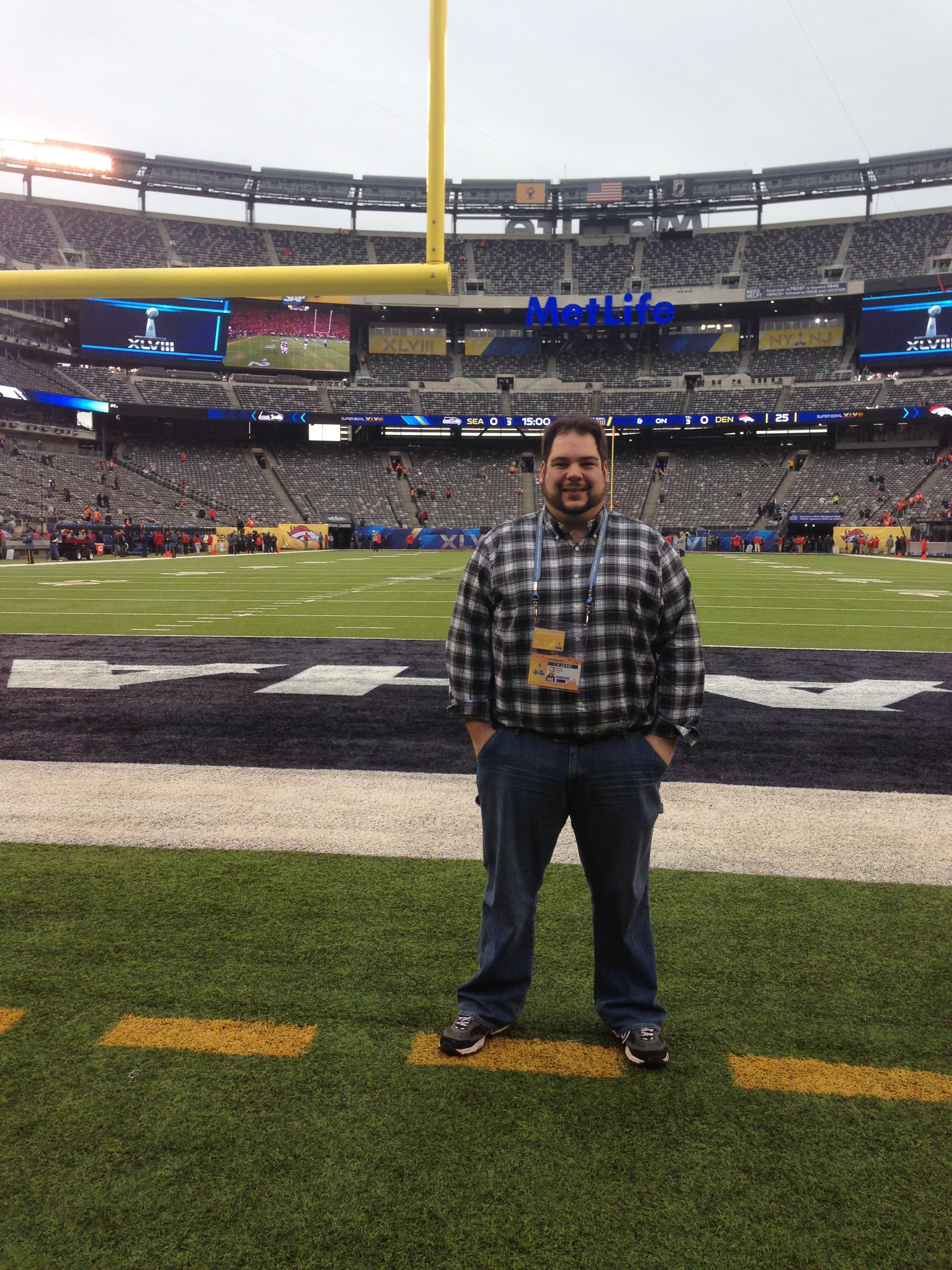
We’re not talking about the acquisition of Aaron Rodgers, but it does take place on the field…literally. MetLife is finally doing away with the current artificial turf and installing an updated and upgraded version that will make players, on the Jets, New York Giants and visiting teams alike, very happy.
The new turf was installed in March of this year and the hope is that the improved artificial surface will decrease the number of injuries that occurred on the old playing surface.
The Jets and Giants will now play on an updated version of FieldTurf called FieldTurf Core system, which is the first multilayer dual-polymer monofilament fiber. While very few of us knows what that means, if it leads to less injuries that can only be a good thing.
Recently, during an interview with Doctor Mike, former star wide receiver for the Jets and Giants Brandon Marshall spoke out about how he blames the playing surface at MetLife Stadium for his career-ending injury.
On the play that ultimately ended his career, Marshall chased a deep ball out of bounds and lost his footing. His legs went in two different, unnatural directions and he ultimately snapped his deltoid ligament in his ankle.
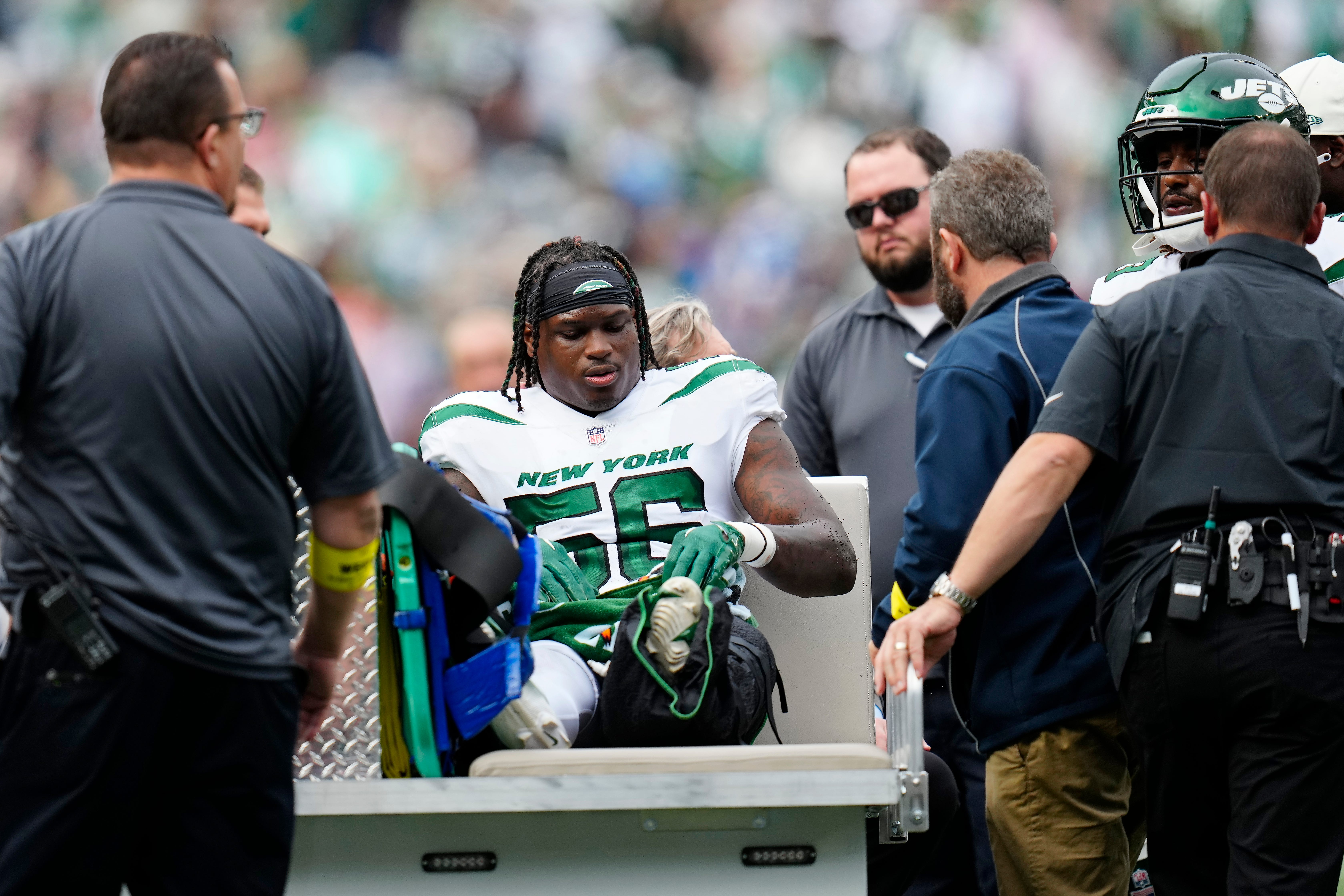
Marshall was carted off of the field with a season-ending injury that ultimately led his career to end not long thereafter.
Marshall said of the 2017 injury, “That was pretty much the last of me. I felt like I could’ve played a couple of more years, you know? That play was over. That’s really hard to do. That’s like a car accident. I knew it was over.”
MetLife Stadium’s old turf, the UBU Sports Speed Series S5-M, was widely criticized by players. The San Francisco 49ers saw a significant number of injuries, including season-ending knee injuries to Nick Bosa and current Jet Solomon Thomas, during back-to-back road games at MetLife Stadium in September 2020.
Former Jet and Baltimore Ravens cornerback Kyle Fuller tore his ACL in a Week 1 road game against the Jets last season, leading to critiques from head coach John Harbaugh.
"Everybody in this league should do everything they can to put the best surface out there," Ravens coach John Harbaugh said after that game. "How much is invested in the players who go out there and play, and our league really is a player-driven league, and we want those guys to have the best of the best, especially surfaces to play on. … That turf was matted down, it was packed down, it was a little tight."
Although the new surface is still an artificial turf, there are plans to lay grass seed in the future. The new grass seed must be in place in time for the 2026 World Cup Games that will be played at MetLife.
The fact that it took both the Jets and Giants this long to change the surface after so many players and coaches openly complained about it is disheartening. For a league that claims to care so much about player safety, there were too many players being carted off the field at MetLife Stadium for too long.
Hopefully, with the talent on the roster, a healthy Jets team can finally break this playoff drought.
Featured Image via Sam Greene/The Enquirer / USA TODAY NETWORK


