
Texas QB Quinn Ewers confirmed as polarizing QB prospect in 2025 NFL Draft as analysts debate where he will be selected
The journey of Texas quarterback Quinn Ewers has been an extremely unique, and enigmatic one, at times. Once viewed as one of the best quarterback recruits ever coming out of Southlake Carroll, Ewers was originally a member of the 2022 recruiting class. He opted to reclassify to 2021, and spent his first season with the […]

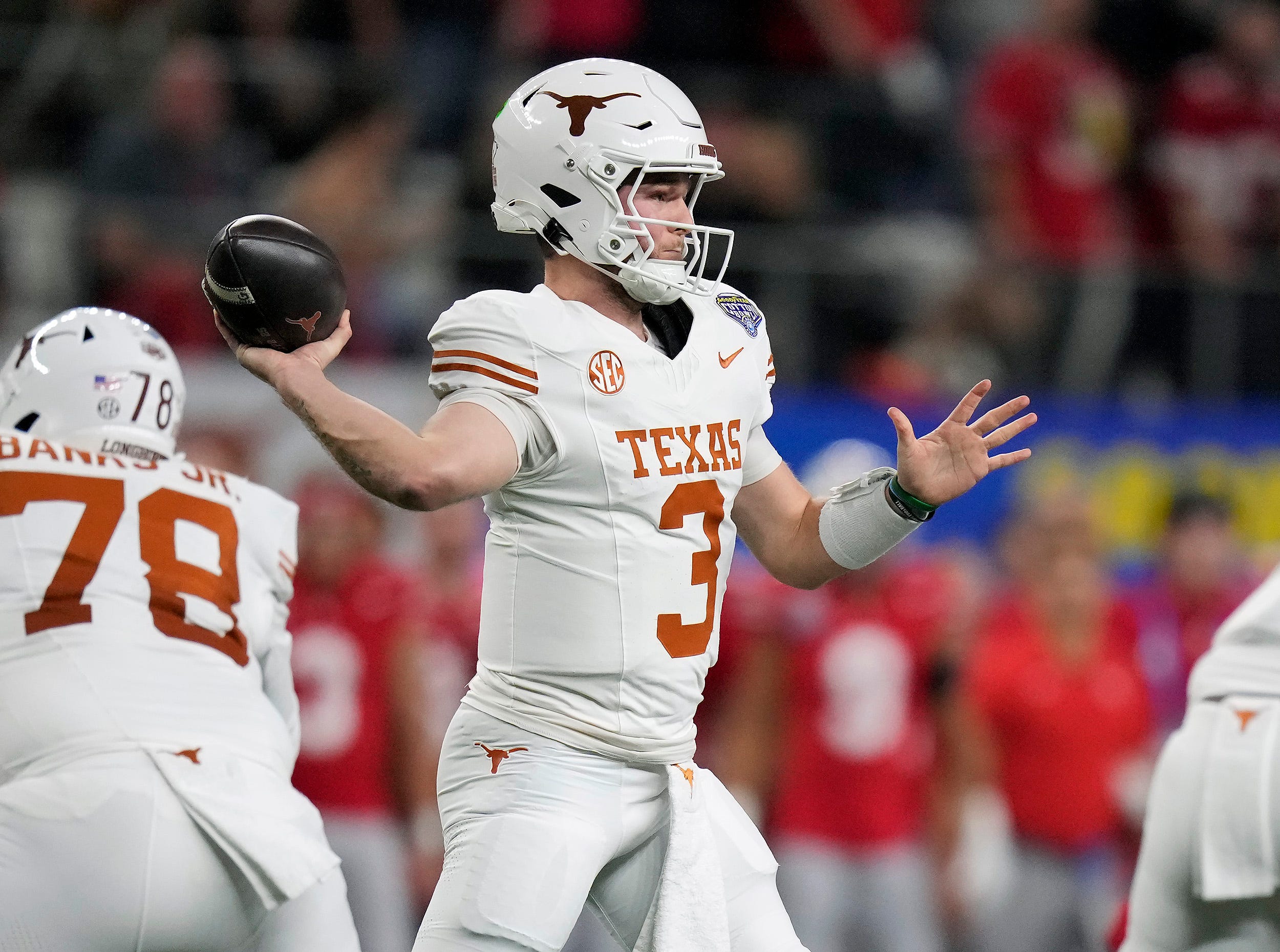
The journey of Texas quarterback Quinn Ewers has been an extremely unique, and enigmatic one, at times. Once viewed as one of the best quarterback recruits ever coming out of Southlake Carroll, Ewers was originally a member of the 2022 recruiting class. He opted to reclassify to 2021, and spent his first season with the Ohio State Buckeyes.
After that lone season, Ewers decided to head back home to the Lone Star State. During his three seasons with the Longhorns, Ewers threw for 9,128 yards and 68 touchdowns. Ewers also added another five scores on the ground while completing just shy of 65 percent of his passes. There was a lot of success during that stretch, but also some inconsistency and durability issues.
Ewers has now become one of the more polarizing quarterbacks in the 2025 NFL Draft class. Prominent NFL Draft analysts seem to be split on Ewers, some liking the assumed upside he brings to the table, while others are worried about various red flags. A big difference of opinion has even taken place amongst the A to Z Sports staff.
College Football managing editor Travis May is much more bullish on Ewers, while I am considerably lower on the Texas signal caller. Here are both sides of the debate.
Case for Ewers as an early-round selection
When a quarterback begins his college football career as one of the highest rated recruits in the history of the game anything shy of spectacular is viewed as complete failure. That's what has happened with the perception surrounding Quinn Ewers.
Ewers' arm talent was always evident at Texas when he was fully healthy. Unfortunately he just wasn't completely healthy that often. He missed multiple games as a redshirt freshman for Texas. He was dinged up with a shoulder injury for much of 2023. Then last season he was playing through a torn oblique, a high ankle sprain, and continued shoulder issues.
In 2023 he took down Alabama with a near perfect game, and took Texas to the College Football Playoff semifinals. Then after that–even fighting through all those injuries last season– Ewers managed to carry Texas to the SEC Championship, the College Football Playoff (again), and tossed over 30 passing touchdowns. Was his final season perfect? Absolutely not. But it was a wildly impressive step towards proving he's good enough to make it at the NFL level.
The fact that he's widely considered a day three quarterback is a bit strange given how good he looked at his best. And if his low moments were truly just attributed mostly to injuries (highly likely in most cases), then the ceiling on Quinn Ewers is much, much higher than the typical mid-round quarterback. A smart NFL team would give him a chance in round three, putting him on par with the typical QB5, 6 or 7 in most classes.
Case for Ewers to be a late rounder… at best
We can get excited over the natural arm talent of Ewers as much as we want, but that is something we have seen less and less of the last couple of seasons. That could be due to the amount of injuries he has sustained ( I believe it is), but that in itself, is a giant red flag. At 6-2 and 214 pounds, Ewers' playing weight was closer to the 200-pound range. His frame is frail, and is one of the biggest reasons for his durability issues.
Ewers is also really, really inconsistent managing inside of the pocket. He runs into too many sacks, and has next to zero ability to extend plays once protection breaks down. There is also a bad tendency to drop his eyes against pressure, making for a really easy target inside of the pocket. This isn't a player that will make much happen outside of structure.
From a pure arm strength perspective, Ewers isn't the same talented thrower he once was. The ball floats on him a ton, and he also now lacks the natural velocity to threaten tighter windows. There is a strong case to be made that Ewers' durability issues may have zapped some of that juice he once had in his arm. This is a tale of diminishing returns.
So we have a smaller quarterback who struggles to manage the pocket, has a deteriorating physical skill set, and struggles to stay on the field… and we want to spend an early pick on him? Even in a below average quarterback class, that is an unwise investment.
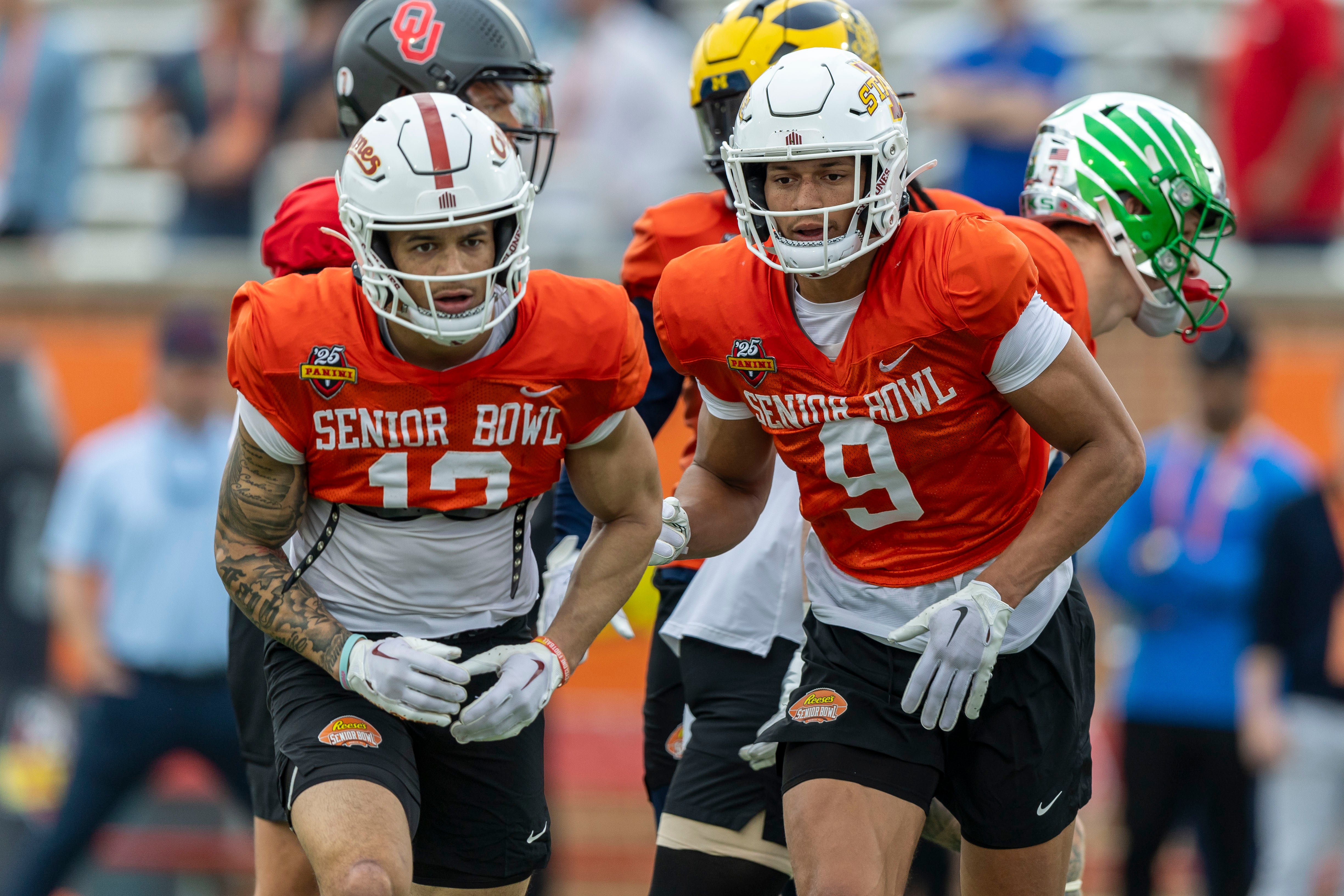
Jaylin Noel and Jayden Higgins are extremely different players, but that’s a big reason for Noel’s rise as a 2025 NFL Draft prospect
The unlikely rise of a couple of Iowa State pass catchers


