
A case for and against potential upcoming NFL rule changes | A to Z Sports NFL Newsletter
SUBSCRIBE to our emails here: By submitting this form, you hereby acknowledge and agree to receive email communications from A to Z Sports. We value your privacy and will handle your information with care. You will have the option to unsubscribe from our emails at any time through a link provided in each correspondence. Please […]


SUBSCRIBE to our emails here:
By submitting this form, you hereby acknowledge and agree to receive email communications from A to Z Sports. We value your privacy and will handle your information with care. You will have the option to unsubscribe from our emails at any time through a link provided in each correspondence. Please review our Privacy Policy for more details about how we manage your information.
A case for and against potential upcoming NFL rule changes
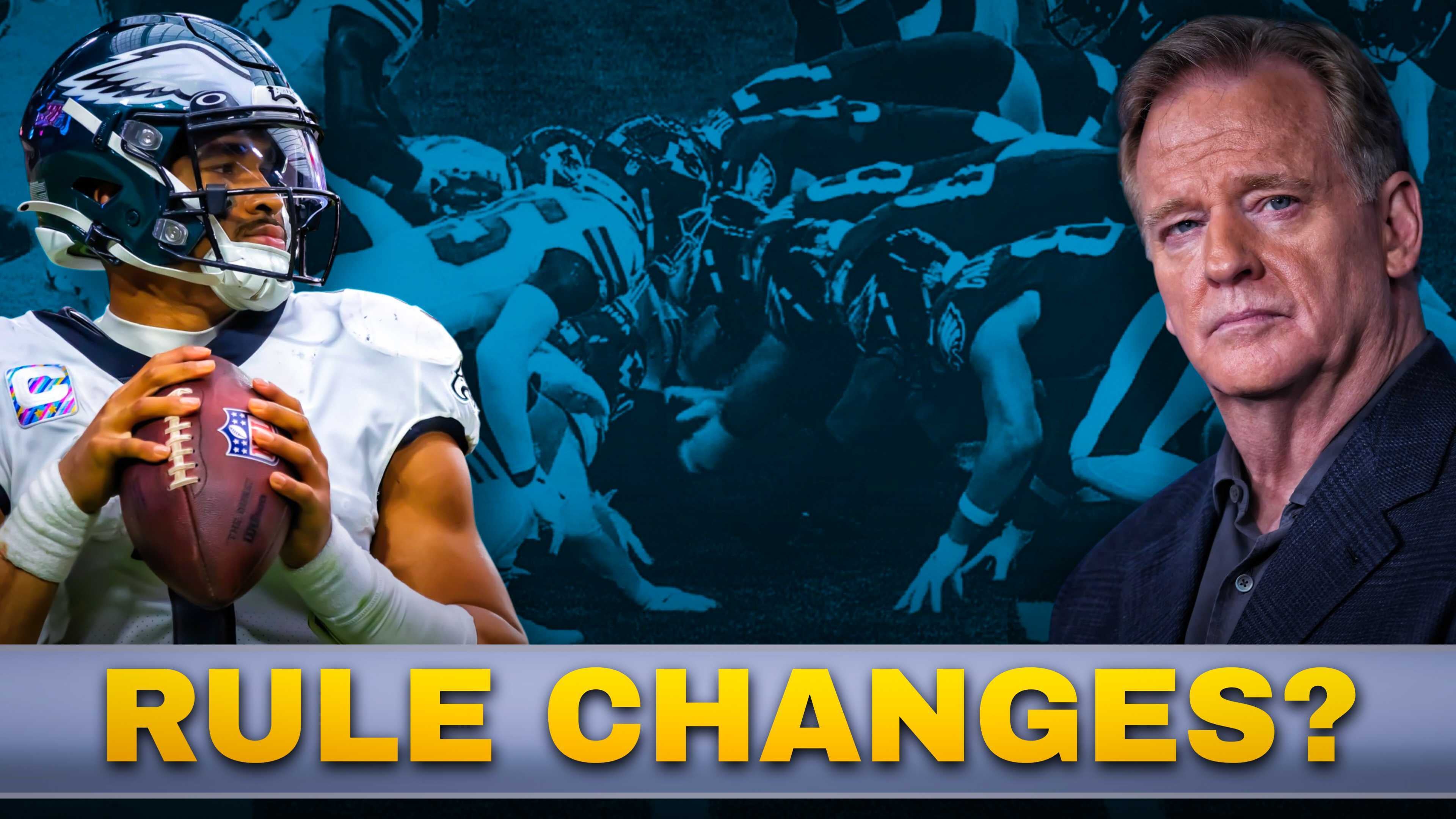
The NFL’s annual League Meetings are currently taking place now through April 2. Among other issues, the league owners and other personnel are discussing several potential rule changes that have been proposed by various teams. Like every year, it’s expected that some will pass while others will be shot down.
The full list of rule change proposals can be seen here. Several proposals are contentious. Below, we’ll go over the top five and determine a case for and against each.
Eliminate automatic first down as a penalty for defensive holding, illegal contact
Details: Defensive holding and illegal contact penalties are currently a loss of five yards and an automatic first down for the offense. This new rule would eliminate the automatic first down portion while keeping the loss of five yards. This rule change was proposed by the Detroit Lions.
Case against: The primary belief is that eliminating the auto first down would encourage defenses to hold on third-and-long situations since it would only be a five-yard penalty if caught. Getting burnt on third-and-20? Just hold your man and the down will be restarted at third-and-15. It’s a legitimate argument. However…
Case for: This penalty is much too favorable for the offense in an age when the rules already heavily favor the offense. Nothing is more frustrating for a defense than brief contact on a third-and-20 situation turning into a first down for the offense. In many cases, that automatic first down is unearned for the offense and is instead based on pure luck and happenstance. Instead, this should be a spot foul — if the contact happens seven yards downfield, it’s a seven-yard penalty and a replay of the down, with the first down only earned if the initial down’s distance was seven or fewer yards. Sure, a defender could purposely hold on third-and-20, but the play would be replayed at a shorter distance. The “hold them on purpose” strategy doesn’t really work because eventually you’re going to give them enough yards to easily pick up a first down.
Eliminate the ‘Tush Push’
Details: The rule change calls to “prohibit an offensive player from pushing a teammate who was lined up directly behind the snapper and receives the snap, immediately at the snap.” So it doesn’t necessarily prohibit pushing an offensive player in general — just at the snap behind the center. This rule change was proposed by the Green Bay Packers.
Case for: The best argument for eliminating this is consistency. Defenders aren’t allowed to push other defenders at all, so why should offensive players be allowed to do it? Also, there is a perceived injury risk with the play.
Case against: Simply put, this rule change is lame. First, there is no concrete evidence that the play carries any more injury risk than any other play. Sure, some players may complain about running it, but that’s an issue they should take up with their coaches. Second, this particular rule change doesn’t even call for consistency like mentioned above — it literally just calls for the ban of the Tush Push in an overly-elaborate fashion. If you want to ban it outright by banning pushing altogether, that would make more sense. But the wording of this proposal reeks of desperation coming from those who either can’t stop the play or can’t run it successfully (or both).
Change regular season overtime rules to match postseason
Details: In the postseason, overtime gives both teams a chance to possess the ball during a 15-minute period. In the regular season, the extra period is 10 minutes and the non-receiving team only gets a chance to match the first score if the first score is a field goal. This change was proposed by the NFL Competition Committee.
Case for: This is a no-brainer. Why didn’t they do this in the first place? If you want regular season games to mean something, play them the same way that you do playoff games.
Case against: I honestly cannot find a reasonable case against this rule change. Time doesn’t seem like a good answer, because the majority of fans would likely rather see their team receive a fair chance of winning an overtime game than see the game end a few minutes early. I suppose the only real argument is the inverse of the “case for” — leaving the regular season rules as is puts more weight and importance on postseason games. Though, that doesn’t sound like a strong argument if we’re hoping for consistency.
Change playoff seeding to match record rather than by division winner
Details: This change wants to “amend the current playoff seeding format to allow wild card teams to be seeded higher than division champions if the wild card team has a better regular season record.” Essentially, you win your division, you’re still in the playoffs no matter what, but that doesn’t necessarily mean you’ll be hosting a playoff game during the wild card round. This rule was proposed by the Detroit Lions despite the fact that they held the NFC’s No. 1 seed last season.
Case against: Simply put, win your division and you don’t have to worry about it. That’s how it’s been for years. Winning your division is something to be celebrated in the NFL, and that’s why intra-divisional rivalries have been so strong in this league — perhaps stronger than any other pro sport.
Case for: In 2024, all three of the NFC’s wild card teams finished with better records than the Nos. 3 and 4 seeds. And yet all three wild card teams had to play on the road in the first round of the playoffs due to not winning their divisions. Is that fair? Why should teams be punished for playing in more talented divisions? Also, remember when the 2020 Washington Commanders won their division at 7-9? Why the heck was that team rewarded with a home playoff game? Changing the seeding doesn’t necessarily affect the importance of divisions, either — if you win your division, you’re still in. You just don’t get a guaranteed home playoff game.
Change kickoff dead ball line to 35-yard line, can declare onside kick at any time if trailing
Details: This change “a) modifies the alignment requirements for receiving team players in the setup zone; (b) changes the dead ball spot after a touchback to the 35-yard line if the ball lands in the end zone and is downed in the end zone by the receiving team or goes out of bounds behind the receiving team’s goal line; (c) changes the alignment requirements for the kicking team on an onside kick; and (d) permits the kicking team to declare an onside kick at any time during the game if trailing its opponent.” This was proposed by the NFL Competition Committee.
Case for: Last year’s new kickoff rule has received mixed reviews. Those who like it believe it reinvigorates the kickoff game by changing the strategy, while those who hate it mainly just want the play to go back to the old rules from many years ago. But the fact is it’s simply not going to go back to the way it was. So this is likely a good middle ground — changing the touchback to the 35-yard line will likely discourage kickoff teams from purposely kicking the ball in the end zone, meaning more return plays and, ultimately, more chances for exciting football. That’s a good thing. Also, the onside kick portion is an improvement — previously it could only be done during the fourth quarter, but what if you’re trailing big time and need to run an onside in the third?
Case against: The 30-yard line was already a drastic switch from the previous 25-yard touchback. Now you want it to be the 35? Where does it end? If anything, this rule change feels like a slippery slope to eliminating kickoffs altogether due to teams being sick of them. But kickoffs have provided so many iconic moments over the years that eliminating them would be a bummer. As for the onside kick portion, there’s no strong argument against it, but why not just allow teams to run them at any time? Who cares if they’re trailing? This is the pros, not peewee football.
A to Z Sports’ site-wide 2025 mock draft
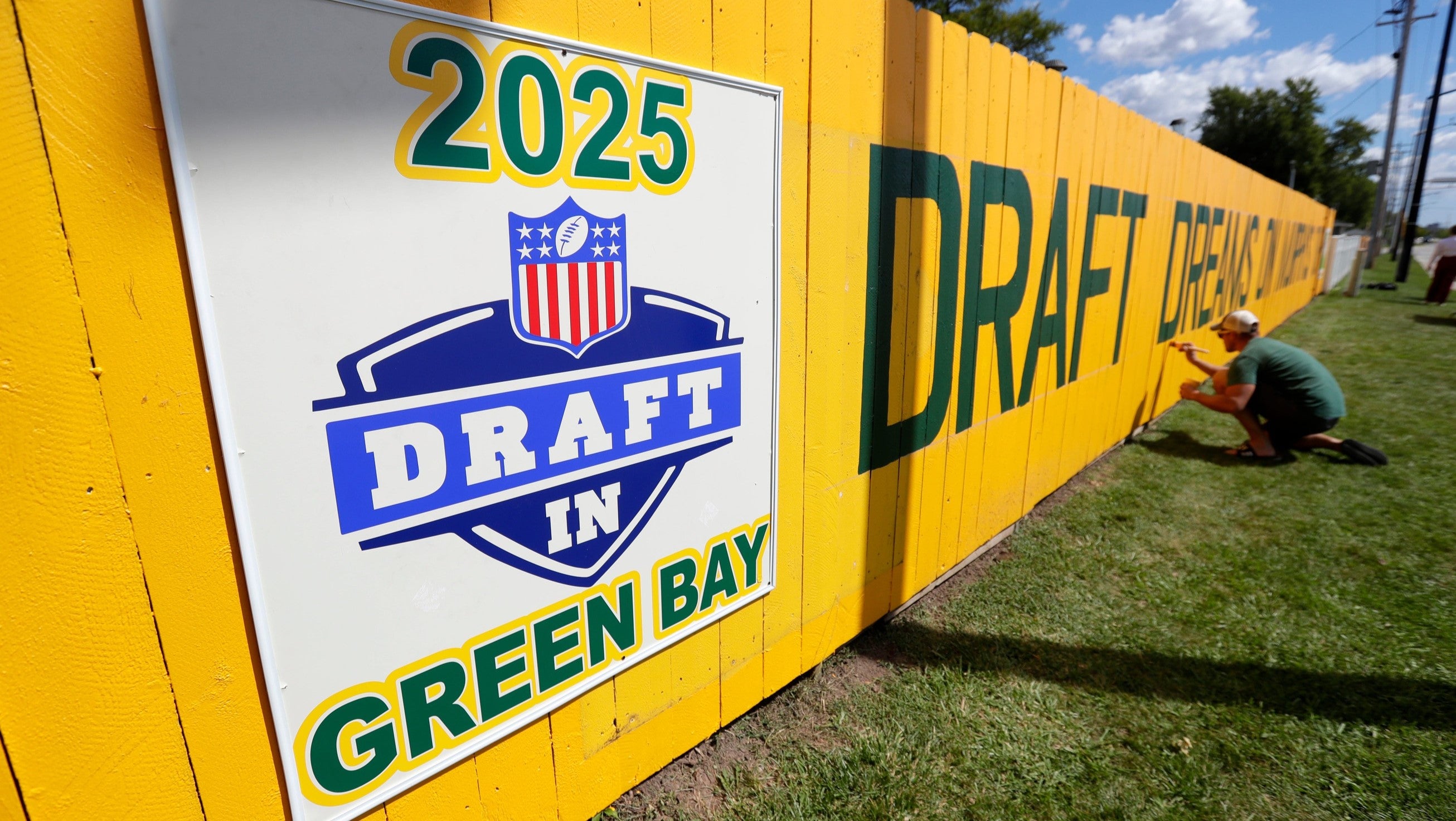
The mock drafts keep rolling as we still have a little less than a month to go before the real thing. A bunch of our writers at A to Z Sports recently put together a site-wide 2025 mock — no trades or funny business, just team beat writers picking the guy they think their respective squad will take. Let’s look at some highlights:
Tennessee Titans, No. 1: QB Cam Ward, Miami Hurricanes: “Taking Cam Ward at No. 1 is so much more than just taking the best QB of the bunch; it’s about taking a quarterback prospect who is in every way worthy of a first overall selection. He’s not without his warts, but you simply don’t find many players with his creativity and mental acumen. He plays smart and strong in the pocket, and is very difficult to bring down. He’s got enough arm talent and athleticism to thrive at the NFL level.” —Easton Freeze
Las Vegas Raiders, No. 6: RB Ashton Jeanty, Boise State Broncos: “The Raiders had a historically bad offense in 2024, and knowing Pete Carroll, the Raiders will surely want to run the ball a ton in 2025. Getting the best running back in the best running back class would be a good start, especially when you look at what their RB class currently looks like.” —Justin Churchill
Dallas Cowboys, No. 12: WR Matthew Golden, Texas Longhorns: “I’m just not sure the Cowboys can afford to pass on wide receiver in the first round. Golden’s game would make CeeDee Lamb’s life much easier as he’s more than just a speedster. He’s a legit route runner that could make an impact right away as a No. 2 on Brian Schottenheimer’s offense.” —Mauricio Rodriguez
Pittsburgh Steelers, No. 21: DT Derrick Harmon, Oregon Ducks: “The Steelers are going to go either DT or WR in round one, barring a slide from Shedeur Sanders. The Steelers would prefer Kenneth Grant, but the way this board fell, it has them taking their second-best option via Harmon. A giant nose tackle, with Keeanu Benton likely to kick outside, Harmon can immediately step in as the starting 1-tech and get the Steelers' defensive line back on the track like they want.” —Rob Gregson
Green Bay Packers, No. 23: EDGE Shemar Stewart, Texas A&M Aggies: “I don't see a world where Stewart is available and the Packers bypass him. He is the exact type Brian Gutekunst loves: Absurdly athletic, extremely high potential, and certainly has his best football ahead of him. The lack of productivity might concern Packers fans after underwhelming experiences with this prototype, but in Stewart's case it was closely related to what he was asked to do in Texas A&M's defensive scheme. Edge is a short- and long-term need for the Packers, and getting a potential future number one defensive end later in the first round would be an ideal outcome.” —Wendell Ferreira
Kansas City Chiefs, No. 31: S Nick Emmanwori, South Carolina Gamecocks: “Even with the board falling so that some offensive tackles are available, I'm going to go against the grain with this pick. The Raiders have a major weapon in TE Brock Bowers for the foreseeable future. The Broncos added TE Evan Engram in free agency. The Chargers selected Michigan TE Colston Loveland in this draft. Adding an elite athlete like Emmanwori, who can be a true coverage mismatch against tight ends and big slot receivers, seems like a good strategy for the Chiefs. Beyond the appealing coverage matchups, he can be a three-level defender and chess piece for Steve Spagnuolo's defense. Dime linebacker, edge rusher, deep safety — you could really see it all from Emmanwori.” —Charles Goldman
Philadelphia Eagles, No. 32: T Josh Conerly, Oregon Ducks: “The Eagles pride themselves in having one of the best offensive lines in the NFL and left tackle is the most important position. Of course, the Eagles have Lane Johnson locked in until 2027 but whether or not he plays out his contract remains to be seen. Now could be a good time to invest in their future at the position and Josh Conerly would be a perfect fit. The former Oregon Ducks product enters the draft after playing 700 snaps at left tackle while allowing only one sack in 2024. He also has the skills to play right tackle. Coach Stoutland will have a field day with him.” —Kelsey Kramer
A to Z Sports’ Initial First Round Mock Draft for the 2025 NFL Draft: Cam Ward stays in the South, Commanders land a steal, and more
The first days of April are just around the corner, which means the NFL world is in full-on draft mode, and it'll only continue to ramp up from here. Therefore, it's time to put out our first site-wide, first round mock draft of the offseason. Like last year, there won't be any trades or anything […]
Only A to Z Sports newsletter subscribers get the rest of this email, which has the latest NFL news and more.
Don't miss out on next week's full newsletter: SUBSCRIBE to our FREE weekly NFL newsletter to receive updates on your favorite NFL team and the rest of the league straight to your inbox.
By submitting this form, you hereby acknowledge and agree to receive email communications from A to Z Sports. We value your privacy and will handle your information with care. You will have the option to unsubscribe from our emails at any time through a link provided in each correspondence. Please review our Privacy Policy for more details about how we manage your information.


