
Important lesson Bills learned during Stefon Diggs saga could be major blow for James Cook's hopes for top contract
James Cook wants to get paid. The Buffalo Bills, for their part, would like to play him. The difficulty here lies not in interest but in agreeing on the expected cost of retaining his services after his fourth and final season of his rookie contract. As a result, it’s been an uneventful spring for Cook, […]


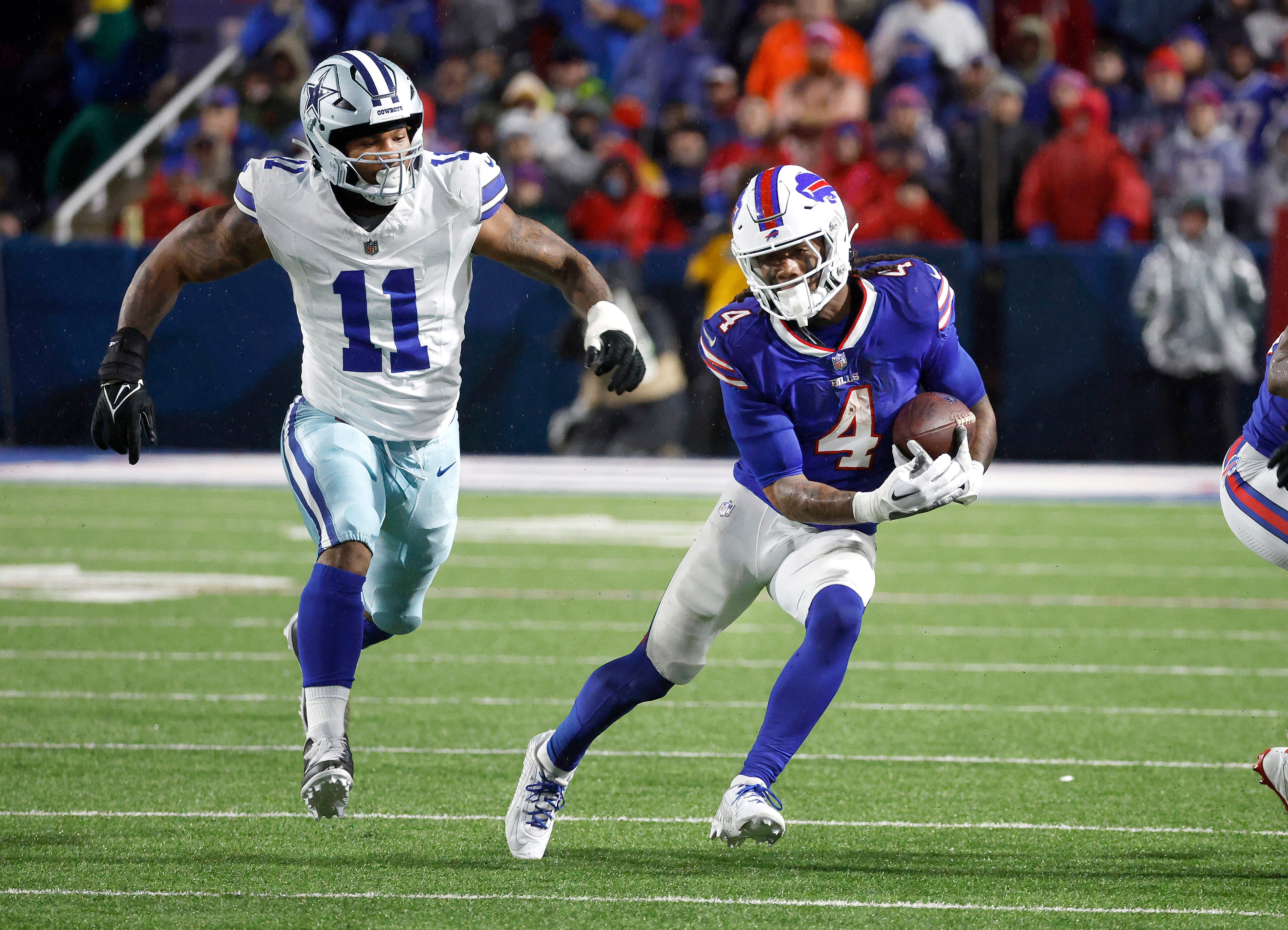
James Cook wants to get paid. The Buffalo Bills, for their part, would like to play him. The difficulty here lies not in interest but in agreeing on the expected cost of retaining his services after his fourth and final season of his rookie contract. As a result, it’s been an uneventful spring for Cook, mainly because he hasn’t been around the Bills as they work through the foundational periods of their offseason work while campaigning for that new deal with the Bills — until today.
Any time that a team finds themselves mired in the politics of contract negotiations, it’s a bummer. In a perfect world, these contract dealings would sort themselves out amicably and expeditiously. But we don’t live in a perfect world. Cook’s dealings this offseason have been intense through the public eye — he’s not shying away from making his position known.
There’s just one problem for Cook in an effort to strong-arm the Bills in negotiations. He’s picking his fight with the wrong franchise at the wrong time. This is a Bills offense that elected to take less talent into the season at wide receiver just one year ago after trading away wide receiver Stefon Diggs. Diggs had yet to play a down on the contract extension he signed with the team when dealt but the Bills took the dead cap charges on the nose anyway. They traded Diggs and subsequently embraced an “everybody eats” mantra. There were some transitional struggles, sure. Buffalo ultimately traded for Amari Cooper, too.
But Josh Allen ultimately played the most efficient football of his career in 2024. He won the NFL’s MVP award, the team averaged 31 points a game, and the offense scored 29 points in their AFC Championship Game loss against the Kansas City Chiefs.
If I’m the Bills, the Stefon Diggs transition is all the affirmation I need that my quarterback is the engine that drives the offense with star players and/or role players alike. Allen’s development and maturation are now carrying him through the prime of his career. He’s always been a player capable of putting on the cape at a moment’s notice but the consistency and efficiency we’re seeing from Allen far transcends what any individual skill player brings to the table for Buffalo’s offense.
The Bills, to their credit, acted accordingly this offseason by landing a monster contract extension with Allen. He’s now sitting at a $55 million annual average salary on the six-year, $330 million new deal and handsomely compensated for his services. With that contract serving as the keystone of Buffalo’s team-building, it’s all about selectively piecing the right chips at the right price around Allen. Cook can be a piece of that puzzle for the Bills, but at the right dollar amount. Cook’s aspirations are separated, significantly, from the reality of his role on the team and his role as an NFL running back.
Yes, Cook has been a productive player. He’s a quality starter and should be given credit for the work he’s done behind a mauling Bills offensive line while rushing for over 1,000 yards in each of the last two seasons. The fact that he’s done so while playing 55 percent and 48 percent of the offensive snaps in Buffalo the last two seasons highlights just how efficient he’s been with his carries. That is, if you choose to look at it that way. The other side of that coin is what's happening on the other snaps that is keeping Cook off the field?
If Cook wants to be paid like the Saquon Barkleys and the Christian McCaffreys of the world, the workload and responsibilities of such a price point requires closer to 80 percent snap share. Cook can argue all he wants that he doesn’t control the personnel groupings, but it isn’t as if this team has conspired against Cook to play him as a lesser player for no reason other than to keep his negotiating leverage down.
Cook is a limited player in pass protection, period. He’s been asked to pass protect just 44 times in the last two seasons and conceded nine pressures on those limited reps. That’s a woeful ratio and a testament to why Cook is often off the field on third-downs all together.
He’s been a frustrating player in the passing game as a receiver, too. Things were better this year versus in 2023 but Cook has a 10 percent drop rate on targets over the last two seasons despite getting just 14 of those 92 targets further than 5 yards downfield. Three of those 14 targets downfield were drops and all three would have been touchdowns — one in the first half against the Philadelphia Eagles and another against the Miami Dolphins in Week 18 in 2023 and yet another dropped touchdown against the Jaguars early in 2024.
There’s plenty of backs gifted with the ball in their hands. The collection of backs who can thrive in all phases of the position are few and far between. And those are the ones that get paid like elite players. What Cook does offensively relative to his peers as a rusher doesn’t lend a lot of leverage to Cook, either.
Over the last two seasons, Cook ranks fifth among NFL running backs in yards BEFORE contact per rush:
- Jahmyr Gibbs, Detroit Lions: 2.21 yards before contact per rush
- Saquon Barkley, New York Giants/Philadelphia Eagles: 1.95 ybc/rush
- De’Von Achane, Miami Dolphins: 1.93 ybc/rush
- Christian McCaffrey, San Francisco 49ers: 1.85 ypc/rush
- James Cook, Buffalo Bills: 1.81 ypc/rush
- Jonathan Taylor, Indianapolis Colts: 1.76 ypc/rush
Yet Cook ranks 20th in yards AFTER contact per rush out of 40 qualifying runners with at least 250 carries over the last two seasons. He’s averaging less than 3.0 yards after contract per rush (2.99). Buffalo’s offensive line and the spacing the offense creates by virtue of Josh Allen in the backfield help Cook to be afforded some luxuries that you won’t find just anywhere. You can count on one hand the number of NFL destinations that have had all five starting offensive linemen play 932 snaps or more last season and all five also collecting over 1,100 snaps the year prior in 2023.
None of this is to dump on James Cook or suggest he isn’t a good player. But when you want to get paid like the elites, the negotiations are going to be extensive and the microscope is going to be critical. There’s simply too many holes in Cook’s current resume to warrant or justify paying him in the same stratosphere as names like Henry, McCaffrey and Barkley. If I were the Bills, I’d be offering a contract somewhere between the annual averages of Aaron Jones ($10 million per season) and Alvin Kamara ($12.25 million per season).
And I wouldn’t be budging, either. If Cook wants to ensure he gets more than that, he’d have to come play this season and be the best version of himself in all phases to get it.
If that’s not an acceptable proposition for Cook, then he’s welcome to try to hold the Bills’ feet to the fire. He's already punted on the first opportunity to do so by choosing to attend this week's mandatory mini-camp.
It's a wise call. Cook does not have the leverage here. This town, and offense, runs through 17.
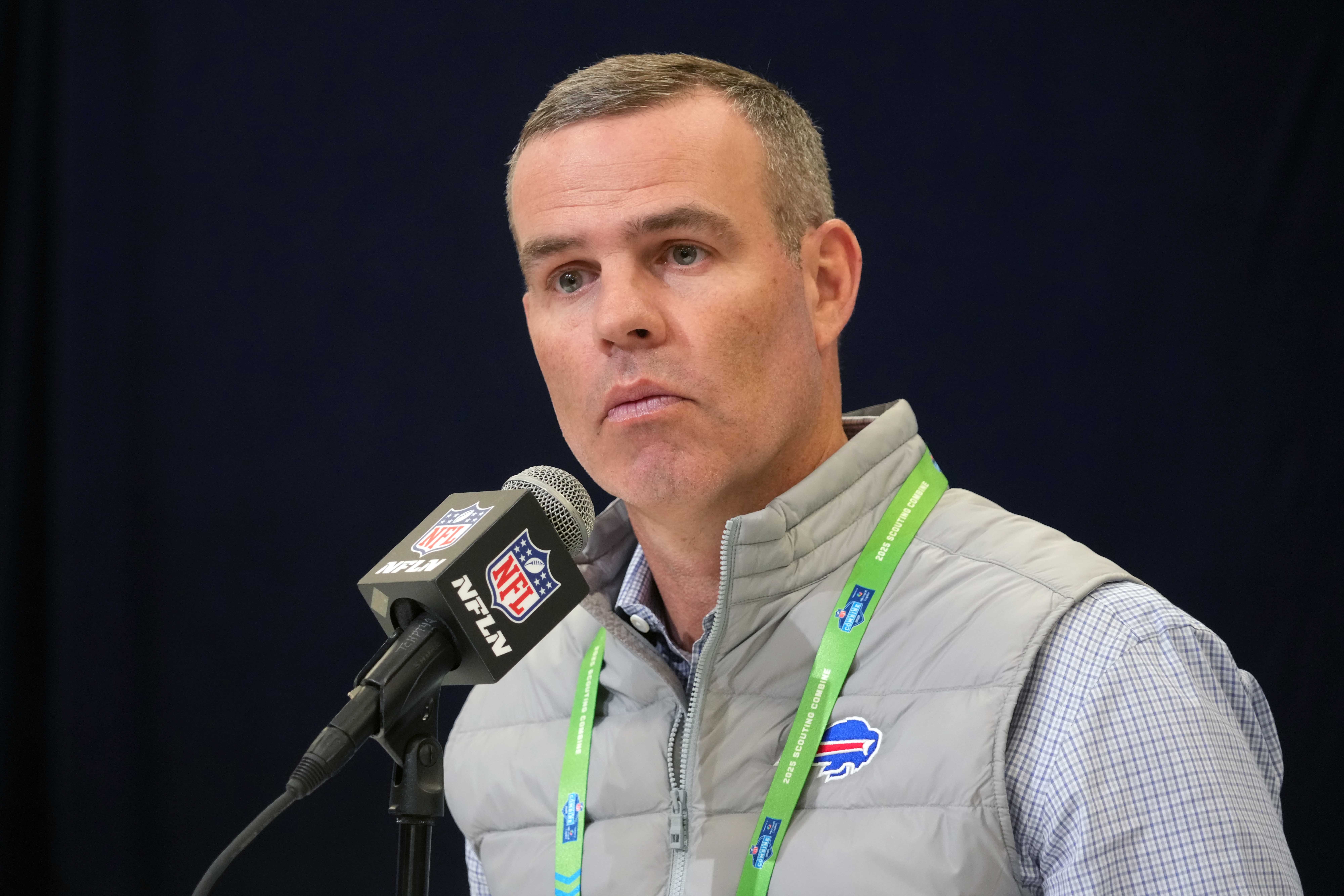
The Bills came close to trading for a Pro Bowl player who would have elevated a weakness on their roster ahead of the 2025 season
The Buffalo Bills have made some significant additions to their roster through free agency and the 2025 NFL Draft. But a recent report revealed that they attempted to make a big splash via trade. According to NFL insider Jordan Schultz, the Bills and Green Bay Packers engaged in trade talks this offseason that would have […]


