
Telling data supports why Bengals need to extend Tee Higgins
Within the next year, the Cincinnati Bengals will attempt to pull off an impressive feat that has nothing to do with on-field results. Extending the trio of Joe Burrow, Tee Higgins, and Ja'Marr Chase would be an accomplishment not many outside of Cincinnati expect to happen. It's been a primary goal for the organization ever […]


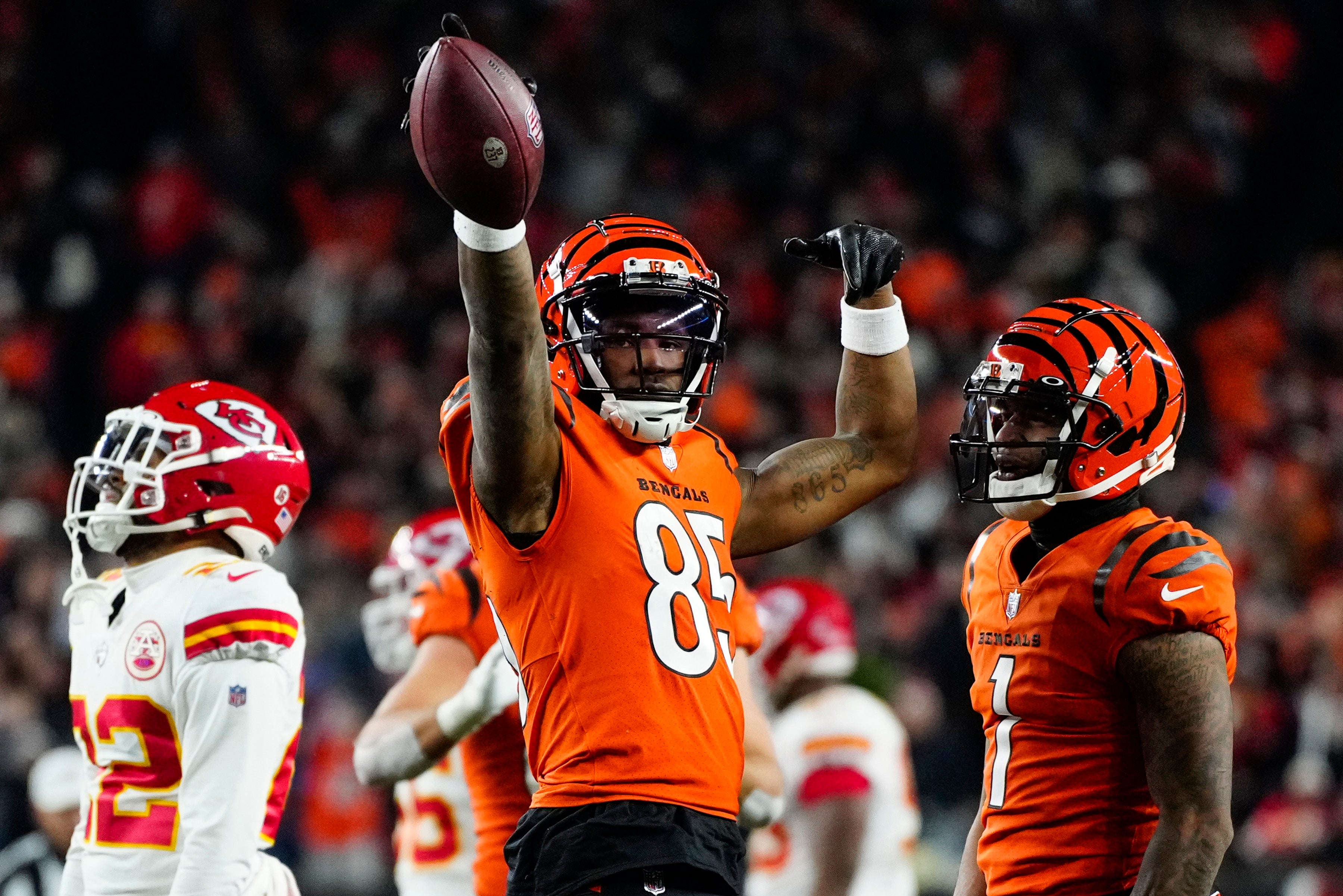
Within the next year, the Cincinnati Bengals will attempt to pull off an impressive feat that has nothing to do with on-field results.
Extending the trio of Joe Burrow, Tee Higgins, and Ja'Marr Chase would be an accomplishment not many outside of Cincinnati expect to happen. It's been a primary goal for the organization ever since the 2021 season showed why the team can go far following the lead of all three playmakers.
And while Burrow and Chase are foregone conclusions to stay with the franchise, Higgins has been the external subject of trade and free agency rumors. The Bengals have been firm in their stance on retaining Higgins, and their reasoning is backed up by some quality data.
In 2022, the Bengals' offense experienced stretches without either Higgins or Chase on the field due to injury. In a study done by Paul Dehner Jr. of The Athletic, Higgins' absence greatly impacted Chase's Expected Points Added per target. Conversely, Higgins had even better production when Chase was off the field.
The most revealing conclusion here lives in expected points added per target (EPA/target). Chase’s efficiency dropped dramatically without Higgins on the field, from 0.3 to .08. Higgins’ EPA per target rose slightly from .32 to .39. Higgins thrived without Chase on the field. For reference, Higgins’ 2.46 yards per route run without Chase on the field would have been tied for fourth among all qualifying receivers last year (minimum 35 targets). – The Athletic's Paul Dehner Jr.
As Dehner mentions, the sample size isn't particularly huge, but the Bengals definitely struggled during the three games Higgins missed significant time. The Bengals went 1-2, all against AFC North opponents, and averaged 20 points per contest.
Chase's missed time all came in a single stretch of four games, in which the Bengals went 3-1 and Higgins' yards per route run was nearly a yard greater than his clip with Chase playing alongside him.
That these games all happened consecutively likely benefited the Bengals from a preparatory perspective, as they were able to slowly figure out how to conduct the offense without their No. 1 option. Higgins missing three games that were spread out so sporadicly made it harder to adjust the offense on the fly, despite Chase's talents. Cincinnati had struggles with offensive line play that only made things tougher throughout the year.
The relationship between Higgins and Chase usually gets boiled down to the former being below the latter in the pecking order and consensus rankings, but it's not how the front office views their dynamic.
This data provides another bullet point towards Higgins' value to Chase and the offense as a whole, and builds his case as a true No. 1 receiver who can carry the load if need be.
Whatever the Bengals end up paying both of them, it will be worth it.
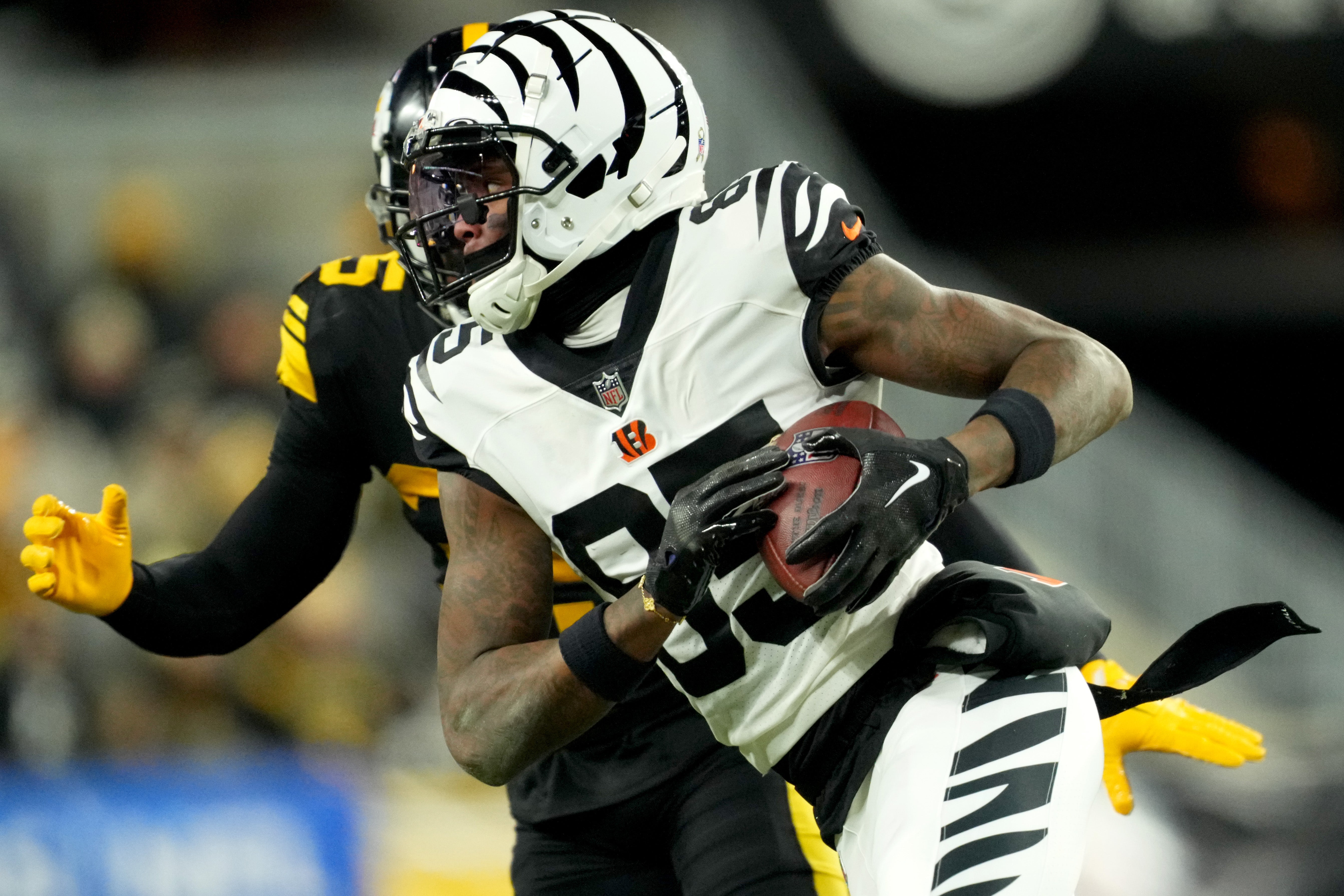
Tee Higgins explains how he’s approaching contract year
Higgins is due for a big pay day, but that’s not in the forefront of his mind.
Featured image via © Sam Greene-USA TODAY Sports


