
Logan Wilson’s retirement is a warning of the risk the Cincinnati Bengals are already taking
Logan Wilson calls it a career after six years.


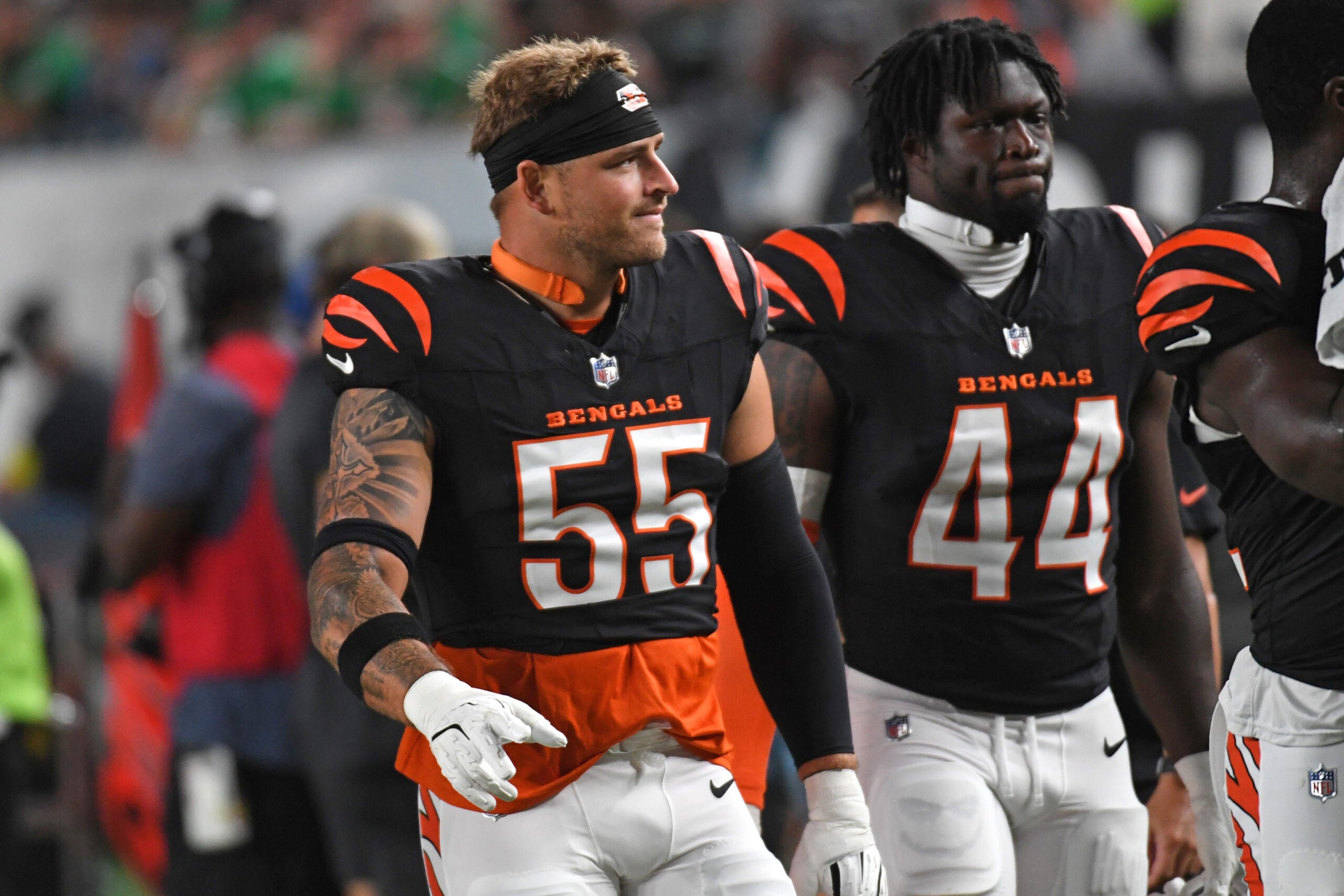
For the second time in 13 months, a key member of the Cincinnati Bengals defense from 2021-22 has called it a career.
Former Bengals linebacker Logan Wilson announced his retirement Wednesday, joining Sam Hubbard as crucial leaders from the teams that went to a Super Bowl and back-to-back AFC Championship Games who hung up the cleats before turning 30 years old.
Wilson was a third-round pick from the 2020 NFL Draft class that produced Joe Burrow and Tee Higgins in the two rounds ahead of him. Cincinnati established its foundation for consecutive playoff runs with those picks, and Wilson proved to be a playmaking starter for the bulk of his career and eventually became a team captain in 2025.
We all know how it ended. Wilson was benched in Week 6 of last season and traded to the Dallas Cowboys a couple weeks later. Cincinnati had extended his contract for an additional four years just two years prior. His time with his original team wasn’t supposed to end so suddenly, but his play fell off to a point where retirement became his decision several months later.
There’s one thing about Wilson that can at least partially explain how his career came to this, and it’s something the Bengals should take note about one of the players who helped replace him last year.
Demetrius Knight Jr. is already not that far off from Logan Wilson’s age
Wilson had many positives as a draft prospect in 2020, but one of the reasons why he fell to the third round was his age. He was 23 when drafted and turned 24 before his first training camp began. By the time he was named a full-time starter, he was 25.
That’s the same age Bengals starting LB Demetrius Knight Jr. is now as he enters his second season, and he’ll be 26 when July comes around.
Knight was taken with Cincy’s second-round pick in last year’s draft. Concerns about his age were cast to the wayside as he would be plugged in as a starter immediately to take advantage of his physical prime.
Wilson’s best years came when he was between ages 25-28. Knight, who plays the same exact position, is already in the middle of that time period and was more of a liability than an asset last year for a struggling defense.
This isn’t to say Knight’s career is void of hope. He’ll have every opportunity to prove himself worthy as a starter this season, especially since the Bengals haven’t added to the position group at all this offseason so far.
But how long can they reasonably expect quality play from him if they ever see it at all?
There’s inherent risk when drafting older players. Most of them enter the league with ample experience, and therefore bodies that have taken more blows than younger players. By the time they’re eligible for second contracts, they’re closer to 30 than they are to 25.
Outliers exist at physical positions (note Andrew Whitworth’s career), and quarterbacks and specialists aren’t really factored into this at all, but age certainly matters in terms of what kind of investment teams make. When it comes to the draft, very rarely do players as old as Knight get drafted as early as he did.
The saving grace for Knight is he doesn’t have much wear-and-tear on him as he only played 1,461 defensive snaps in five years at three different collegiate programs. Wilson was at 3,619 despite playing only four years in comparison at Wyoming. Another 4,871 in the NFL was enough for him to ride off into the sunset.
Knight has a chance to quickly rebound this year and add value to Cincinnati’s defense, but Wilson retiring after just six years when he had a multi-year peak is a clear warning for the Bengals when it comes to the long-term outlook for one of their second-year backers. Draft picks only sign four-year deals, but a player selected within the first 50 picks should ideally be a second-contract player. Wilson proved to be that, but he’s retiring halfway through that deal.
It really can go downhill in a hurry for those who are much older than their peers.

Cincinnati Bengals News
Bengals Free Agency Tracker: Extensions, re-signings, new additions, and departures from Cincinnati’s roster
Stay up to date with every free agency decision the Cincinnati Bengals make in 2026.


