
Brock Osweiler should serve as inspiration for Broncos' approach with Russell Wilson
It turns out, after all these years, what happened to Brock Osweiler in his NFL career might inspire a smart move by the Denver Broncos. The team decided to move Russell Wilson to the bench to avoid a scenario where extra $37 million are added into the quarterback's future guarantees, an indication that his tenure […]


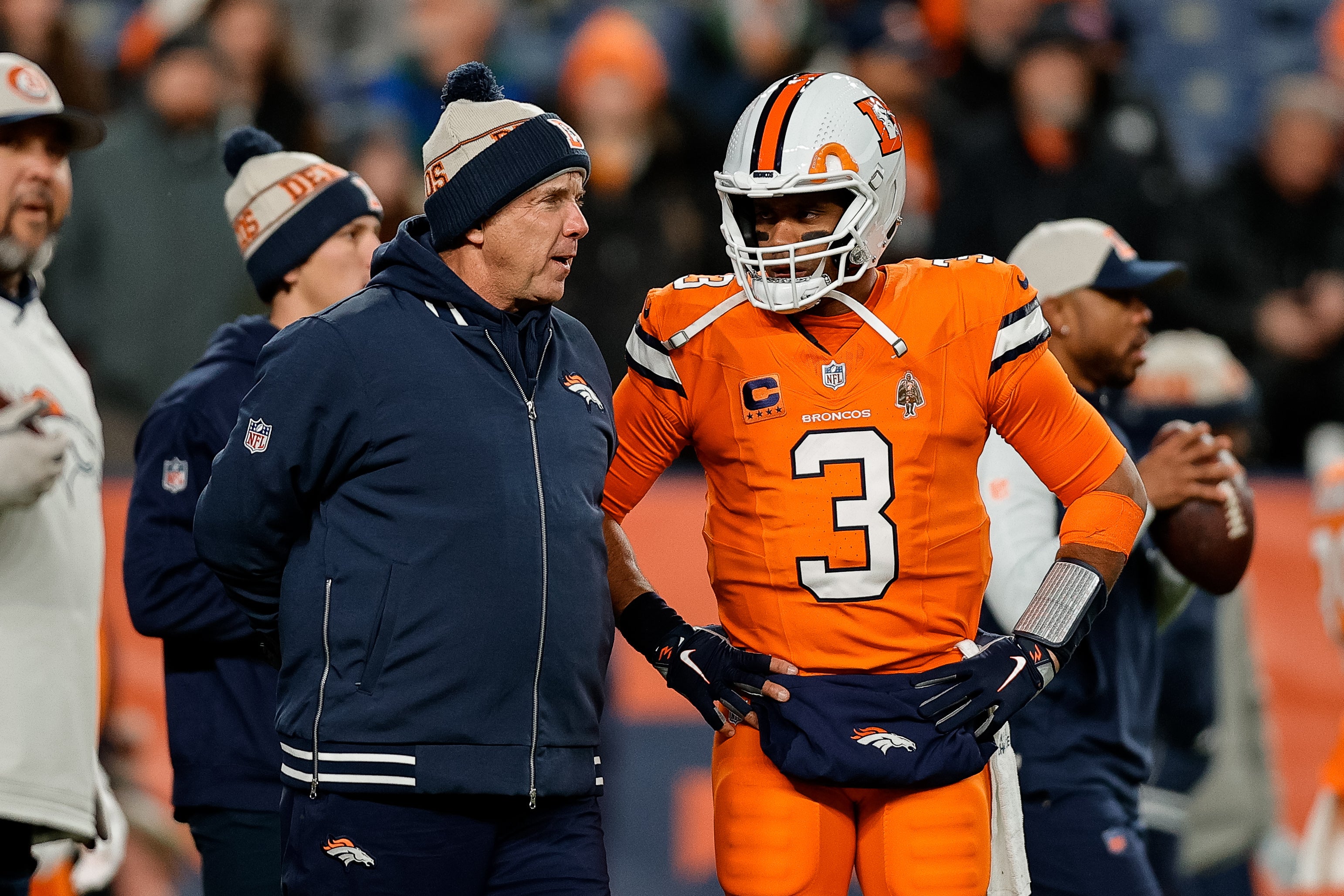
It turns out, after all these years, what happened to Brock Osweiler in his NFL career might inspire a smart move by the Denver Broncos. The team decided to move Russell Wilson to the bench to avoid a scenario where extra $37 million are added into the quarterback's future guarantees, an indication that his tenure as the Broncos QB is all but over.
Now, the Broncos will have options to move on from Wilson, and the most common path would mean an $85 million cap hit in dead money. But there's a solution for Denver, and that's something that has already happened in the league — the main character was former Broncos quarterback Brock Osweiler.
Contract structure
There are several types of guarantees in an NFL contract. One is money paid upfront in the form of signing or restructure bonuses — the hit of those is split through the life of the contract up to the maximum of five years, but it is unavoidably going to hit the cap at some point, even if the player is traded or released.
But there are also future guarantees. That is money which will be paid throughout the contract, but can be moved in the case of a trade. And that's how the Broncos could make the Wilson's deal less harmful moving forward.
Wilson's deal
When the Broncos gave Wilson a five-year, $245 million extension in 2022, the quarterback received $50 million in signing bonus. Wilson cashed it all in last year, but the cap hit is split — $10 million per season through 2026.
If Wilson is cut or traded, this amount is going to accelerate — there is $46 million yet to hit the cap, so in a trade everything would hit the cap in 2024. In a release, the Broncos would have the option to absorb everything next year, or designate Wilson as a post-June 1st release, leaving the future value ($32 million) to accelerate only into the 2025 cap.
But Wilson also has guarantees in base salary and option bonuses — $39 million in 2024, and if Wilson is on a roster on the fifth day of the new league year, $37 million in 2025. That amount can be moved to a new team, even though it's guaranteed.
What happened to Osweiler?
In 2016, Brock Osweiler left the Broncos in free agency to sign a four-year, $72 million contract with the Houston Texans. When it backfired, the Texans found a way to move on without paying an extra $16 million in 2017.
They sent Osweiler, a 2017 sixth-round pick and a 2018 second-round pick to the Cleveland Browns for a 2017 fourth-rounder. In essence, the Browns absorbed Osweiler's $16 million salary to receive an extra pick, which they used to select running back Nick Chubb.
It’s a frequent occurrence in the NBA, not that much in the NFL because of how deals are structured in football.
Does it make sense for the Broncos?
If the Broncos decide to release Russell Wilson, they are going to have a huge $85 million cap hit. They would probably be forced to apply a post-June 1st designation, which would mean a $35.4 million cap hit in 2024, but $49.6 million in dead money for 2025.
The Broncos would have zero cap savings in 2024, and just $5.8 million in 2025. The real savings wouldn't come before 2026.
In a trade scenario, Denver would have to part ways with a high pick, and that's a real problem. That's because the new team would absorb $39 million in 2024, but also probably $37 million of the 2025 base salary — unless the new team finalizes the deal and cut Wilson immediately thereafter, which is not as likely in the NFL world as it would be in the NBA.
So if the Broncos are able to pull off this trade, they would have "only" $46 million in dead money, moving $39 million to the acquiring team.
Who would do that?
Well, there are actually several options. First, it needs to be a team with plenty of cap space. Second, an owner willing to pay a lot of money to what is now an average (at best) quarterback to receive a draft pick.
And third, the new team would have to decide if it would be exclusively a compensation move, or if they would actually keep Russell Wilson. The latter scenario is more likely if a team wants to make the deal, so a prerequisite for that is a team where Wilson would be an upgrade over the current QB situation.
Considering all these layers, the most likely fits would be the Washington Commanders ($81.72 million in cap space and Sam Howell/Jacoby Brissett at QB), the New England Patriots ($74.3 million in cap space and Mac Jones/Bailey Zappe at QB), and the Las Vegas Raiders ($51.9 million in cap space, Jimmy Garoppolo/Aidan O'Connell at QB).
It's not an easy decision, and not an easy scenario. But the Denver Broncos can still find a creative solution to a bad situation all around.
Broncos have a $37 million Russell Wilson question to answer
Team might opt to sit the quarterback for the final games


