
The Dolphins seriously entertaining any Jaylen Waddle trade talks would be downright absurd — and the reasons why reach far beyond potentially losing his talent
Details matter in hypotheticals like these.


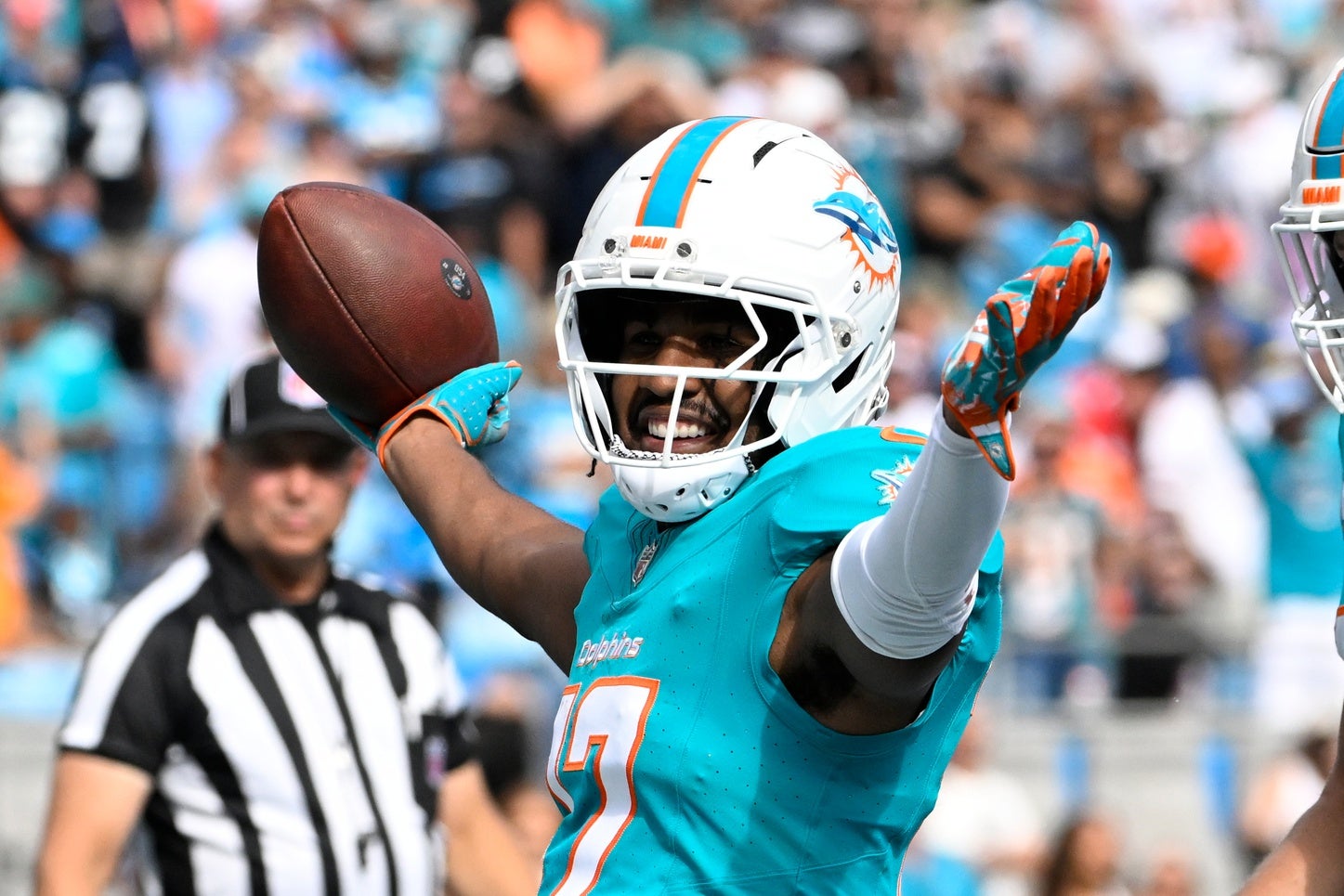
The inevitability of losing early and often in an NFL season is that the rest of the league will start eyeing up your players. The Miami Dolphins are no different. Sitting at 1-5 and with just three weeks left until the NFL’s trade deadline, Miami is faced with some hard internal conversations. Primary among them is sorting out the phone calls that they’re certainly getting from starry-eyed colleagues with visions of adding some of the Dolphins’ premier talent mid-season.
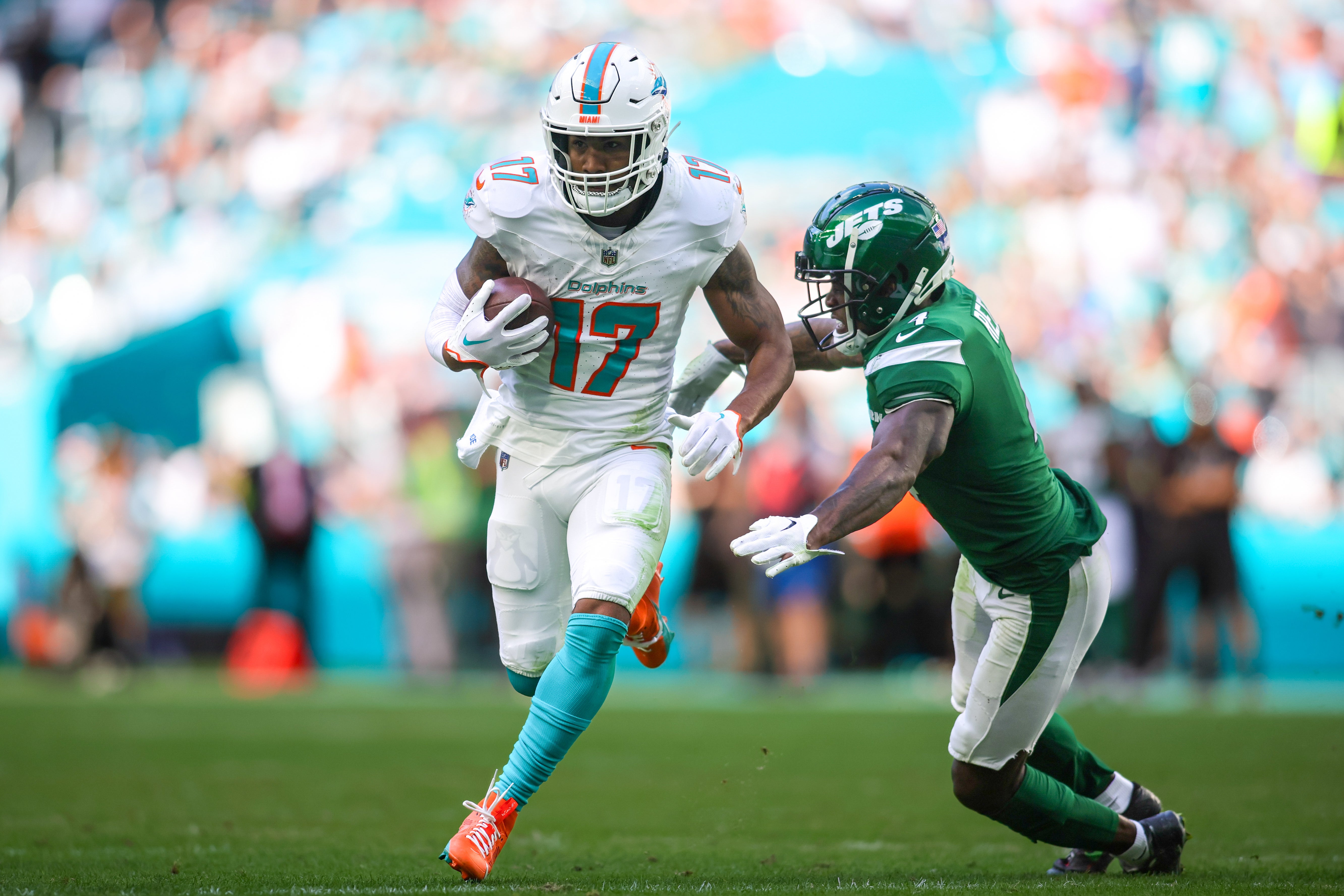
We’ve already heard one hint from ESPN’s Jeremy Fowler recently that teams may be considering kicking the tires on wide receiver Jaylen Waddle. They should call, given Miami’s predicament.
The Dolphins, for their part, should hang up. Expeditiously. There are a plethora of reasons why trading Waddle would be stupid. First and foremost among them is his talent level as he enters the prime of his career. Do those prime years align with what is perceived to be a Dolphins rebuild for 2026? No. But rebuilding teams are allowed to sustain talent, too, especially when they’re already locked in on a multi-year extension that will age quite gracefully.
But one of the other deterrents to trading Waddle, beyond the fact that it would be a horrible idea, is the economics behind such a decision.
A hypothetical Jaylen Waddle trade this fall has major 2026 implications for the Miami Dolphins
Quick! Quiz question! What is Waddle’s cap charge in 2026? The answer is: $11,658,800. Waddle technically has not played a down on his 2024 contract extension yet — this is his fifth year, which is technically his fifth-year option year off of his rookie contract. Given the proactive timing of Waddle’s extension (more of that in the future, please), they’ve spaced his money out through the lingering years of his rookie contract to keep his cap charges down.
You know what happens when teams do that, right? That’s right! The cap debt gets pushed into future years at a higher rate. You can pay NFL players whatever you want and conduct all kinds of funny business with the cap — but an NFL franchise must always pay its debts, eventually.
Jaylen Waddle’s 2024 contract extension terms with the Miami Dolphins
- Three years, $84.75 million extension
- $36 million fully guaranteed at signing
- Ranks 18th, 25th, and 19th in 2024-2026 in cash owed amongst NFL wide receivers
Waddle’s cap debts are significant. So much so that trading him now will trigger a dead cap charge in 2026 that’s nearly twice his current scheduled cap charge for being on the roster. By moving Waddle in a hypothetical trade deadline deal, Miami would be in a position to eat $23,227,800 in dead cap next season.
That is, in and of itself, not great! But that’s before you take inventory on the other roster moves and cap accounting Miami needs to be prepared for. Cornerback Jalen Ramsey was traded after June 1, so he’s on the books for $20,868,000 in dead cap charges in 2026 already. Offensive tackle Terron Armstead announced his retirement in April, but the move was processed after June 1 — meaning he’s carrying $10,732,750 in dead cap charges in 2026 as well.
What about wide receiver Tyreek Hill, who suffered a season-ending knee injury in Week 4 and is owed over $36 million in non-guaranteed compensation in 2026? The Dolphins are expected to release him before $11 million of his 2026 compensation guarantees next March.
That will provide the Dolphins with significant cap savings versus the current $51,898,750 cap charge he’s on the books for — but it will also leave the Dolphins carrying an additional $28,248,750 in dead cap charges in 2026.
Between the pending departure of Hill and the salary cap debts owed for the since departed Ramsey and Armstead, Miami is on the books for $59.848 million in dead cap. Sprinkle in their micro-transactions of dead cap for names like Jonnu Smith and Cam Smith, and that total of dead cap checks in around $63 million.
Trading Waddle shoots that figure north of $88 million in dead cap for 2026 — and that’s before you start having conversations like Bradley Chubb’s contract ($31.2 million cap charge for 2026), Minkah Fitzpatrick ($18.849 million cap charge for 2026), and the elephant in the room with quarterback Tua Tagovailoa and his contract.
Only two teams in NFL history have had dead cap charges that have exceeded $90 million — the 2022 Chicago Bears ($93.2 million) and the 2025 San Francisco 49ers ($100.1 million). Miami would sit at $109.47 million in dead cap with just their preexisting cap debts, releasing Hill and Bradley Chubb pre-June 1, and a hypothetical Waddle trade.
We’re talking an unprecedented amount of cap clearing. Is the team willing to restructure Tua Tagovailoa’s contract in 2026 to defer more of his fully guaranteed salary into the future? They could swing it with a conservative approach in free agency.
But trading Waddle makes your life exponentially harder amid navigating all those other hurdles to sort out, plus the debts you already owe (or, in Hill’s case, will inevitably have to tackle). For what? A second-round pick? For a chance to maybe draft another Waddle, who just so happens to be 22 years old instead of 27?
Respectfully, kick rocks. This conversation is already a dumb one based on the idea of shuffling away one of your few rousing successes as a homegrown talent via the draft in recent years. But throw in the economic layer to it all, and you damn well better be offering a trade package that would make Laremy Tunsil blush if you want to get serious about the conversation.
Miami Dolphins News
One NFL insider offered a significant update this week on Dolphins’ mindset on the availability of one of their offensive stars ahead of the NFL trade deadline
Will the Dolphins let Jaylen…waddle away at the 2025 trade deadline?


