
Five Packers breakout candidates who could play massive roles in determining how far this team goes in 2025
A big part of the Green Bay Packers’ weaknesses last year was the lack of blue-chip talent. Now, beyond some important additions, the development of players already on the roster is a key to unlock the full potential of the team.The Packers do have a strong foundation of building blocks, and some of them making […]


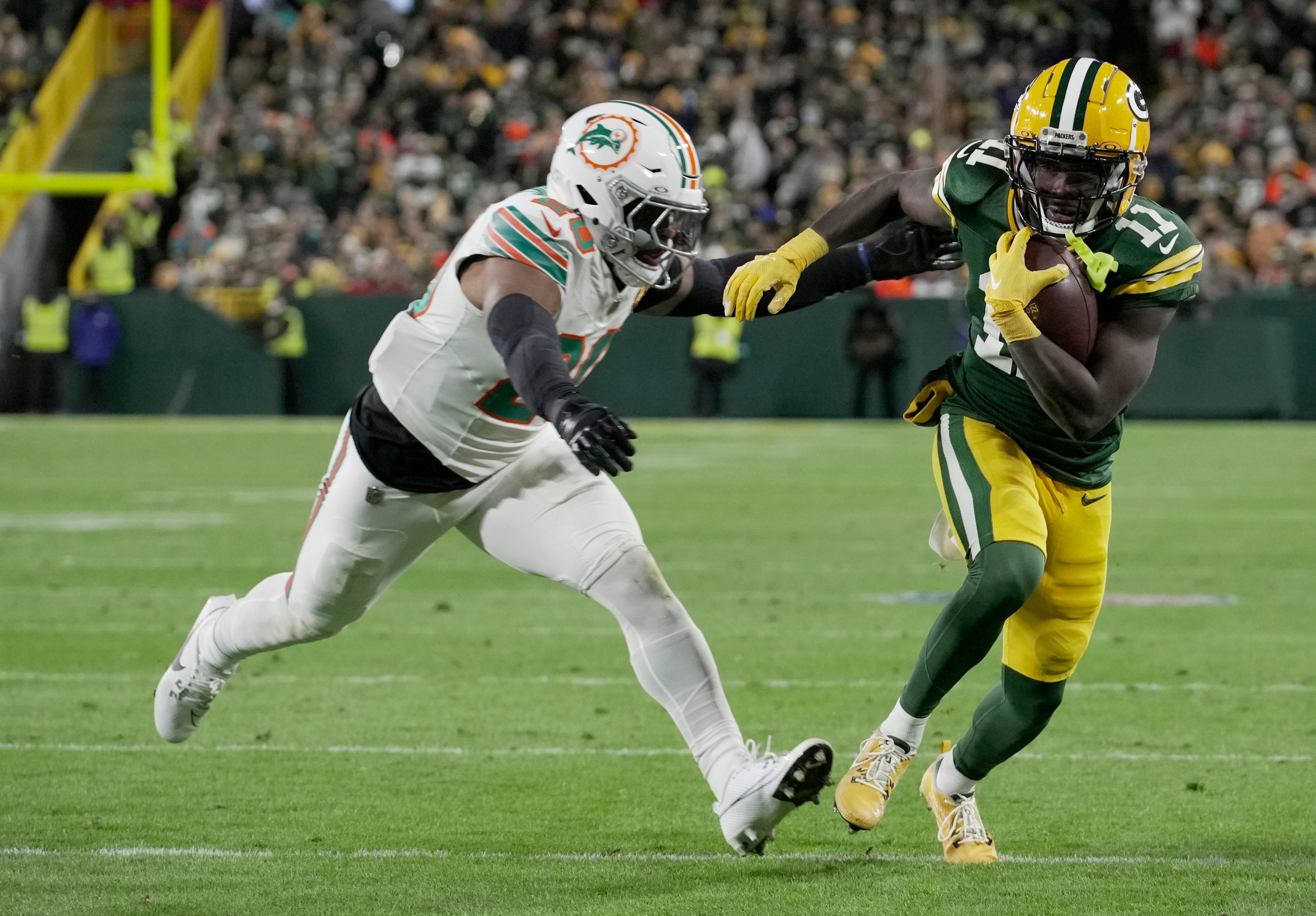
A big part of the Green Bay Packers’ weaknesses last year was the lack of blue-chip talent. Now, beyond some important additions, the development of players already on the roster is a key to unlock the full potential of the team.
The Packers do have a strong foundation of building blocks, and some of them making a leap in 2025 would be imperative for the success of the team. There are impactful breakout candidates on the Packers, and their performances will help determine the collective fate of the group this upcoming season.
Edgerrin Cooper
Cooper is the most obvious answer here after a stellar first NFL season. He made the All-Rookie Team even playing less than 50% of the Packers’ defensive snaps, generating 3.5 sacks, 11 pressures, 87 tackles (13 for loss), an interception, a forced fumble, and two fumble recoveries. As a rookie, he played a limited role in Jeff Hafley’s defense while he developed into a more complete off-ball linebacker, but down the stretch you could see that he was taking important steps to become a full-time player.
The Packers count on their second-rounder from last year to be a staple of the defense, and his athletic ability and positive aggressiveness are essential for how Hafley schematically thinks the defensive structure.
Jayden Reed
It might sound weird to put Reed on this list, because he already was the Packers receiving leader in each of his first two seasons. Last year, he had 55 catches for 857 yards and six touchdowns. However, he made several mistakes (most notably drops) and failed to have consistent production over the second half of the season.
The pounding of the season on his body didn’t help, according to head coach Matt LaFleur. If Reed can replicate what he did in the first half of last year for a full 17-game season, he will definitely enter the WR1 discussion—and he will have a more definitive role, despite the addition of Matthew Golden.
Reed has been one of the best wide receiver versus zone coverage, but his performance versus man coverage goes way down. If he can get better at this and reduce mistakes, the third-year player will be in line to get a monster contract extension next offseason.
Lukas Van Ness
Nobody else’s breakout season would be more important for the Packers than Van Ness’. A first-round pick two years ago, the edge defender has failed to meet pre-draft expectations, but he was always considered a raw prospect. Now entering Year 3 and healthier, he will become a starter from Day 1 opposite Rashan Gary, so it’s time to start producing at a higher level.
As a rookie, Van Ness needed 10.1 pass rush snaps to generate a pressure. That number got worse in his second season—12.35 pass rush snaps to get a pressure. A hand injury suffered in Week 1, in Brazil, certainly did not help. A heavier edge rusher, Van Ness also offers positional versatility, with the ability to move inside in passing down to generate interior rush.
Carrington Valentine
Sometimes, it feels like Valentine is underrated even by the Packers themselves. Last year, the former seventh-rounder had the lowest passer rating when targeted (79.6) amongst the team’s cornerbacks, including Jaire Alexander, but even then he only played 50% of the defensive snaps. At some points, Green Bay moved Javon Bullard to the slot with Eric Stokes as a boundary player over Valentine—Stokes had more defensive snaps (54%) even with a clearly worse performance.
Now, the Packers have signed Nate Hobbs, who has positional versatility to play inside or outside, and Keisean Nixon has established himself as a boundary player. So Valentine will basically compete with Bullard for a starting spot, and Hobbs will adapt accordingly.
Valentine is the most natural outside cornerback of the entire roster, and his solid production in the first two years of his NFL career has generated a great surplus value for his draft position. Now, it’s the time for him to be established as a full-time starter—and maybe more.
MarShawn Lloyd
The Packers made a sequence of running back moves in 2024, releasing Aaron Jones minutes after signing Josh Jacobs, then taking Lloyd in the third round. As a rookie, the back barely played because of multiple injuries and an appendicitis, but now he’s fully healthy.
Both Jacobs and Lloyd are under contract through 2027, so the younger piece doesn’t need to become a full-time, three-down player. However, he is the perfect complement to what Jacobs does well, and his speed and explosiveness could be major weapons for Matt LaFleur’s offense, who would like a better receiver out of the backfield and a fast back to run outside concepts.
Even the people snubbing Packers’ Jordan Love are starting to admit he has a path to join the NFL’s elite quarterbacks in 2025
Love was ninth in EPA/play last year


