
How the Packers offense evolved without Jordan Love, and how it can be useful when he is back
It has been a couple of insane weeks for the Green Bay Packers coaching staff. The reality of losing a starting quarterback is rough enough in the NFL, but the tasks get even harder when the next man up has been acquired days before. Malik Willis had to step up, learn the offense, know how […]


It has been a couple of insane weeks for the Green Bay Packers coaching staff. The reality of losing a starting quarterback is rough enough in the NFL, but the tasks get even harder when the next man up has been acquired days before.
Malik Willis had to step up, learn the offense, know how his new teammates operate, and prepare for each specific opponent. Against the Indianapolis Colts and Tennessee Titans, you couldn't have asked for more than what they did.
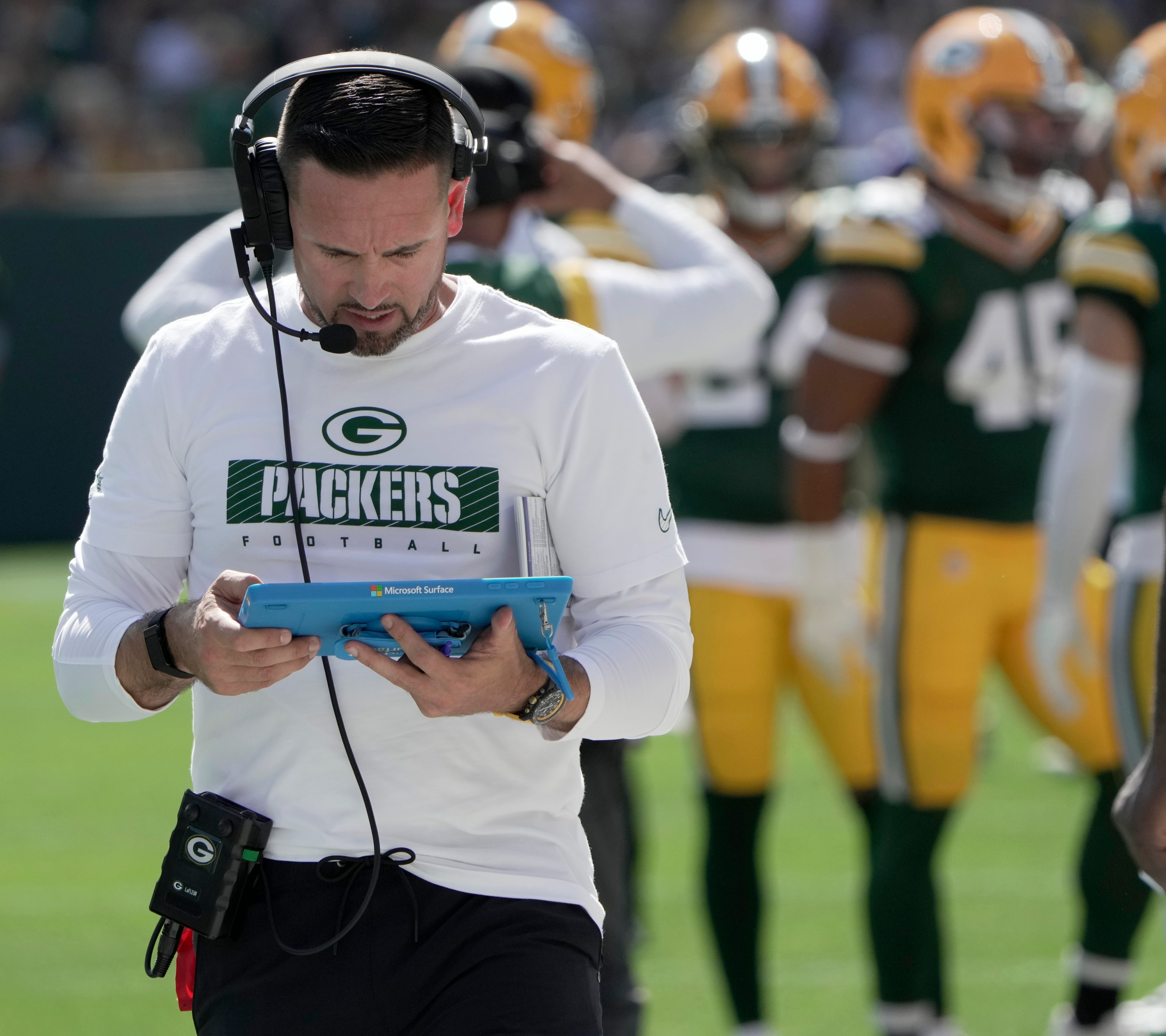
In the first game without Love, versus the Colts, the Packers presented a run-heavier offense, leaning on Josh Jacobs and, to a lesser extent, Jayden Reed to put Willis in favorable situations when he had to throw the football. Against the Titans, with Willis being one extra week into it, head coach Matt LaFleur was able to center the offense around the quarterback's strengths — RPOs and read options were a bigger part of the plan.
After three weeks, two of them without Jordan Love, the Packers offense is third by DVOA and 11th by EPA/play.
If LaFleur was able to build such situational and specific gameplans for Willis, Love obviously allows the coaching staff to expand the offense — not only because he is a better quarterback, but also because he has been in the system for much longer.
But what did the Packers do over the last couple of weeks that can help them be an even better team as soon as Love is back? There are specific points in each phase of the offense.
Running game
Kyle Shanahan, Sean McVay, Matt LaFleur, Mike McDaniel, and everyone that has come from the Mike Shanahan tree run some version of the old zone-blocking scheme, and this is the style of football that has transformed the Packers offense since LaFleur took over in 2019.
But all of these coaches have evolved, adding different blocking concepts to make their offenses more complex — or, as they like to say, to add more elements for ‘illusion of complexity’. Therefore, gap schemes are more frequent by the day.
"From a passing game perspective, they really just stripped most of the offense the past couple games. Very little attacking the middle, lots of screens. So I don't think there's a lot there. The creativity with the run game has been tremendous, though, and they've run stuff off of there. I think we see more of that," said Dusty Evely, a football film analyst for Acme Packing Company and Pack A Day Podcast.
Tying those run concepts with pass plays is a big part of installing and putting everything into place for the Packers, keeping similar looks to run different types of plays — again, illusion of complexity, making it easier for the offense, but crazy for the opposing defense.
"LaFleur has been trying to get to a more gap-scheme running attack for years, and it feels like he's finally where he needs to be. He was showing wrinkles-on-wrinkles, and they played pass game off of that as well. So I don't know if the passing game gets a massive overhaul or anything, but this run game isn't going away."
Passing game
As Dusty mentioned, it's harder to make use of what the Packers ran with Willis in the passing game when Love gets back, because there have been a lot of special concepts — Matt LaFleur admitted last week that they designed specific plays for Willis, some things that the offense hadn't practiced throughout training camp and were not even in the original playbook.
But there are some wrinkles that the coaching staff can still take advantage of. Motions are a staple of this type of offense — and around the entire NFL at this point, unless your quarterback is Aaron Rodgers. But the Packers leaned even more into it. Through three weeks, Green Bay leads the league in motion usage, 85.9%, surpassing the Miami Dolphins (84.7%), the San Francisco 49ers (81.6%), and the Buffalo Bills (80.4%).
"It's hard in this league to just line up, be static and beat people," Packers offensive coordinator Adam Stenavich said last week. "You really got to have an unbelievable roster to do things like that. Now, I think we have good players, but you just have to keep the defense guessing. You have to make them look one way, go the other, just to distract them for a split second so you can find seams and defenses and whatever it is. That's just something that I believe in."
And the Packers have perfect pieces to do that — Jayden Reed is the most notable one, but Christian Watson, Dontayvion Wicks, and even tight ends like Tucker Kraft and Luke Musgrave can be a part of that process.
It's a structural element of the offense. And if it worked to make things easier for Malik Willis, there's not a big reason to take that away — or even diminish it — when Jordan Love is back.
"Every week is a different week. The more you do in a certain area, like running the ball, that's the more that your opponents are going to focus on," Stenavich added. "So we just got to make sure we keep going, we don't get stale, we keep working, we dig at those details that we got to improve on, because there are still a lot of yards left out there."
It's still unclear when Love will return, and Minnesota Vikings defensive coordinator Brian Flores offers a unique and challenging matchup this week. But the lessons Matt LaFleur and his staff are learning can be useful tools for the rest of the year — and Jordan Love will be thankful for that.
Matt LaFleur did it again, and he should receive much more love than he does
Green Bay won its second consecutive game without Jordan Love


