
On Micah Parsons night, Jordan Love had to step up to save the Packers from disaster in Dallas, but a tie still feels underwhelming
What a crazy game.


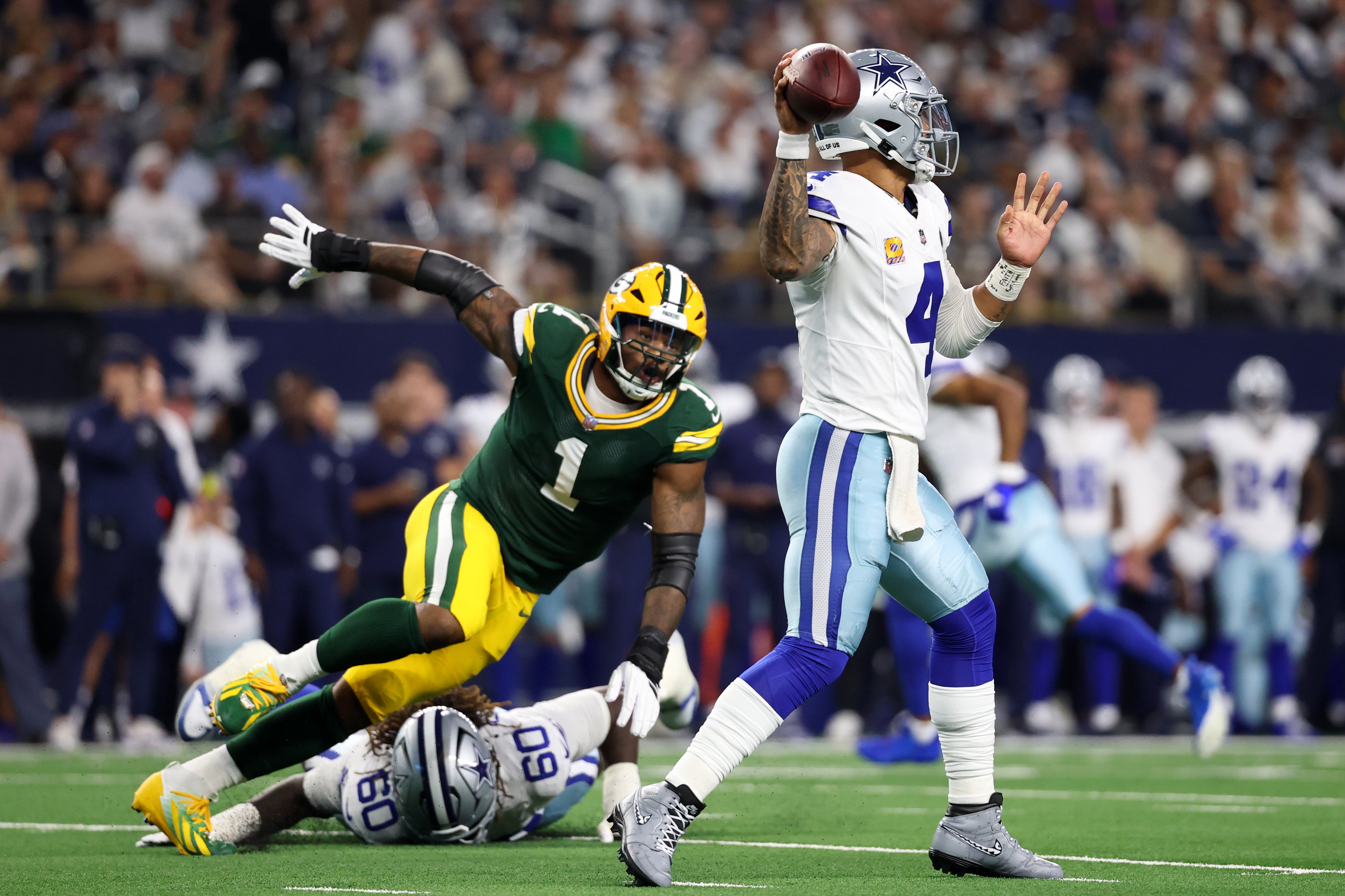
It couldn’t have been a weirder end. After an insane offensive performance from both sides, and a disappointing outing by the Green Bay Packers’ defense, a 40-40 tie after a crazy game feels like a fitting end to an absurd ‘Sunday Night Football,’ celebrated by being Micah Parsons’ return to Dallas.
After a 37-37 score in regulation, each team scored a field goal in overtime, and the Packers did it as the time expired.
Defensive struggles
The Packers’ defense played at a high level for the first three games, but it got badly exposed on Sunday night. And that’s mostly because the cornerbacks are not that good. Keisean Nixon played decently, to be fair, but Nate Hobbs and Carrington Valentine had rough outings. In the first few games, the pressure upfront was responsible for keeping the secondary protected, but the Cowboys smartly built the offense around quick throws, and soft zones by the Packers’ defense turned it into an extremely efficient night for Dak Prescott, even though Dallas was playing without CeeDee Lamb and two starting offensive linemen.
After Devonte Wyatt left the game with a knee injury, the defensive tackles had no shot. Micah Parsons had eight pressures and affected the game as much as possible, but that’s probably the first time Jeff Hafley was outschemed in a long time.
In the second half, in particular, Dak Prescott’s life was too easy. It looked like every play was a positive, the offense was always ahead of the sticks. And Dallas was able to flip the field on a few plays all the time. Ultimately, the Packers were able to allow just a field goal in overtime, and that was key to not losing the game.
Offensive structure
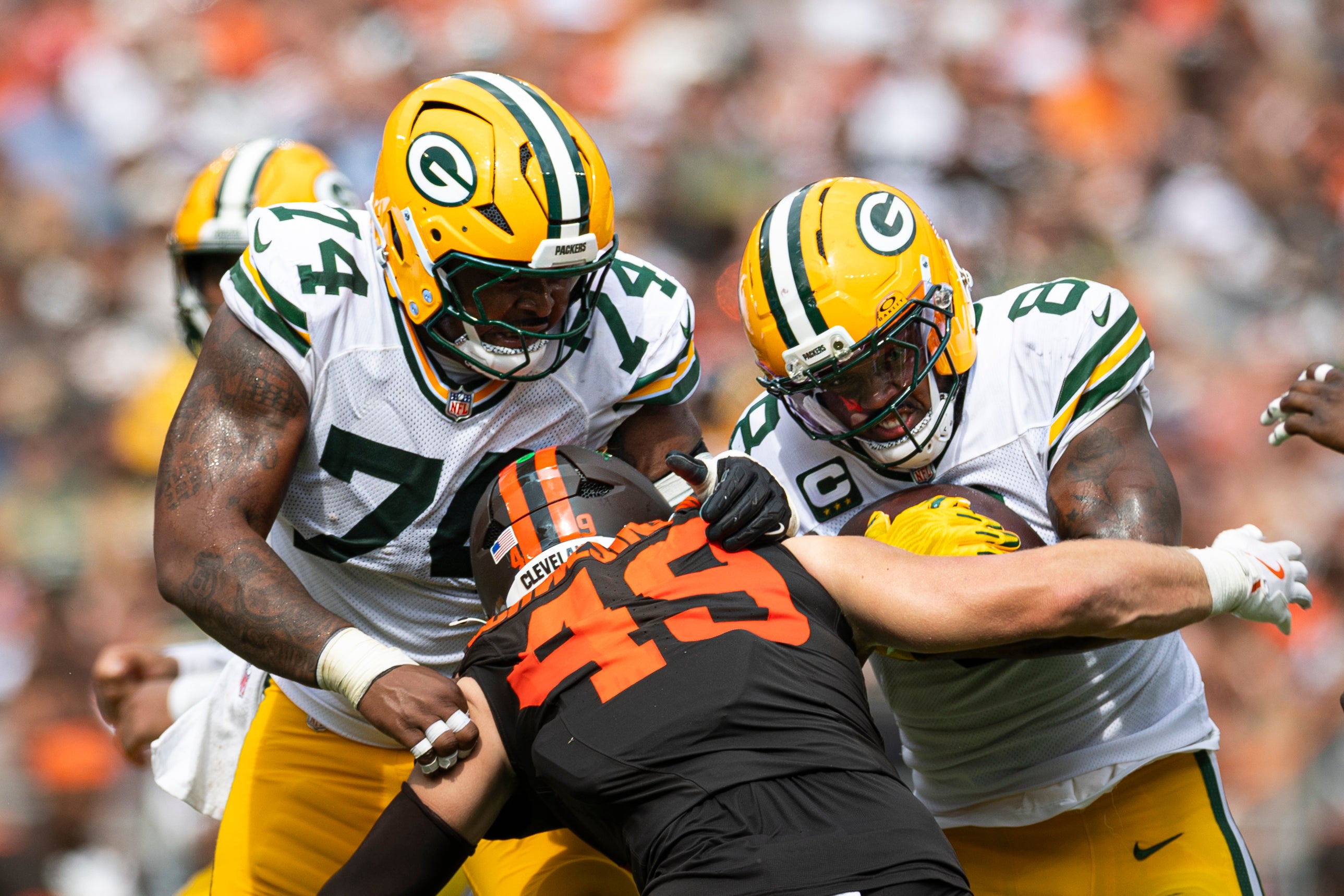
The offensive line was obviously missing Zach Tom, plus Aaron Banks and Anthony Belton to a lesser extent. Both pre- and post-snap penalties were an issue—including two pre-snap ones at the one-yard line at different points of the game. However, nothing was more suffocating for the structure of the offense than the lack of an effective run block.
The Packers forced the issue, just because Matt LaFleur’s offensive philosophy heavily relies on the run game to set up passing lanes. Josh Jacobs had a solid run here and there, and they also tried some gimmicky runs with wide receivers Matthew Golden and Savion Williams. For the most part, the run game was severely inefficient because the offensive line isn’t simply not that good at creating holes—and it’s been an issue since last year.
Eventually, that approach paid off to a certain degree, with two rushing touchdowns from Josh Jacobs—including a longer one in the fourth quarter. Emanuel Wilson also converted a key third & 2 on that same drive. Overall, though, the offense was just too conservative (which we will talk more about later), and it felt like LaFleur didn’t allow Love to cook when he was having a great performance.
Matt LaFleur’s conservatism
LaFleur is a good head coach, a great offensive mind. But what follows is not necessarily some type of breaking news, based on what’s happened since last season. He’s been way too conservative, and that’s hurting the team.
In the first half alone against the Cowboys, he refused to go for it on 4th & 2 close to midfield when the offense was getting anything it wanted. He lost two percentage points of winning the game on that decision alone.
Overall, the offense had too many run calls when it was clear that the run block wasn’t working. In the fourth quarter, with the Packers down 30-27, the conservative nature of LaFleur appeared again, with a run call on 2nd & 8 for no gain. Right after that, Jordan Love had to complete a big play to Romeo Doubs to keep the drive going.
Getting into the two-minute warning, the Packers got close to the redzone, but LaFleur called some plays like the main intention was to get a game-tying field goal. Hopefully for the team, it has Jordan Love and Romeo Doubs, who scored another touchdown. And in overtime, it felt that the Packers were playing to tie the game down the stretch.
It’s a sequence of conservative decisions on multiple levels of the team, as if LaFleur didn’t trust his roster to reach its full potential.
Green Bay Packers News
Packers leader gives brutally honest assessment of his position group’s play so far, showing where changes must happen fast
Elgton Jenkins knows he has to play better.


