
Packers aware of potential frustrations that come with the Falcons
By now, it's been well-documented that the Atlanta Falcons will pose a unique challenge for the Green Bay Packers. As for the Falcons' passing attack – it'll be interesting to see if anything happens, there at all. Last week was a less-than-stellar performance, to put it lightly. Falcons quarterback Desmond Ridder completed over 83% of […]


By now, it's been well-documented that the Atlanta Falcons will pose a unique challenge for the Green Bay Packers. As for the Falcons' passing attack – it'll be interesting to see if anything happens, there at all.
Last week was a less-than-stellar performance, to put it lightly. Falcons quarterback Desmond Ridder completed over 83% of his passes and threw a touchdown, but he finished the day with just 115 passing yards, which was 29th out of the 32 starting quarterbacks in Week 1 (excluding Aaron Rodgers). A big reason why he completed so many passes thanks to an ADOT of 2.5 yards per pass, which ranked dead last among all QBs, per Pro Football Focus. His touchdown also came way of a behind-the-line-of-scrimmage pass to Bijan Robinson, who did all the work on his own for six points.
The Falcons' quick passing attack is a big reason why there were so many short passes. Ridder averaged the eighth-quickest time to throw (2.63 seconds) among all QBs with at least 22 dropbacks last week.
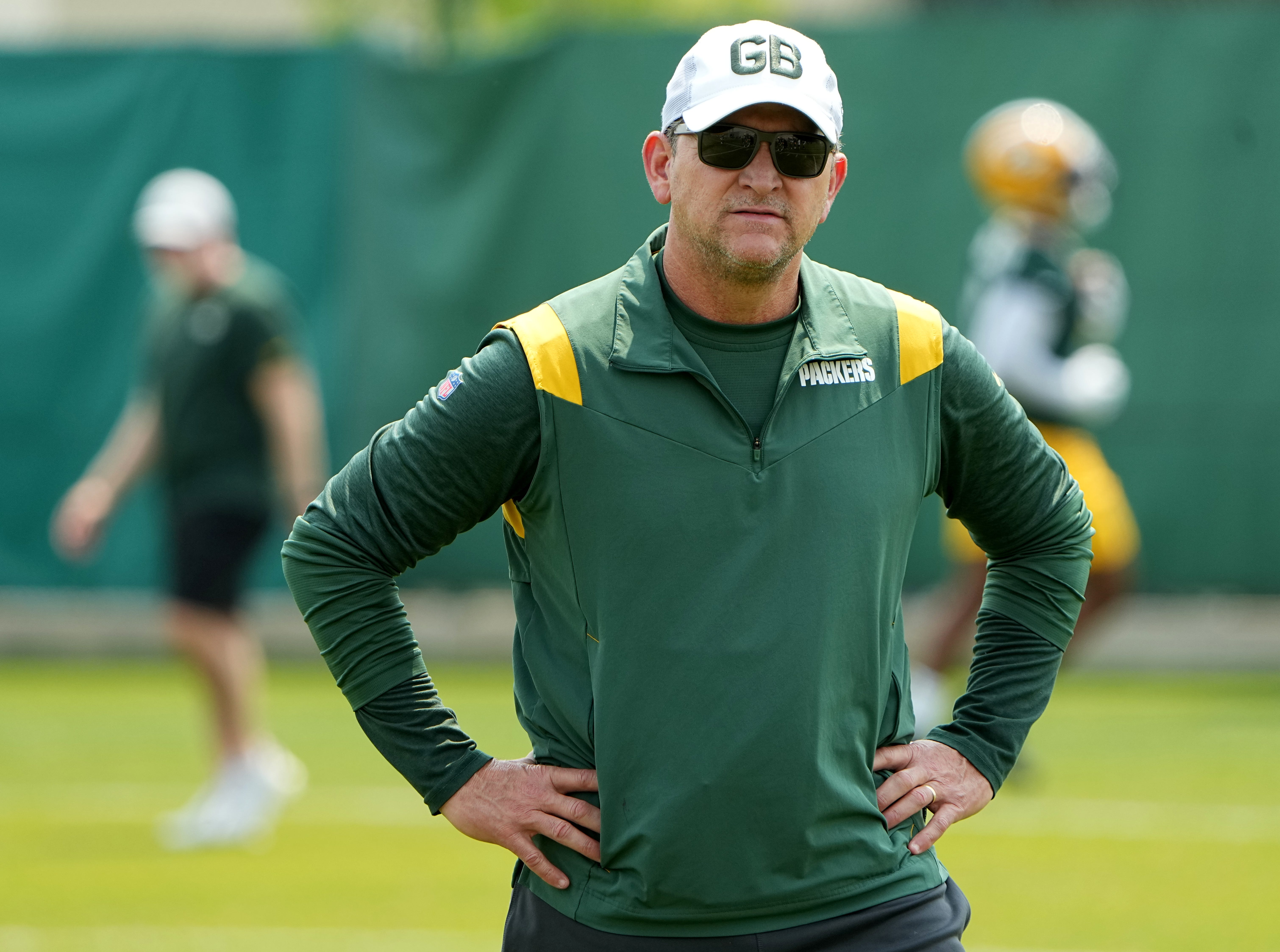
"It's natural, especially for those rushers, to get frustrated," Packers defensive coordinator Joe Barry told reporters Thursday. "Because, those guys want to pin their ears back and rush the passer and get after the passer. We just talked about sacks and hits and pressures, it's hard to do that in quick passing game. But there's many ways that you can affect the passer even when the ball is coming out quick and things like that: You can get your hands up, you can tip balls. So it it is frustrating. But as a pass rusher, you just got to keep playing. And you know, when you do get your opportunity, you got to cash in."
The Packers defense must heed Barry's words, because the pass rush can get home on Sunday, regardless of the Falcons' quick attack. The Panthers sacked Ridder a total of four times and per PFF, the Panthers didn't have to blitz on three of the occurrences. Ridder's 80% pressure-to-sack conversion rate, is absolutely horrid and it was easily the worst rate in the NFL in Week 1.
Put it this way: It was 34% higher than second-worst, Sam Howell. Ridder was also responsible for 20% of the pressure he faced against the Panthers, which was tied for eighth-worst. There should be plenty of occasions where the Packers secondary locks down the Falcons receivers and forces to Ridder to eat turf.
The key with all this, though, is the Packers run defense. The Falcons offense is predicated upon its success on the ground and if there isn't any success then the passing game isn't going to take over. Especially against a talented secondary like the one the Packers have.
Sunday will certainly be a test of patience, but as long as the Packers can pass that test – things should be fine, ultimately.
Packers at Falcons: Final Injury Report for Week 2
There will be plenty to keep an eye on over the weekend.
Featured image via MARK HOFFMAN/MILWAUKEE JOURNAL SENTINEL / USA TODAY NETWORK


