
Packers have the tools to exploit the Vikings' biggest offensive weakness
The Minnesota Vikings said they could fix Sam Darnold, and they have done it to a certain degree so far this season. Through three weeks, the bridge quarterback is eighth in EPA/play, seventh in completion percentage over expected, and 13th in success rate. So stopping or limiting Darnold becomes a priority for Jeff Hafley and […]


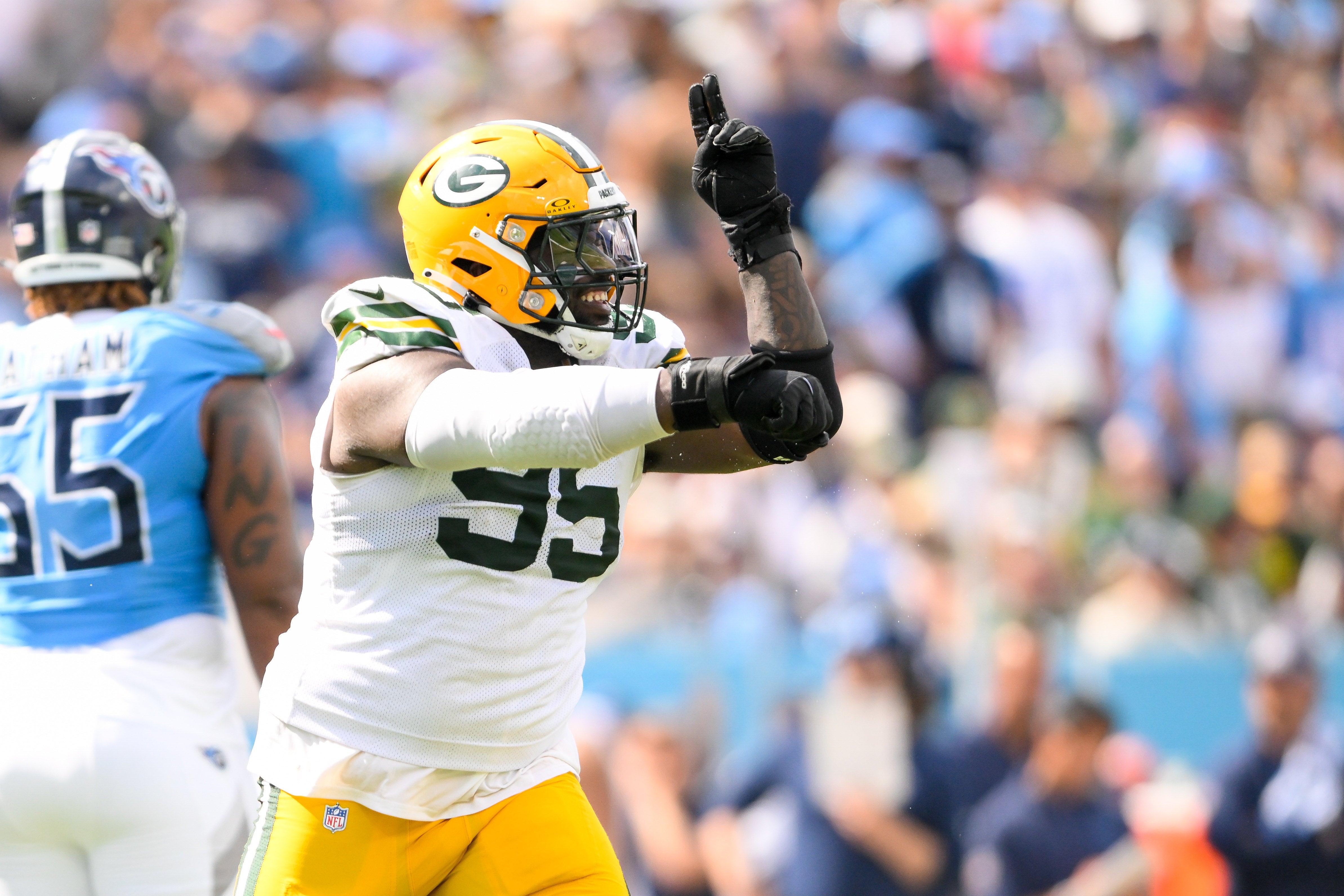
The Minnesota Vikings said they could fix Sam Darnold, and they have done it to a certain degree so far this season. Through three weeks, the bridge quarterback is eighth in EPA/play, seventh in completion percentage over expected, and 13th in success rate. So stopping or limiting Darnold becomes a priority for Jeff Hafley and the Green Bay Packers defense on Sunday. To do that, there's not an easier way than applying pressure from the middle.
Vikings' weakness
The weakest link of the Vikings offense is clearly the interior of the offensive line. So far, the starting five allowed 33 pressures — and 20 of them have been allowed by right guard Ed Ingram and center Garrett Bradbury, ten by each. Ingram and Bradbury allowed three of the five sacks the line was credited for. Three pressures per game per player is certainly suboptimal, even if head coach Kevin O'Connell does a good job of protecting them.
Sam Darnold has a 2.98 average of time to throw, but this is the issue with interior pressure. Even if the quarterback is throwing the ball quickly after the snap, interior rush can still affect the process.
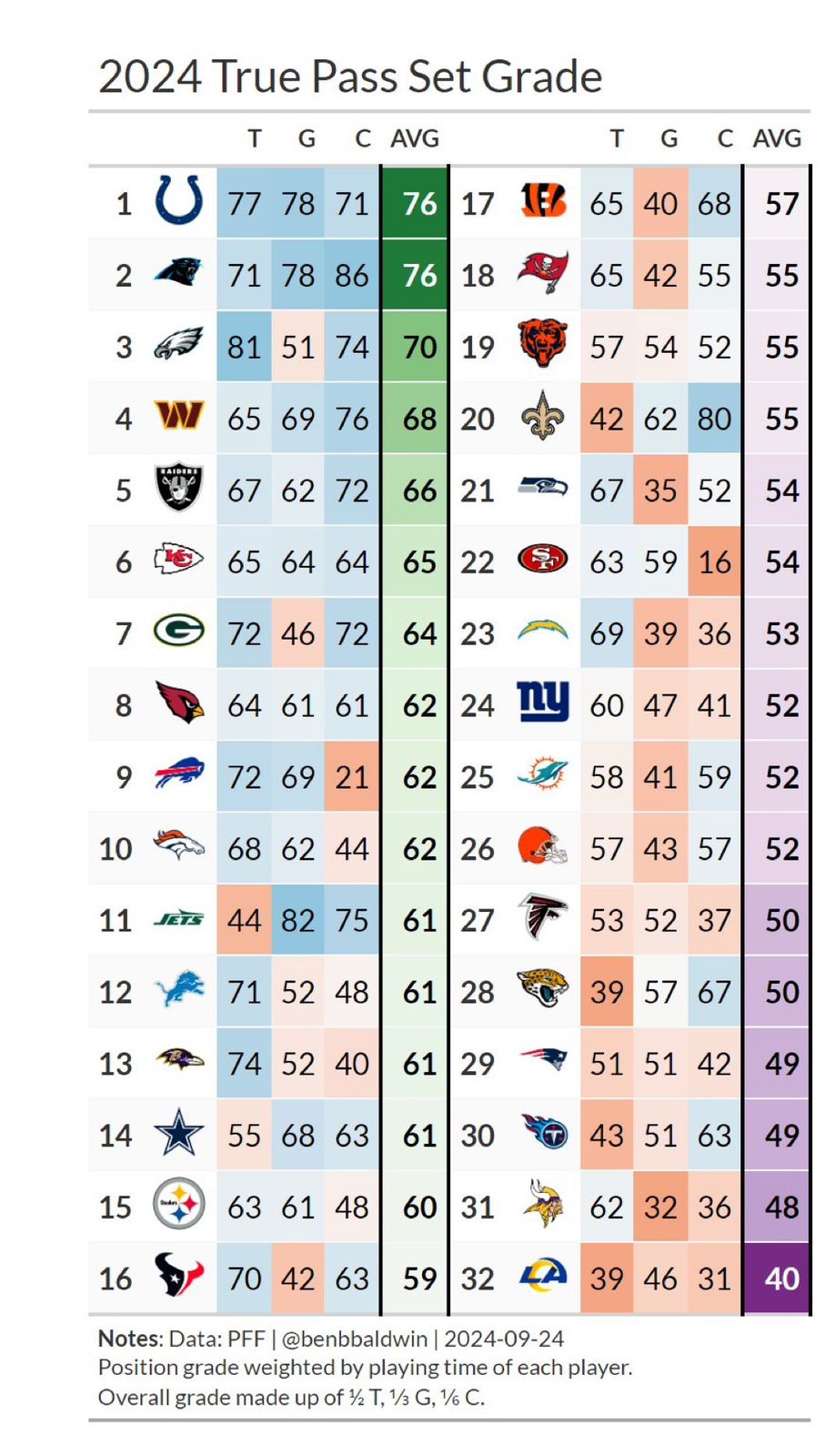
Weighting PFF grades for every position of the offensive line based on playing time, the Vikings have had the worst guard play in football so far in true pass sets — it's also the fourth worst center play.
Packers' strength
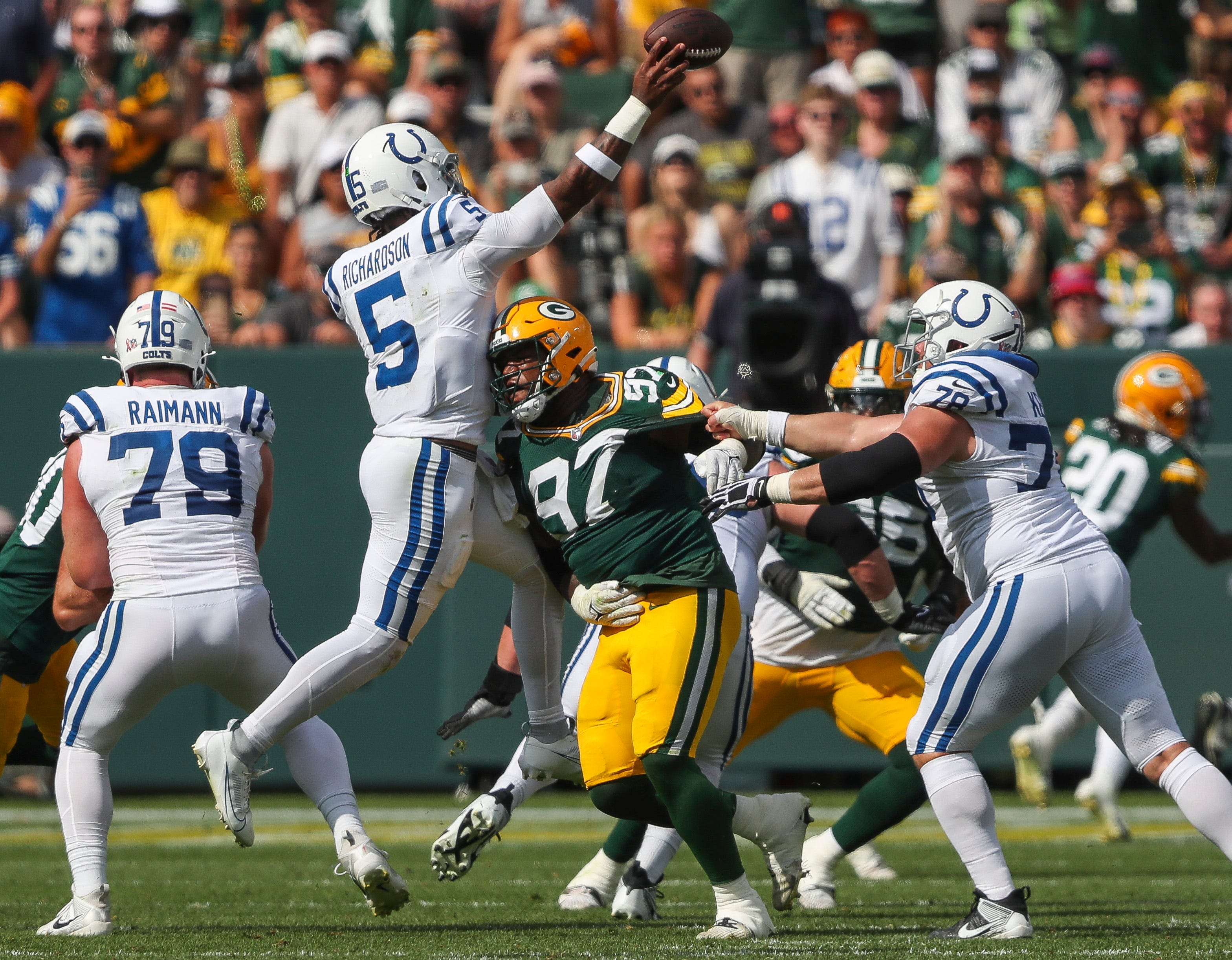
The Packers defense has been progressively better at creating pressure. Against the Tennessee Titans, that ability resulted in eight (!) sacks. The curious factor, which bodes well against the Vikings in particular, is that Green Bay has generated 21 pressures with defensive tackles this season, against 18 from edge rushers.
The two players with the most pressures generated through three weeks are Devonte Wyatt (9) and Kenny Clark (7).
If defensive coordinator Jeff Hafley hasn't been a fan of coverage disguises, games upfront to mess with the opposing offensive line have been more frequent, and interior pressure is a direct result of a philosophy prioritizing disruption.
Against mobile quarterbacks — the Packers have faced Jalen Hurts, Anthony Richardson, and Will Levis —, the defensive ends were tasked more frequently with setting the edge to avoid extended plays. While Darnold is a different style of quarterback, that approach can teach the Packers some important lessons of what they can do, especially when the opponent has so many issues inside the line.
Kevin O'Connell comes from a schematic tree designed to attack cover 3 defenses, and cover 3 is the primary coverage for Hafley (32%). While Aaron Jones is the talk of the week for obvious reasons, the Vikings' usage of Justin Jefferson to exploit the Packers' linebackers is the real reason for concern. To avoid that, the Packers will need quick pressure, and that has to (and can) come from the interior.
It’s not time to hit the panic button with a Packers Pro Bowler yet
Kenny Clark has not been solid this year


