
Packers' identity shift could be exactly what they need to compete at a higher level and finally break through in 2025
The Green Bay Packers had a relatively calm offseason. The biggest veteran additions were guard Aaron Banks and cornerback Nate Hobbs. The team released Jaire Alexander, but the only other significant loss was defensive tackle TJ Slaton. Let's talk about what's next in this week's edition of the Packers mailbag. This would be a much […]


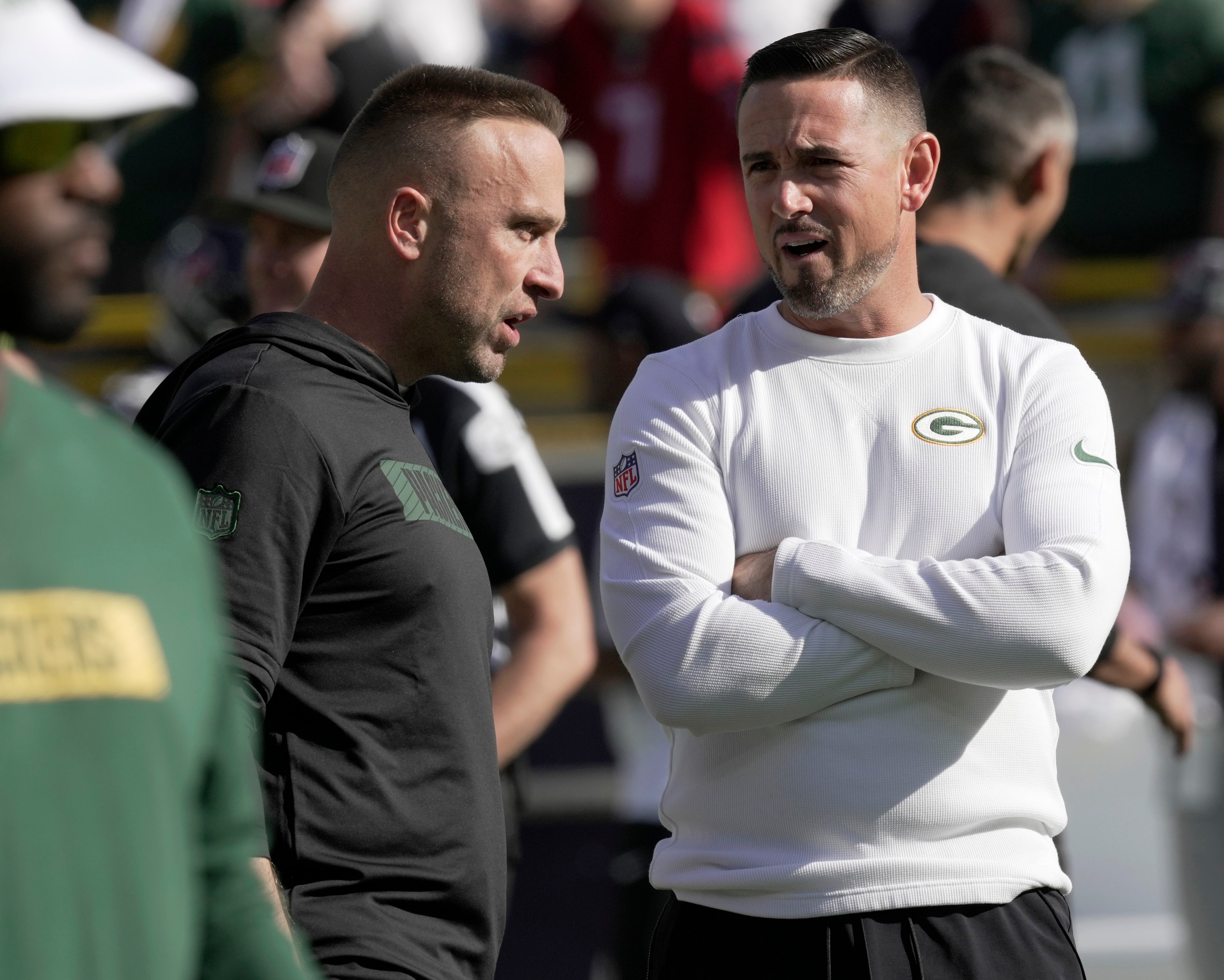
The Green Bay Packers had a relatively calm offseason. The biggest veteran additions were guard Aaron Banks and cornerback Nate Hobbs. The team released Jaire Alexander, but the only other significant loss was defensive tackle TJ Slaton. Let's talk about what's next in this week's edition of the Packers mailbag.
This would be a much bigger reason for concern a year ago. In 2024, the Packers showed a lot of progress in building a team identity with physical football on both sides of the ball, and that's why the team had two extra wins compared to 2023 even though several players individually performed at a lower level.
Defensive coordinator Jeff Hafley brought a different style of defense, much more aggressive and willing to tackle, bring extra pressure, be closer to the football. And even on offense, Matt LaFleur adjusted the unit to run the ball with more power. That's why they added Josh Jacobs last offseason, and also why they added Aaron Banks and Anthony Belton this year.
The Packers are leaving behind the identity of being young to being physical and well-coached, which is a better recipe for collective success.
This is a great way of saying a lot with just a few words. I would say it depends on the position. For cornerbacks and running backs, specifically, the answer is probably yes. Jaire Alexander is 28, for example, and there aren't many cases of players at this position who show signs of regression and then return to play at a high level. Overall, at 28 you already have to respect what the player's trend is showing you. If they've had two downs seasons in a row, for instance, it's harder to imagine them getting back to the prime.
Other positions tend to age better, though. Quarterbacks, offensive tackles, and edge rushers frequently are still impactful in their mid 30s. However, the Packers still prefer to pay players entering their second deals, and history says this is a wise approach.
I actually think Carrington Valentine is underrated. Based purely on on-field performance, he should be an unquestioned starter. Last season, he had by far the lowest passer rating when targeted (79.6) among Packers' cornerbacks, including Jaire Alexander (79.9) and Keisean Nixon (99.7). Moreover, he's the only natural boundary corner, since Nixon and Nate Hobbs come from a nickel background. He's also the younger of them at 23, which indicates a higher ceiling and developmental potential.
This doesn't mean that Valentine has been a great cornerback, and we know that he has had a limited role. But considering what the Packers' cornerback room looks like, he deserves more praise and higher expectations.
I'd expect something like the Packers did with rookie Ty Montgomery back in 2015. In the preseason, they tried to develop him as a normal wide receiver, with real routes and utilization. During the regular season, Montgomery was more of a gadget piece, which led to Mike McCarthy's conclusion that he could be converted from a wide receiver to a running back.
I don't think Savion Williams will be a back, because he's much more explosive than Montgomery as a receiver. But my point here is that the coaching staff (even though it's a different one) will try to develop Williams as a normal receiver during training camp and preseason. Then when things truly matter, LaFleur will take advantage of whatever he does well to help the offense as much as possible.
This is curious because Cox has a different body type than the Packers tend to prefer. At 250 pounds, he's lighter than the norm. However, that was a positive factor last season under Jeff Hafley, because the defense needed a faster bender off the edge, and this was a role nobody else could fill. That's why he was so efficient as a pass rusher after the Packers traded Preston Smith away.
Presumably, he won't have a bigger role this year with more competition, since the Packers drafted Barryn Sorrell and Collin Oliver, but he still offers a unique skill set in the room.
People are truly excited about Cox, huh? But I would think the Packers' priority this season will be the development of Lukas Van Ness. The former first-rounder said he played through a hand injury in 2024, which is a sliver of hope after two underwhelming seasons.
NFC North Roundtable: Multiple players had career years in 2024 with one a major candidate to regress
The success for one player is not likely to continue


