How Ted Thompson deviated from his norm to add a future Hall of Famer to the Packers
March 15, 2014. The Green Bay Packers general manager at the time was Ted Thompson, (fairly) known for his lack of aggressiveness to build an NFL roster. Draft and develop was his mantra, and there were jokes about how he would sign free agents or pull off trades. Out of nowhere, though, Thompson executed one […]


March 15, 2014. The Green Bay Packers general manager at the time was Ted Thompson, (fairly) known for his lack of aggressiveness to build an NFL roster. Draft and develop was his mantra, and there were jokes about how he would sign free agents or pull off trades.
Out of nowhere, though, Thompson executed one of the biggest external moves he would ever make. Four days after being released from the rival Chicago Bears, star edge defender Julius Peppers signed a three-year, $30 million deal with the Packers. Curiously enough, his last relevant play for Chicago was an almost sack on Aaron Rodgers. But the quarterback escaped the pocket to find Randall Cobb on a 4th & 8 conversion for a touchdown that gave the Packers a win, the NFC North title, and a playoff spot.
Almost ten years later, on Thursday, Julius Peppers was elected into the Pro Football Hall of Fame. He made it in large part because of what he did for the Carolina Panthers and Chicago Bears, but there was also a special chapter of his career in Green Bay.
"I have a lot left in the tank," Peppers said right after signing his deal. "I have a lot left to give, a lot left to offer. I want to show people I can still play the game at a high level."
Well, he did.
How it happened
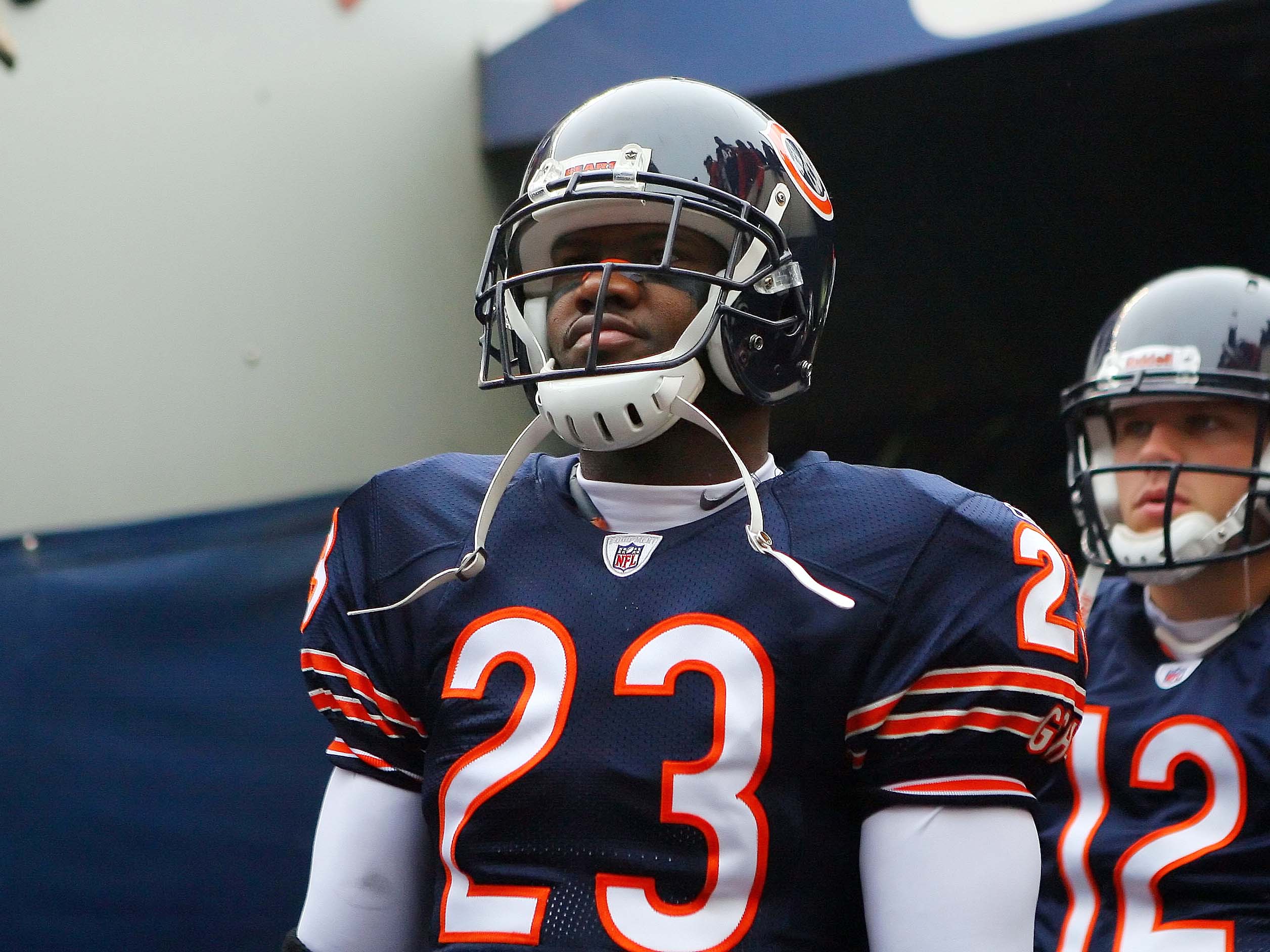
Julius Peppers was already a big-time star, three-time First-Team All-Pro when he signed a six-year deal with the Bears in 2010. The contract included $42 million in guarantees over the first three years, $91.5 million in total value. And while the guarantees were in place, Peppers played as well as the Bears could have hoped for.
In 2013, however, he had a slight decline, finishing the season with seven sacks — his worst number since 2007. He was slated to cost more than $18 million in cap hit for the Bears in 2014, so instead of trying a new version of the deal, Chicago simply released him.
That opened the door for something the Packers weren't exactly used to do: adding a big-time external free agent. But it was a perfect storm.
Green Bay had former first-round picks Clay Matthews and Nick Perry on the roster, but each of them had played only 11 games in 2013 because of injuries. Ted Thompson understood it was important to add more pieces, and that team was close to contention.
The Julius Peppers situation had one more particular aspect for a draft-centric management style. As he had been released by the Bears, he wouldn't count against the Packers compensatory pick formula. A silent, fast negotiation took place.
"This happened fast. It happened very quietly," the late Ted Thompson proudly said at the time. "It was one of those rare things where the thing was put to bed and everybody was back home before anybody knew about it. Quite frankly, it was kind of refreshing to do it that way. We obviously followed him throughout his career, and we look forward to seeing him in a Packers uniform."
It was the second biggest contract the Packers gave to an external free agent during Ted Thompson's tenure, only behind Charles Woodson in 2006. And Thompson used that to show he explored free agency, even though the perception around the team wasn't that.
"People who say we don't use free agency are wrong," Thompson added. "We've always dabbled in free agency. Sometimes you can spend a lot of time and effort recruiting a guy, which we've done in the past, and nothing comes of it, and nothing comes out publicly and people assume we didn't try to do something. We almost always, almost every offseason, try to do something in free agency, certainly with our own guys but also with guys around the league."
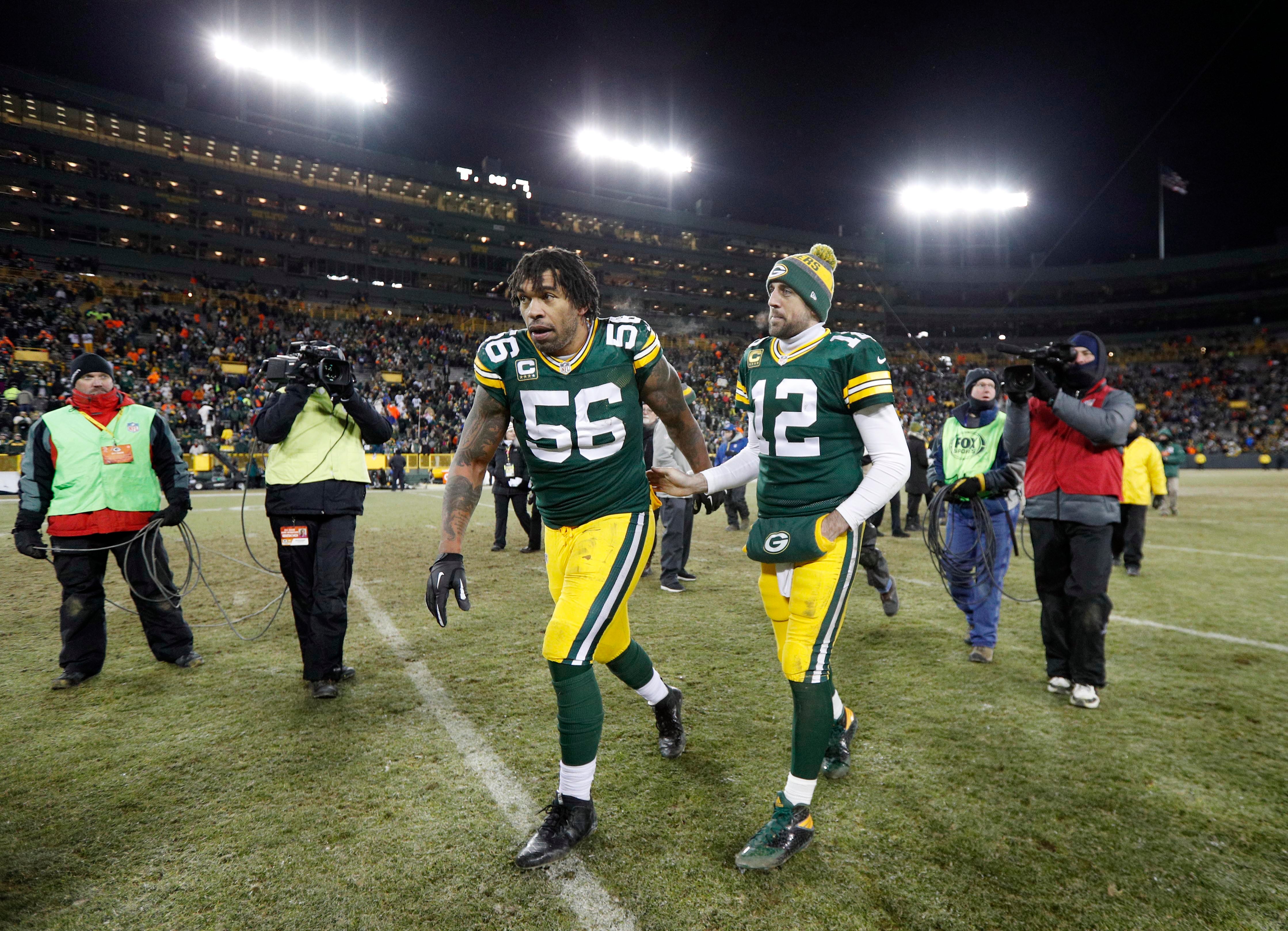
Peppers ended up playing 73.95% of the defensive snaps in 2014, 66.44% in 2015, and 56.75% in 2016. During his three years, he led the team with 25 sacks — followed by Matthews (22.5), Perry (17.5), and Mike Daniels (13.5). They came close to a Super Bowl in the 2014 season, and a Peppers' fateful sign for Morgan Burnett to give up the play after an interception didn't help the Packers in a traumatic series of events.
When his initial deal with the Packers expired, Green Bay let him walk in free agency, and he returned to the Carolina Panthers for the last two seasons of his NFL career.
But the 2014 NFCCG and his departure two years later don't erase how significant the Peppers addition was, how Packers fans felt with that signing. And it was impossible not to remember that with the star defender going to Canton. Deservedly so.