
Packers line up replacement options to handle significant talent lost early in the offseason
It’s all part of a big-picture process.


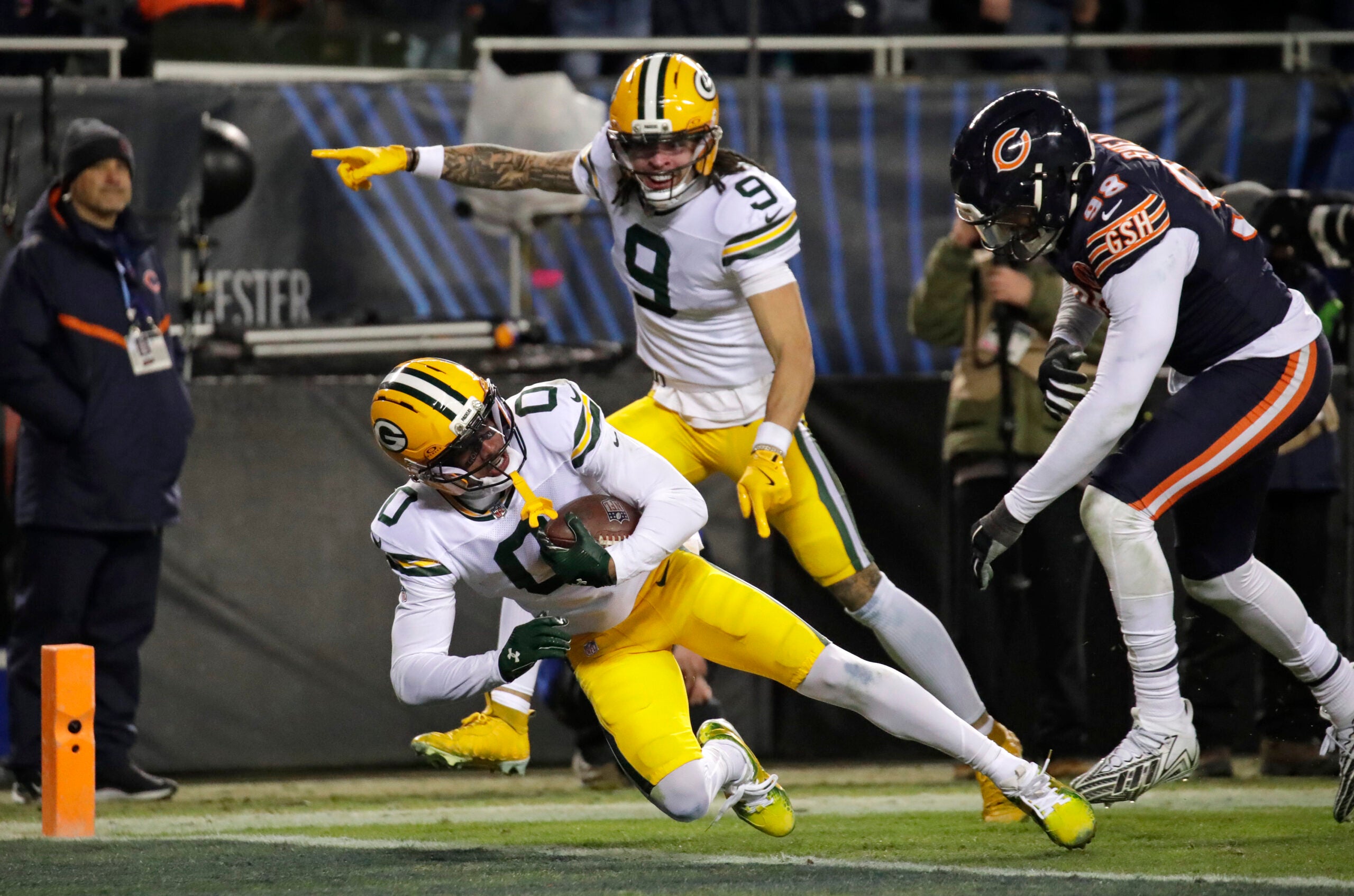
If you look at what the Green Bay Packers lost and gained in the early portion of the offseason, it’s unquestionable that the net is negative — the roster lost more talent than what was possible to add. But that would also be a misguided and incomplete way of analyzing how general manager Brian Gutekunst and his front office build the team.
As a draft and development organization, the Packers usually tend to add players based on talent and future projections. When a player is lost in free agency, there’s normally another way waiting for more opportunities. It may or may not work sometimes, but any type of roster-building strategies would have hits and misses.
Evaluating what the Packers lost, most of those spots have clear replacement options in place — and addition by subtraction can be real. Let’s discuss what are the alternatives to each player who left the organization.
Rashan Gary
Gary was traded for a fourth-round draft pick, and his immediate replacement is Lukas Van Ness. The Packers created this model to select athletic but raw edge defenders, and it’s ironic that Van Ness will replace Gary, both drafted under similar premises. Sure, moving Van Ness to the starting spot creates some depth issues, but that’s why you keep adding developmental pieces.
Elgton Jenkins
That’s an easy one because it already happened. When Jenkins suffered his leg injury last season, the Packers moved Sean Rhyan from right guard to center and actually saw an improvement there. Rhyan isn’t as prolific as a pass protector, but he’s a better run blocker — and as a younger player, there’s more room to grow. The versatility to play center or guard is there as well.
Nate Hobbs
Hobbs was released, and the Packers signed Benjamin St-Juste to give the cornerback room more depth. The good news is that St-Juste actually can play boundary, while Hobbs was better suited to play in the slot — and there, the Packers already have Javon Bullard. Hopefully, St-Juste can stay healthy, because that’s something Hobbs didn’t do in his lonely season in Green Bay.
Romeo Doubs
The Packers have a lot of depth at wide receiver, at least for this year, but Matthew Golden is the one piece that could benefit the most from getting more targets. As a rookie, Golden had significant snaps, but he was always an afterthought. When he did get targeted, especially in the playoff game against the Chicago Bears, the first-rounder showed his talent. The Packers might not have a clear X receiver like Doubs was, but Golden and Christian Watson can operate together at the same time on the outside, with Jayden Reed more in the slot.
Quay Walker
Two weeks ago, we could say that Ty’Ron Hopper would be that option. But the Packers didn’t feel comfortable with that scenario, which motivated them to acquire Zaire Franklin via trade from the Indianapolis Colts — and then give Franklin a raise on top of that. Edgerrin Cooper is still the top linebacker on the roster, but Franklin is a more natural middle linebacker, so the fit can be even more natural than it was with Walker.
Malik Willis
That’s a tough one because it’s nearly impossible to replicate what Willis produced as a backup quarterback for the Packers. But even if Willis had re-signed, it would be hard to keep up that level of performance — it was too small of a sample size to make definitive proclamations. Right now, the option behind Jordan Love is Desmond Ridder, who has starting experience — and probably played better than Willis had for the Tennessee Titans before the trade. The question is always how Matt LaFleur can scheme around his limitations.
Kingsley Enagbare
Enagbare was a solid rotational edge rusher throughout his rookie deal, and a great run defender over the past few years. After he left, that role could go to Barryn Sorrell — who was drafted a round earlier. Sorrell didn’t play much as a rookie because the Packers had a deep edge group, but he started against the Minnesota Vikings in Week 18, generated two pressures, a sack, five stops, and had a reasonable performance against the run.
Emanuel Wilson
The Packers have Josh Jacobs and Chris Brooks, so a backup running back who can carry the ball on early downs if Jacobs isn’t available is not necessarily a big concern. But MarShawn Lloyd is probably that piece now. The question is health, as it’s been throughout Lloyd’s NFL career. But if he’s fully healthy and in regular shape after so many issues, the talent is undeniable. Here, though, it’s possible that the Packers look for another long-term option.
Zayne Anderson
The most natural option for a backup safety who’s an important special teamer is Kitan Oladapo, who played almost as many snaps as Anderson last season. Beyond him, though, the Packers also have Johnathan Baldwin, a former undrafted player who had 66 snaps on defense and 14 on special teams as a rookie.
Green Bay Packers News
Packers way too early 53-man roster projection after the first wave of free agency and key offseason moves
Packers still have a lot of work to do.


