
Five young pieces who need more playing time for the Packers
The path to the playoffs became more realistic for the Green Bay Packers after a win over the Los Angeles Chargers on Sunday, and the team will fight to be in the postseason. But this is still an evaluation season of the roster, and it's important to give young guys more playing time to analyze […]


The path to the playoffs became more realistic for the Green Bay Packers after a win over the Los Angeles Chargers on Sunday, and the team will fight to be in the postseason. But this is still an evaluation season of the roster, and it's important to give young guys more playing time to analyze who can be a big part of the plans beyond 2023.
The extra playing time is important for two reasons. First, it's a great opportunity for inexperienced players to learn and grow. Second, it's also a chance for the coaching staff to see how they can deploy these players to maximize their talents.
EDGE Lukas Van Ness
The Packers love to slow play their young players, and the defense doesn't have the same youth movement. So it's understandable that Lukas Van Ness develops behind Rashan Gary and Preston Smith. But is there a reason for Van Ness to have fewer snaps than Kingsley Enagbare? Throughout the season, Enagbare has played 40.15% of the defensive snaps, against 32.74% from Lukas Van Ness. Against the Chargers, last year's fifth-rounder played 22 snaps, while Van Ness was on the field for just 12 plays.
Even playing much more snaps, Enagbare has just one more pressure (8 to 7) and the same number of sacks (1) than Van Ness. The rookie has a better overall PFF grade (62.8 to 58.7), pass rush grade (60.1 to 58.9) and run defense grade (60.6 to 60.5).
If Van Ness has been better on a play by play basis, is the higher investment, and has the higher ceiling, it's hard to find a good reason not to play him more.
WR Dontayvion Wicks
Wicks was the Packers leading receiver against the Chargers with 91 yards, and he got those playing just 24 offensive snaps — significantly fewer than Christian Watson (56), Jayden Reed (50), and Romeo Doubs (49). He's also fourth in the season, having played 42.28% of the snaps, even considering that Watson missed the first three games.
Wicks is the best Packers receiver at creating separation, and Jordan Love is starting to achieve a better connection with him. He will certainly not play ahead of Reed, for example, but he deserves something closer to 50% of the snaps per game.
RG Sean Rhyan
Rhyan played 21 offensive snaps in the last couple of weeks, and he did pretty well. If the Packers are playing Rasheed Walker at left tackle over Yosh Nijman in part because Walker is under contract beyond 2023, the same logic should apply at right guard. Jon Runyan has not been good, especially at run blocking, so Rhyan should get more opportunities for the Packers to see what they have in last year's third-round pick.
TE Tucker Kraft
Kraft has already surpassed Josiah Deguara on the depth chart over the last couple of weeks, and he's had 31.64% of the offensive snaps, against Deguara's 22.69%. That difference might get bigger until the end of the season, as Deguara is a worse player, with a lower ceiling, and without a contract for 2024. Kraft has taken important steps in his development, blocking better and even appearing as a receiving weapon eventually.
S Anthony Johnson Jr.
The seventh-round rookie has played 20.3% of the defensive snaps, which is right around where you should expect and hope. The problem is that Jonathan Owens has played over him, with 50.22%, and there's little reason for it. The Packers are probably more comfortable getting experienced guys on the field, but their performances don't justify that. When Rudy Ford and Darnell Savage are back from injury, they will start. But Johnson should be the first alternative.
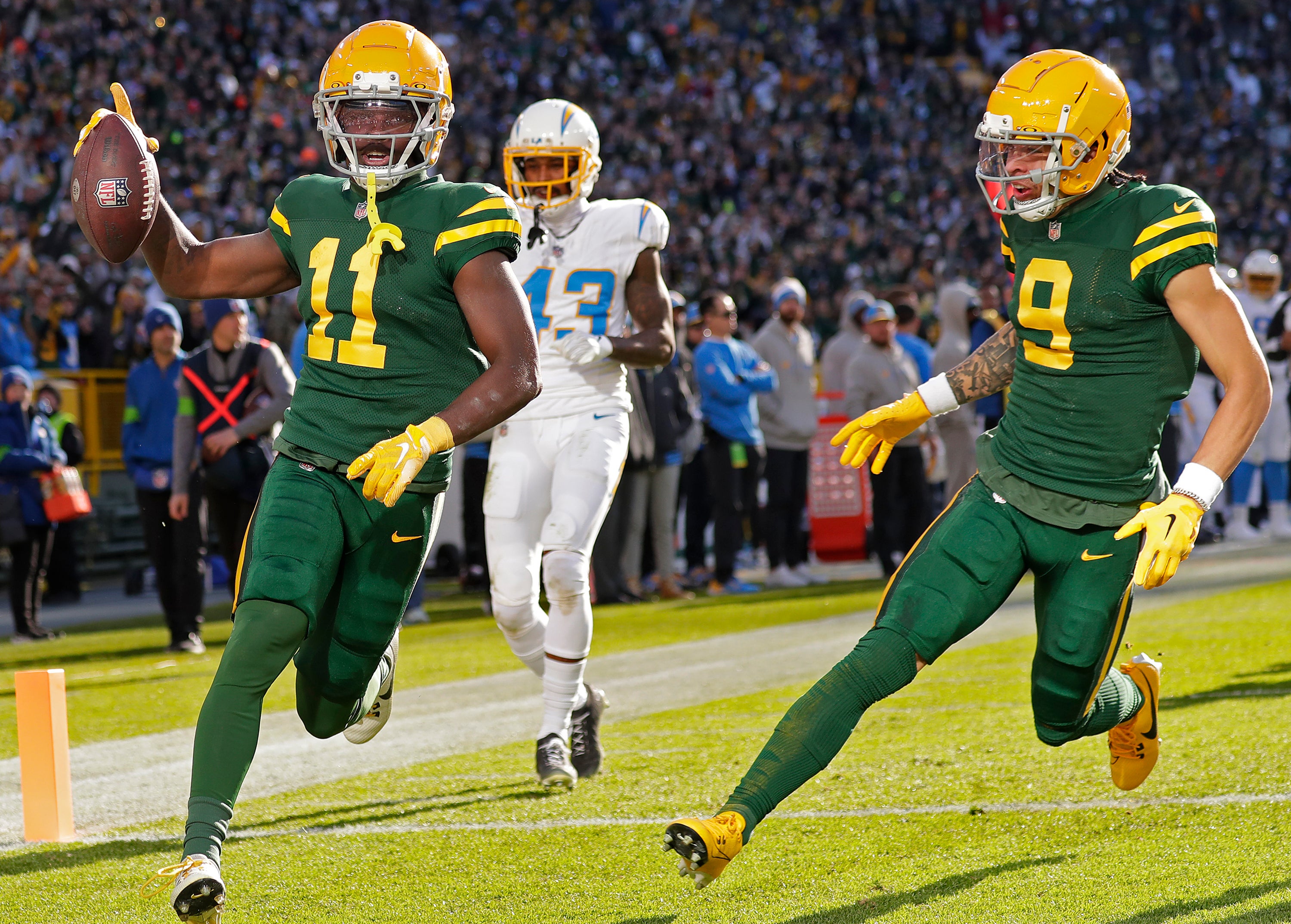
Rookie WR shines in Packers win over the Chargers
Jayden Reed had 92 scrimmage yards


