
There's a major misconception about Jordan Love right now, and it's leading to flawed projections for the 2025 Packers offense
Yes, the Green Bay Packers were unusually run-heavy in 2024. It was the first time since 2003 that the franchise was below 50% in pass rate, which you would expect with quarterbacks like Brett Favre and Aaron Rodgers. But this has nothing to do with how much or little head coach Matt LaFleur trusts quarterback […]


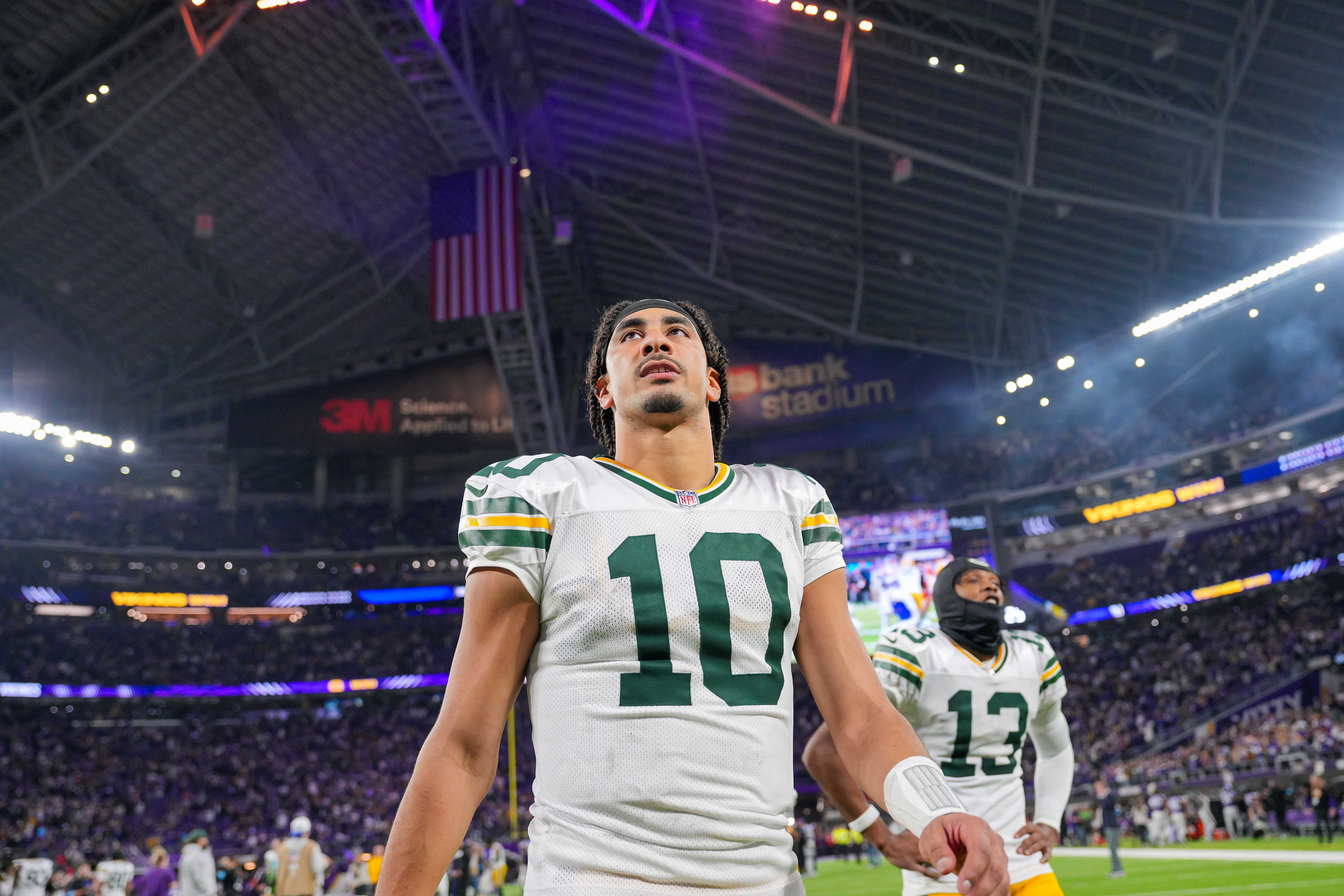
Yes, the Green Bay Packers were unusually run-heavy in 2024. It was the first time since 2003 that the franchise was below 50% in pass rate, which you would expect with quarterbacks like Brett Favre and Aaron Rodgers. But this has nothing to do with how much or little head coach Matt LaFleur trusts quarterback Jordan Love, and it's probably not a sustainable projection of what will happen in 2025.
Fantasy Points Data brought to attention how much more passing-happy and aggressive the Packers were in the small portion of the season where Love was relatively healthier, and it's a massive difference in playcalling approach.
The team went from 32nd when Love was hurt to seventh in that timeframe in pass rate over expectation. That shows Green Bay didn't necessarily want to be run-heavy, it was just a way to protect Love. The team still got an efficient offense, finishing fourth in offensive DVOA. Meanwhile, the passing offense had to rely on big plays.
"We've called a little bit more aggressive plays down the field, and it takes the guys up front being able to hold on to do that," Matt LaFleur said during last season. "We've done a good job in the run game, probably generating more explosives with our rushing attack than we have maybe in the past. It's a credit to some of the scheme, and then our guys again, being able to go out there and execute."
Differences in style and success
Jordan Love hurt his knee in Week 1 against the Philadelphia Eagles in Brazil, then his groin against the Jacksonville Jaguars in Week 8, and finally his elbow in Week 18 versus the Chicago Bears. The healthiest version of Love appeared between Weeks 11 and 17, and you can see a massive difference in level of play — and even how Love played.
"There's like a narrative out there for whatever reason that he wasn't as productive as the year before," LaFleur recently said about Love. "Well, he missed significant time. He missed the better of three games. Really, it was Indy. It was Tennessee. He went out in Jacksonville and then he went out in Chicago. So, you know, three games is a significant amount of time, and you're not going to produce as much from a numbers perspective. Also, let's be honest, we've talked about this, we did have a lot of drops last year. So there are other circumstances that play into it. I think all in all, everybody's going to be better, though."
Analyzing performances from the entire season, Jordan Love was ninth in EPA/play, 15th in success rate, and fourth in air yards. Meanwhile, evaluating only the period between Weeks 11 and 17, Love was third in EPA/play, seventh in success rate, and seventh in air yards.
He didn't need to rely on big plays as much, the consistency got significantly better, and the offense became even more efficient.
Projection
Going back to 2023, when Jordan Love had his first season as an NFL starter, the Packers had a 57% pass rate. That was a much more realistic representation of what LaFleur wants the offense to be.
The Packers added left guard Aaron Banks to get better in run block, but the additions of Matthew Golden and Savion Williams in the draft also indicate a desire to play more consistent and reliable in the passing game.
The Packers trust Jordan Love to lead the offense, but health will always be a significant part of how the 2024 season shook out.
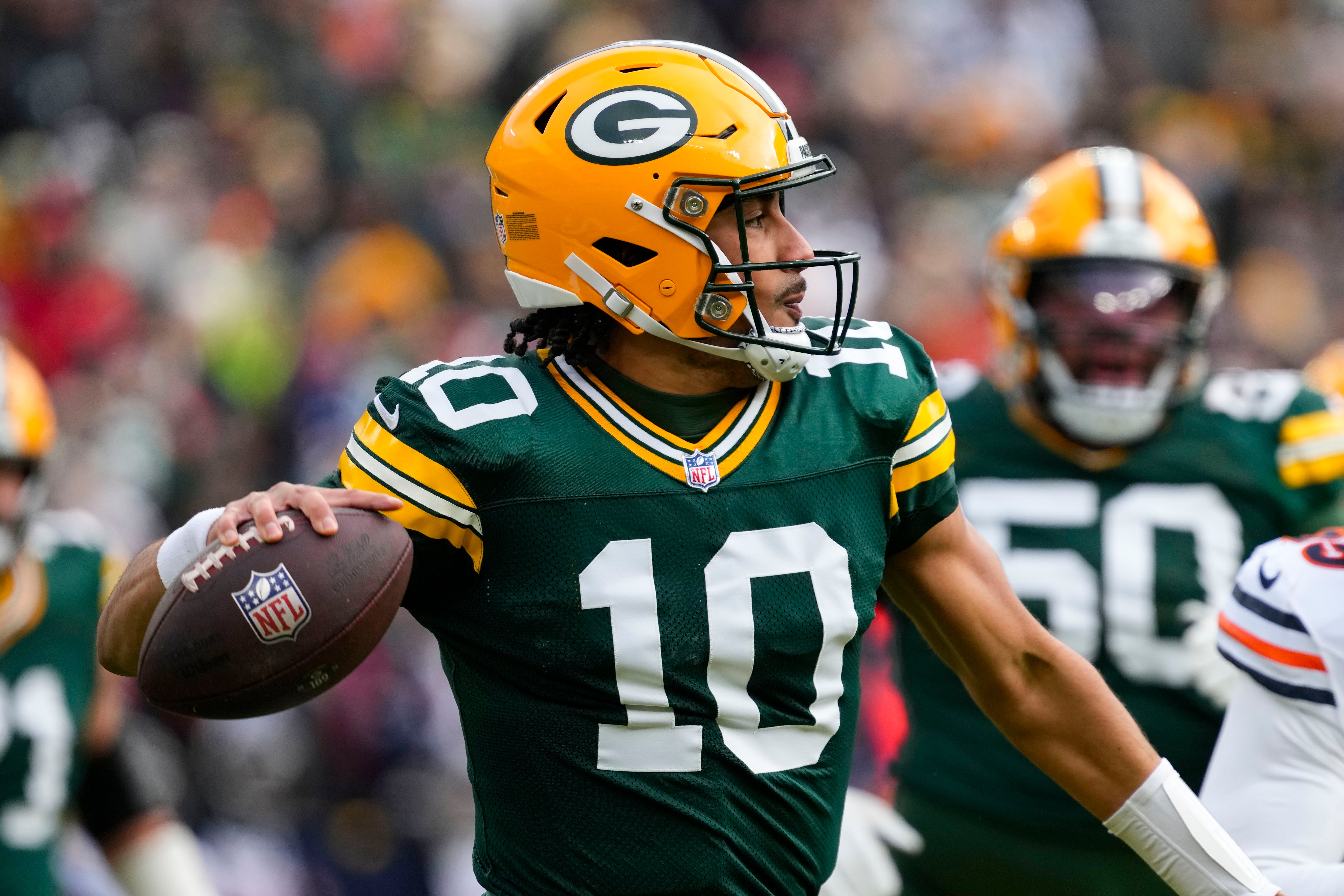
Jordan Love lands in elite company as Dan Orlovsky highlights detail that shows the Packers QB already belongs in rare air
Quarterback has had impressive production


