
Three worst moves of the Packers' offseason
The Green Bay Packers made several moves throughout the offseason. And, to be fair, most of them made a lot or total sense. But not everything is perfect around Title Town, and some decisions deserve a closer look. It's the dead period in the NFL, so that allows us to go deep into these types […]


The Green Bay Packers made several moves throughout the offseason. And, to be fair, most of them made a lot or total sense. But not everything is perfect around Title Town, and some decisions deserve a closer look.
It's the dead period in the NFL, so that allows us to go deep into these types of topics to understand (and eventually criticize) what general manager Brian Gutekunst did.
So, let's evaluate the Packers' three worst moves so far in 2024.
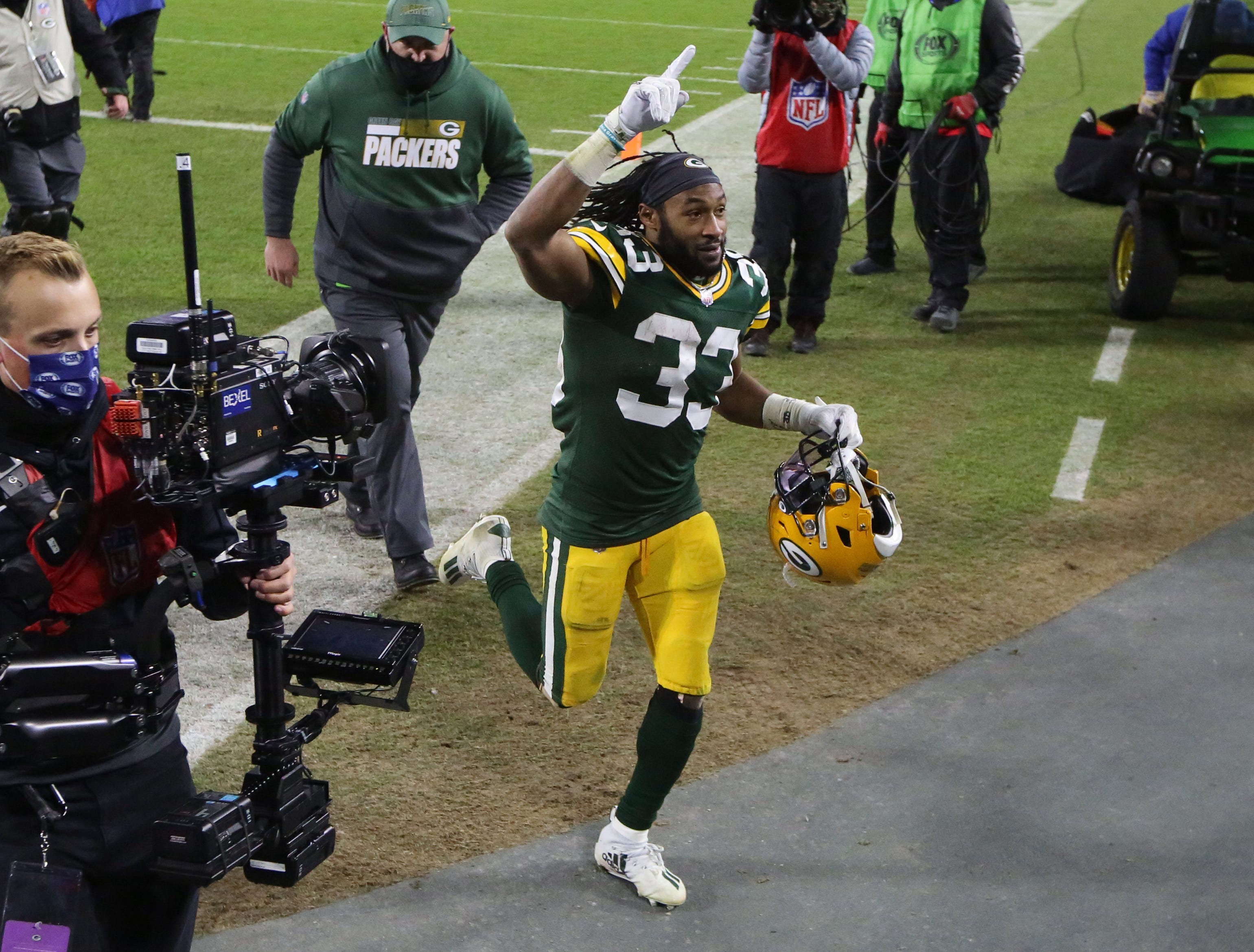
Releasing Aaron Jones
I know, I know, going from Aaron Jones to Josh Jacobs made sense. Jacobs is three years younger and is expected to be able to carry a heavier workload. But why not keep both?
You could fairly argue that a money issue would ensue, and that paying one running back is already a questionable process. Philosophically speaking, I would agree. But Aaron Jones is a star, he is a real difference-maker, and he hasn't shown signs of decline in play. He's making $6 million guaranteed with the Minnesota Vikings, while the Packers are *checks notes* paying a combination of $5.982 million to running back AJ Dillon and offensive guard Royce Newman. If you try to pull this trade off on Madden, the system prevents you from doing so.
Moreover, Jacobs and Jones have incredibly complementary skills sets. The Packers have a really inexpensive group of wide receivers, tight ends, and offensive linemen, and that would allow them to fiscally responsibly pay a significant amount to running backs. At least for a year.
If Aaron Jones can't be healthy once again or if the combination of the two doesn't make sense, the Packers could certainly let Jones walk in free agency next offseason — and that would even generate them a compensatory pick. By moving on from him now, the Packers lost that benefit, and just to watch him go to a divisional rival.
Signing Andre Dillard
The magic behind what the Packers did in 2023 with their wide receiver group was not only adding a lot of young pieces, but allowing them to have space, to develop and grow with reps, mistakes, failures, and finally success. Repeating a mistake they made by signing Sammy Watkins in 2022, taking reps away from Christian Watson and Romeo Doubs, didn't make sense — especially after Aaron Rodgers got traded to the New York Jets.
So why don't they take the same approach with the offensive line this time around? Sure enough, it's important to keep Jordan Love healthy. But if that's the case, they should have signed a real improvement over what they had or were presumed to add.
Andre Dillard was a first-round pick and a really good prospect. However, he hasn't panned out. Last year for the Tennessee Titans, he was one of the worst starting left tackles in football.
And because he's on the roster, he's preventing practice time for young players like first-round rookie Jordan Morgan. Because that's what coaches do. When there's a veteran in place, they make the young guys earn reps, when in reality Dillard has never earned them either.
The Packers are fine with Rasheed Walker and Zach Tom at tackle at the moment. But based on what OTAs showed us, Dillard might be a realistic swing tackle option. And if he has to play, Jordan Love won't be protected. If there will be a risk anyway, why don't they just give the reps to the player with a real shot to be good?
Moving Alex McGough to WR
The first question when we discovered that Alex McGough had switched positions was a resounding "Why?". Basically, the Packers drafted Sean Clifford and Michael Pratt over the last two years, so McGough didn't have a real shot at making the team as a quarterback.
"He's a really athletic guy," head coach Matt LaFleur explained. "He spent a lot of time on the scout team running receiver routes, and he did such a great job. We feel like he's such a talented athlete, why not give him a chance there? He's a smart guy, works his tail off. I think he can contribute on (special teams) as well. We felt like that might be his best chance here."
That's a fine explanation, but how realistic is this? The Packers have five receivers who basically secured a spot on the 53-man roster (Christian Watson, Romeo Doubs, Jayden Reed, Dontayvion Wicks, and Bo Melton), plus Malik Heath, Samori Toure, and Grant DuBose trying to make it. They also have Julian Hicks and Dimitri Stanley, true wide receivers, coming as undrafted signings.
Maybe Alex McGough finds himself as a really good contributor at receiver with some time to develop, but is it worth using a roster spot for that? The UFL showed a lot of interesting pieces, and maybe Hakeem Butler is a better alternative. If McGough, who has already been an MVP quarterback in the USFL, wants to make a transition, a minor league is likely a better place to start.
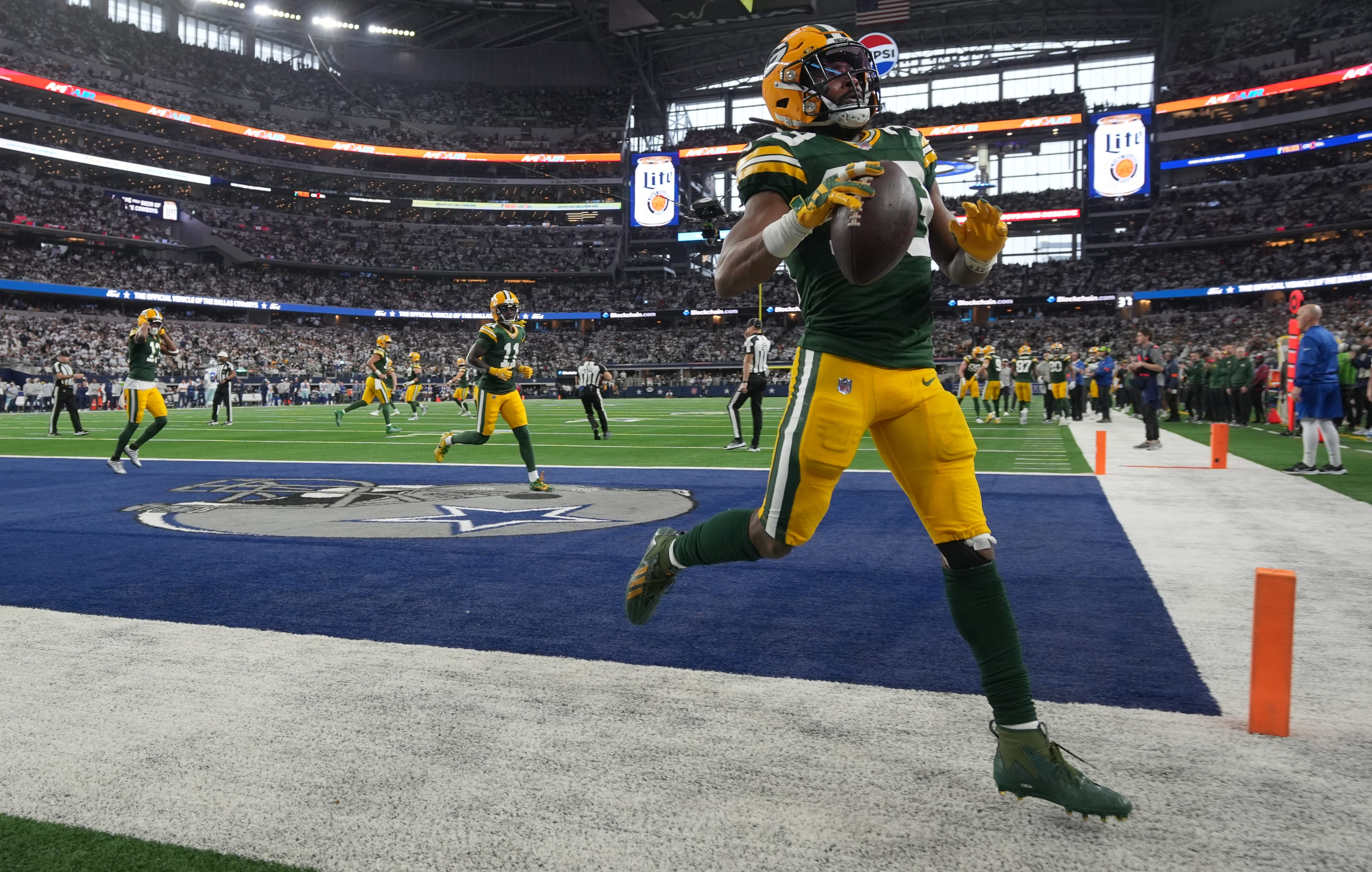
Three reasons behind the Packers’ decision to move on from Aaron Jones to sign Josh Jacobs
Green Bay released Jones after seven seasons


