
If Aaron Rodgers wants to succeed with the Jets, he must embrace something he hasn't
Look at some of the best offenses in football this season, and you see a thing in common. High numbers in motion rate. It's 67.7% for the San Francisco 49ers, 63.2% for the Kansas City Chiefs, 61.4% for the Detroit Lions, 59.3% for the Green Bay Packers. There are even more extreme cases, like 78.2% […]


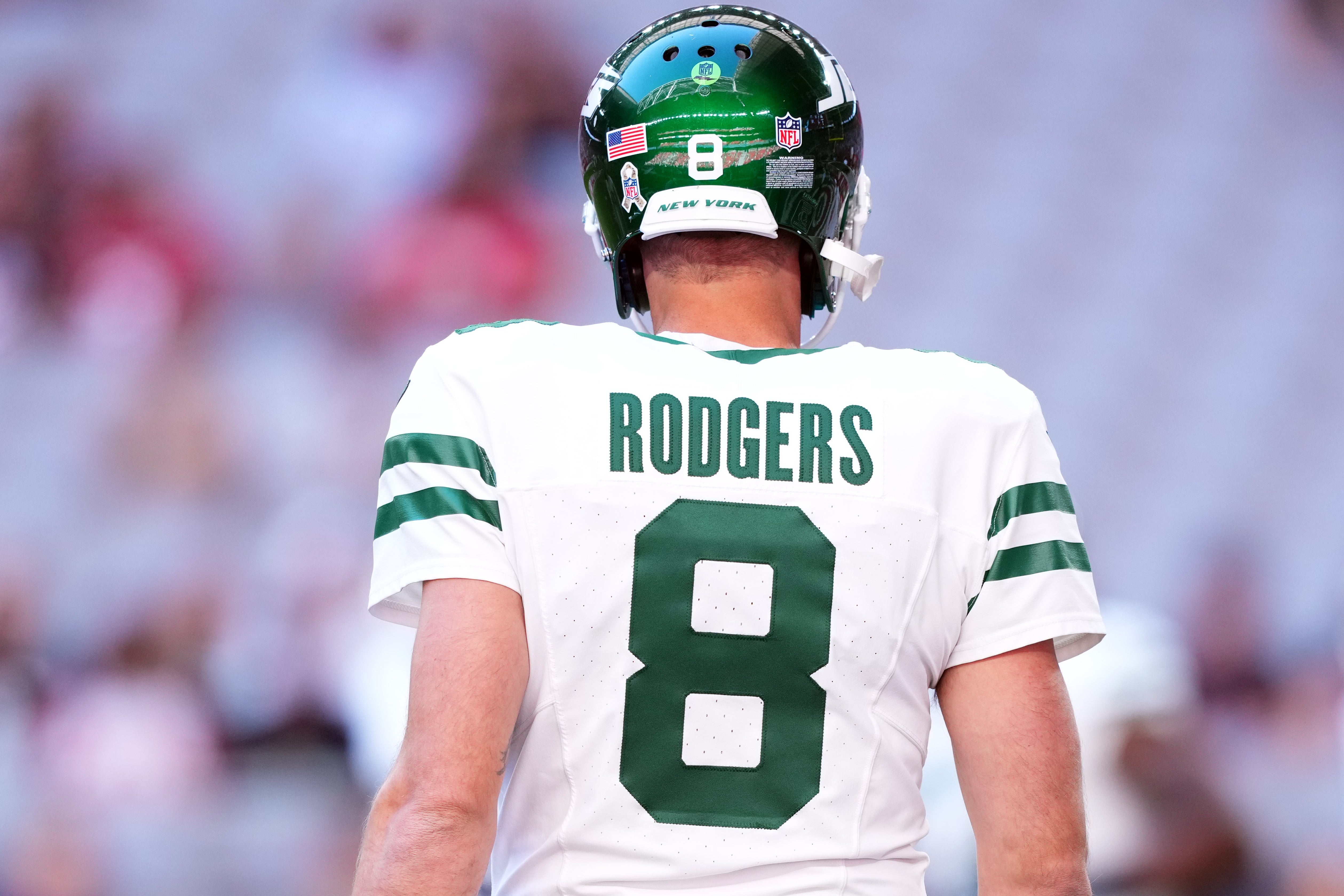
Look at some of the best offenses in football this season, and you see a thing in common. High numbers in motion rate. It's 67.7% for the San Francisco 49ers, 63.2% for the Kansas City Chiefs, 61.4% for the Detroit Lions, 59.3% for the Green Bay Packers. There are even more extreme cases, like 78.2% for the Miami Dolphins and 78.1% for the Los Angeles Rams.
Before Week 10, the New York Jets were tied for 14th. It's not exactly bad, but a 44.6% rate looks pretty low compared to the league average of 57.4%. The Jets are also slightly below average in play action rate. With a quarterback soon to be 41 years old and significant problems along the offensive line, it's hard to understand the process.
Especially in 2020 but also in 2021, Aaron Rodgers executed Matt LaFleur's offense at a high level with the Green Bay Packers. The more they tried to adapt the scheme to what Aaron Rodgers prefers, the less efficient they were.
The idea of bringing Nathaniel Hackett was to make Rodgers comfortable, for the veteran quarterback to run an offense that he wants and likes to. But at this point in his career, there's simply too much evidence of that style not working anymore.
While the Packers scored 34 points on the Cardinals a month ago, the Jets couldn't score more than six. Sure, there is a talent discrepancy, but it doesn't look as big on the paper and it has been on the field.
"There's been a lot of emotions this year for sure," quarterback Aaron Rodgers said after the 31-6 loss to the Cardinals on Sunday. "I thought after a big win on Thursday night and a nice long week we were going to come out with a lot of energy and win the game. We didn't come out with great energy on either side of the ball and offensively, you're not going to beat anybody scoring six points."
Right now, the Jets are done in the 2024 season. The team is 3-7, with six losses in the last seven games. To make the playoffs, they would have to run the table, a task that seems unlikely considering what the Jets have done and that the team would have to beat the Seattle Seahawks, Miami Dolphins (twice), Los Angeles Rams, and Buffalo Bills.
"It's a lot of different emotions. It seems like there's a lot," Rodgers added. "That's a loaded answer, but it's not the time or the place to get into any of that right now. At some point, I'll give you a better answer."
If not the present…
As the 2024 season seems over, so Jets fans can already try to project what's ahead. Head coach Robert Saleh was fired and interim Jeff Ulbrich hasn't done enough to justify serious consideration to keep the job.
General manager Joe Douglas has a 30-63 record over six seasons, a lower winning percentage than his two predecessors, John Idzik and Mike Maccagnan. There might be a new GM in town as well.
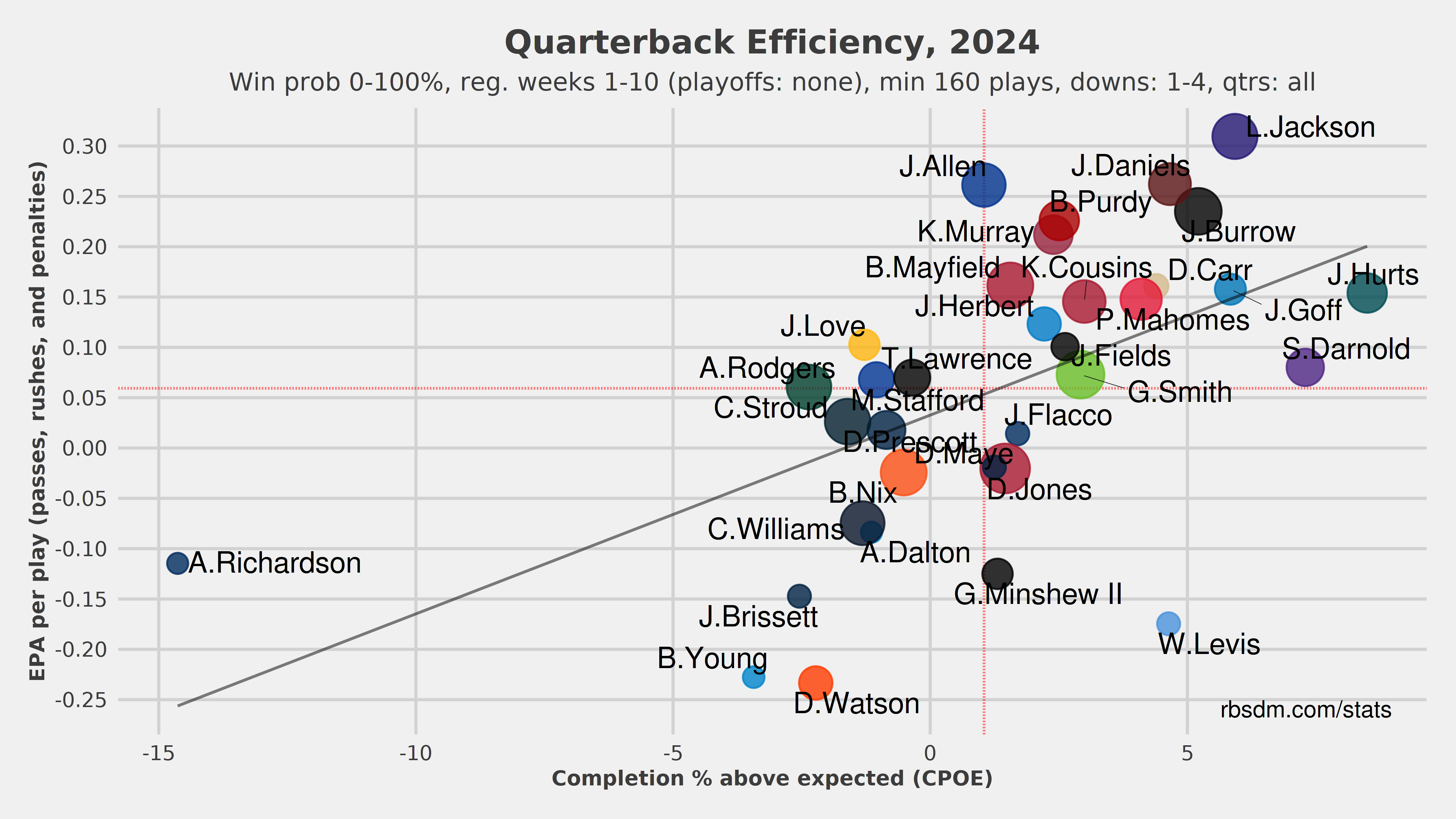
But what to do at the quarterback position and with the staff are tougher questions. In 2024, Rodgers is 21st among 34 quarterbacks in EPA+CPOE composite.
If the Jets release Aaron Rodgers (or if he retires), there will be $49 million in dead money. And the team doesn't have a succession plan in place. It's realistic to say that Rodgers still gives the Jets their best chance to win in 2025 — which says a lot per se.
But if Aaron Rodgers wants to keep playing and to compete at a good level, he has to be open for a more modern offense. The Aaron Rodgers offense hasn't worked in a long time, and at 41 years old, he doesn't have what it takes to overcome that anymore.

How and when the Jets can get rid of Aaron Rodgers’ contract
Veteran quarterback is in the second to last year of his deal with the Jets


