San Francisco 49ers' smart free agency approach has put them in envious position for NFL Draft
The free agency period looked like it could be a tricky one for the San Francisco 49ers to negotiate in the wake of their Super Bowl 58 loss to the Kansas City Chiefs. Bereft of cap space and with several issues to address, San Francisco general manager John Lynch and the 49er front office were […]

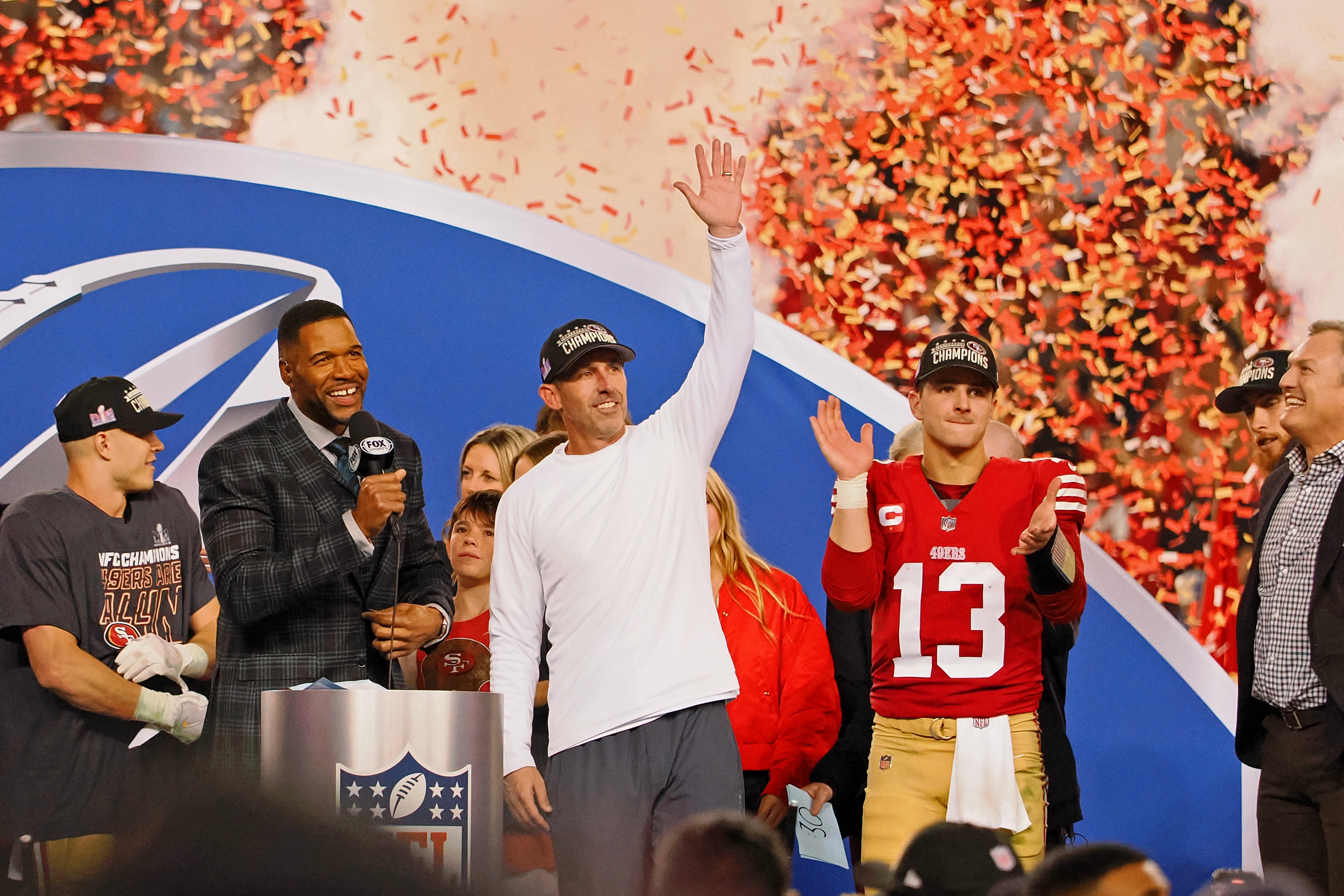
The free agency period looked like it could be a tricky one for the San Francisco 49ers to negotiate in the wake of their Super Bowl 58 loss to the Kansas City Chiefs.
Bereft of cap space and with several issues to address, San Francisco general manager John Lynch and the 49er front office were faced with a challenge to put the roster in a strong position for the immediate future going into a draft they must nail to set the team up for the future.
But through one dose of pain and with the help of several contract restructures, the Niners have achieved that feat, making a series of smart acquisitions that have improved the roster, even after saying goodbye to a critical part of the team before the new league year had even begun.
That painful parting came as word broke of the 49ers’ plans to release their longest-tenured player, defensive tackle Arik Armstead, after he refused to take a pay cut as part of a salary-cap saving restructure.
The two sides could not come to a compromise, and so Armstead was cut loose and quickly signed by the man who drafted him for the 49ers, Jacksonville Jaguars general manager Trent Baalke.
Armstead’s departure threatened to leave the 49ers with a dilemma. San Francisco’s most glaring need is on the offensive line, the right side of which was an albatross throughout their run to the Super Bowl, with its outsized contribution to their downfall in their overtime defeat devastating in its predictability.
Yet with Armstead gone, Javon Kinlaw following him out the door in signing for the New York Jets and Javon Hargave entering his age-31 season, the 49ers looked set to potentially go into the draft with the interior of the defensive just as much of a concern as right guard and right tackle on the offensive side of the trenches.
Thankfully, they have alleviated that concern, and set themselves up excellently to go in almost any direction in next month’s draft.
A rapid revamp
San Francisco did so in astute fashion, acquiring defensive tackle Maliek Collins in a trade with the Houston Texans in exchange for a seventh-round pick. Collins is 28, while Armstead is 30 and coming off a torn meniscus that he played through in the postseason. Last season, Collins was ninth in pressure rate (11.1%) among defensive tackles with at least 25 pressures, per Sports Info Solutions, Hargrave (9.8%) and Armstead (9.3%) were 17th and 21st.
Collins’ arrival followed that of Jordan Elliott, the former Cleveland Browns defensive tackle who missed only one game and made 31 starts over his final two seasons. Last year, he was sixth among defensive tackles with an ESPN run stop win rate of 40%. Elliott posted that number while being double teamed 45% of the time.
After seeing their run defense take an unexpected descent over the cliff edge last season, it's not difficult to see why Elliott appealed to the Niners.
The edge rusher position has also been restocked. Gone are Clelin Ferrell, Randy Gregory and Chase Young, the latter having never come close to delivering the kind of pay-off many thought could come with his trade deadline arrival. Coming in are Leonard Floyd, the antithesis of Young in both durability and production — 39.5 sacks in the last four seasons — and Yetur Gross-Matos, with the Niners betting on the latter’s high-upside traits and potential inside-out versatility.
Behind the revamped defensive front, San Francisco may have reason to be nervous about the prospect of De’Vondre Campbell playing coverage snaps at WILL linebacker after he inked a one-year deal following three years with the Green Bay Packers.
The insurance policy signings
Such worries wouldn’t have existed two years ago, when Campbell was coming off a first-team All-Pro season in 2021, but injuries such as those he has fought through recently can greatly change the course of a player’s career and his Expected Points Added per target allowed of 0.75, which was the highest among all linebackers with at least 10 targets last season, served as compelling evidence of a precipitous decline in pass defense.
But a change in scenery can be a great remedy and there’s certainly cause for hope that, playing on the same linebacker corps as All-Pro Fred Warner, Campbell can thrive in his new surrounding and rediscover his best.
At the very least, having been put into a scramble mode after Eric Kendricks backed out of a contract and instead signed with the Dallas Cowboys, Campbell’s veteran presence should serve to decrease nerves inside the building about Dre Greenlaw’s recovery from the torn Achilles suffered in the Super Bowl that necessitated a linebacker signing.
In the defensive backfield, the shrewd signing of Isaac Yiadom, fresh off a career year with the New Orleans Saints in which he gave up a completion percentage of just 38.5%, tied for the fourth-best among cornerbacks with at least 25 targets, ensures the 49ers have at least one potential solution to their nickel corner issue, Yiadom’s arrival giving them the flexibility to kick Deommodore Lenoir inside without having to rely on the perennially shaky Ambry Thomas.

Perennially shaky is an excellent descriptor for the 49er offensive line, or at least the right side of it. Though few are likely to look at the depth chart now and feel a great degree of confidence in the options, by re-signing Jon Feliciano to a team-friendly one-year deal the Niners have retained the player who looked most comfortable at right guard during the 2023 season and whose injury in the Super Bowl arguably cost them the title.
Feliciano's flexibility in being able to play all three interior spots provides an extra layer of security, and the role of safety net is one most fans will hope is given to Colton McKivitz after last year’s starting right tackle was signed to an extension. It wasn’t a popular move by any stretch but, when you consider how steep the learning curve can be for rookie tackles, it’s one that looks increasingly sensible and does not preclude them from addressing the position in the first round.
Similarly prudent was the decision to sign Joshua Dobbs to be Brock Purdy’s backup. If the 49ers’ offensive line doesn’t hold up and Purdy misses a few games a result, there a few better second-string options than the ‘Passtronaut’.
Crucial flexibility
Ahead of a draft in which many will be clamoring for the 49ers to focus on pass blocking, protection has been the theme of San Francisco’s free agency approach.
The Niners have protected themselves against the defensive line struggles that were a feature of their play down the stretch amid injuries to Armstead and Hargrave by identifying durable and productive players up front. Campbell is protection against Greenlaw not being ready Week 1 and Yiadom is protection against the 49ers being in the position they found themselves in the Super Bowl, when Logan Ryan in the slot was viewed as a better option to any snaps on the outside for Thomas.
Without making much in the way of headline-grabbing moves, the 49ers have fortified areas of the roster that loomed as potentially damaging weaknesses in 2024 and — through the extensions of George Odum and Chris Conley and the signings of Ezekiel Turner and Chase Lucas — addressed a special teams unit that has consistently served as an unintentional thorn in their side.
Now the focus will be expected to turn to the well-documented deficiencies on the O-Line. Tackle stands alone as the obvious direction for the 49ers with their first-round pick. Though the Niners are reported to be keen to add a safety and also have a hole at kick returner, they are otherwise in the position in which every franchise wants to be going into a draft.
San Francisco does not have to draft for need. The 49ers can choose to throw more resources at the areas they have focused on in free agency, and they can look to build on strengths and make selections perhaps with one eye on a 2025 offseason in which Purdy’s prospective contract extension might force the Niners to part with some of their stars.
Simply put, the 49ers’ low-key open market shopping spree has seen them purchase not just insurance but flexibility, with the latter critical in a draft the 49ers are under pressure to get right to ensure they are Super Bowl contenders well past 2024.
San Francisco did not need the added strain of having to find answers at several spots and, beyond a tackle position where the Niners would argue they have a solid starter across from their All-Pro on the left side, they do not bear such a burden.
That is a comfortable reality in which to exist, and the freedom the 49ers possess in the draft bodes well for it being one that will make sure the future remains bright.