
NFL personnel executive suggests a risky path for the 49ers to keep Brock Purdy around without giving him a big extension
The San Francisco 49ers seem to be ready to extend quarterback Brock Purdy. That's part of their calculation to allow players like Charvarius Ward, Dre Greenlaw, Aaron Banks, and Talanoa Hufanga leave in free agency, in addition to trading wide receiver Deebo Samuel. They need cap space, sure, but also the budget to pay Purdy […]


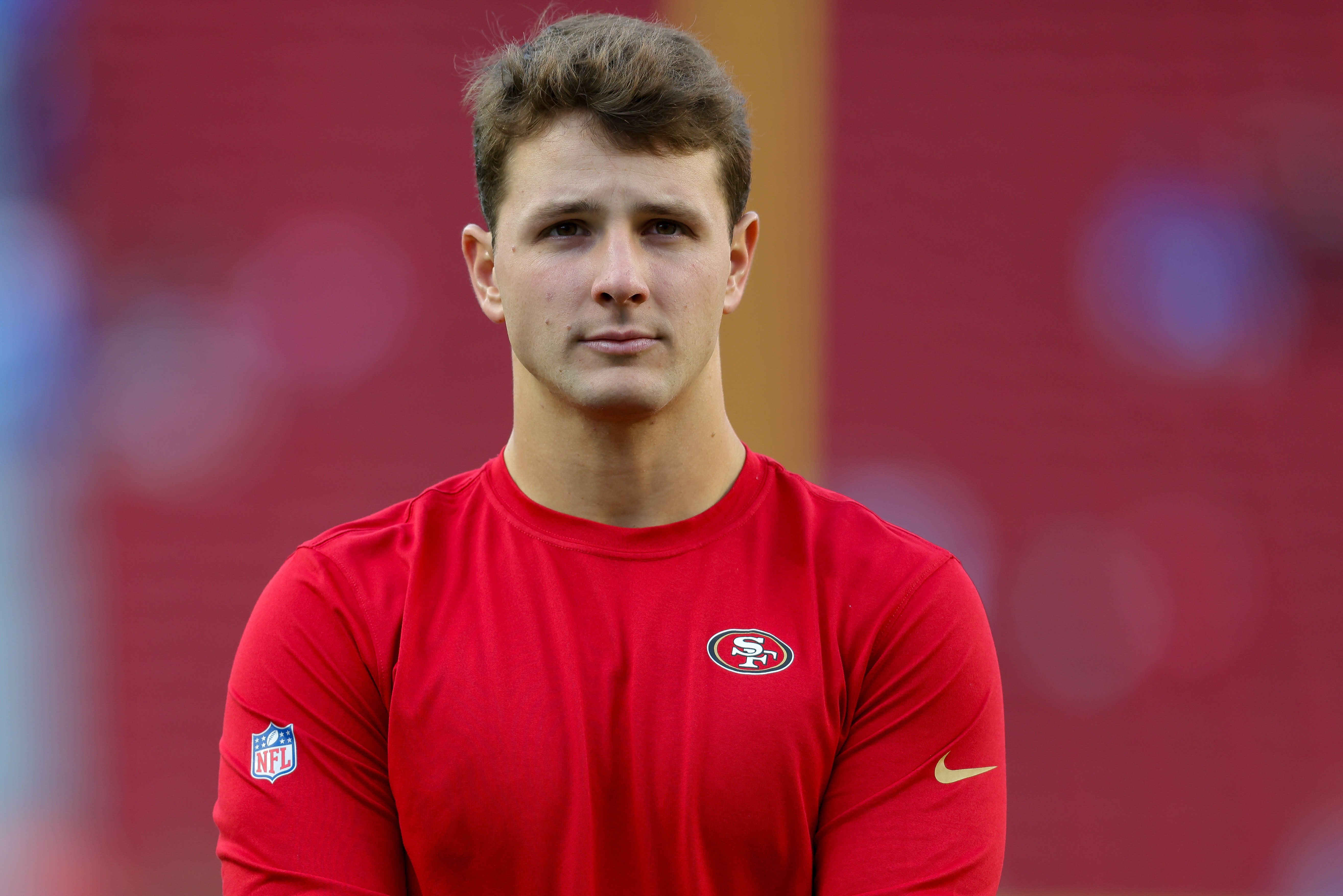
The San Francisco 49ers seem to be ready to extend quarterback Brock Purdy. That's part of their calculation to allow players like Charvarius Ward, Dre Greenlaw, Aaron Banks, and Talanoa Hufanga leave in free agency, in addition to trading wide receiver Deebo Samuel. They need cap space, sure, but also the budget to pay Purdy what the market indicates he will get.
But is it worth it?
Sports Illustrated's Matt Verderame talked about the topic with several NFL executives and coaches, and most think it's too risky to pay Purdy a top-of-market contract based on his projection, even though the stats tell you he's been one of the best quarterbacks in football since he was drafted in 2022.
One person mentioned as a high-ranking NFC personnel man had an extreme idea.
"I'd play it out as long as possible without paying him if I was San Francisco, including using tags, etc.," he said. "I think paying him $50-plus million is very risky."
Franchise tag scenario
Paying Purdy a contract close to what Jordan Love and Trevor Lawrence are making is certainly risky, because the 49ers haven't seen him playing with a poor supporting cast—and a higher cap hit for him will stress the Niners' ability to keep a strong roster around him. But the franchise tag is also a risky path.
Purdy is slated to make $5.346 million in 2025, the final year of his rookie deal—it got bigger because the quarterback reached the proven escalator performance threshold.
According to Over the Cap, the projection for a quarterback franchise tag in 2026 is $46.186 million. A second tag would be 120% of that ($55.423 million), and a third tag would be 140% of the second one ($77.592 million).
Putting all these four years together, you can see why it makes sense. It totals a four-year, $184.55 million ($46.137 million yearly average). That's way less than what Love and Lawrence got, with no guarantees beyond the current season.
That looks great, until it doesn't.
Why the franchise tag is so dangerous
Kirk Cousins proved that the franchise tag route is not necessarily bad for the player. He can play this game out and reach the open market after that with a lot of leverage if he keeps playing at a high level. Dak Prescott also did that, reaching an extremely player-friendly extension with the Dallas Cowboys, which led to another player-friendly extension years later.
But that doesn't mean players will like it anyway. Usually, athletes want as much guaranteed money as possible as soon as possible. Especially for a player like Purdy, who has a small deal as an original seventh-round pick.
And everything will depend on Purdy's reaction to this approach. Year after year, he doesn't need to sign the franchise tag immediately after it is applied. He can miss the offseason program and even training camp without fines, because he wouldn't be under contract. He could miss regular season games with no fines as well, just missing that game's equivalent salary.
Contract ramifications
Beyond the behavior risk, there are also financial implications. The first one is that the $46.137 million yearly average with three tags considers the last year of his final deal.
The equivalent of the "new money" for the three tags alone would be $179.2 million for three years, which is $59.7 million per season. Welp.
If the 49ers pay Purdy $55 million per year for four new years, the total contract would be $225 million for five years considering the last season of his rookie contract, taking his real average down to $45 million.
After all, paying Purdy a market value contract is financially the same as applying three franchise tags. San Francisco would also avoid the risk of locker room contention, and would have the ability to manage the contract structure to have lower cap hits early, allowing it to build a stronger roster.
It's fair to think that Brock Purdy brings a risk, because he hasn't played under bad circumstances. But the market is the market, and if the 49ers structure the deal with intelligence, something they have done over the years, it will be possible to have a big number and a way out at the same time.
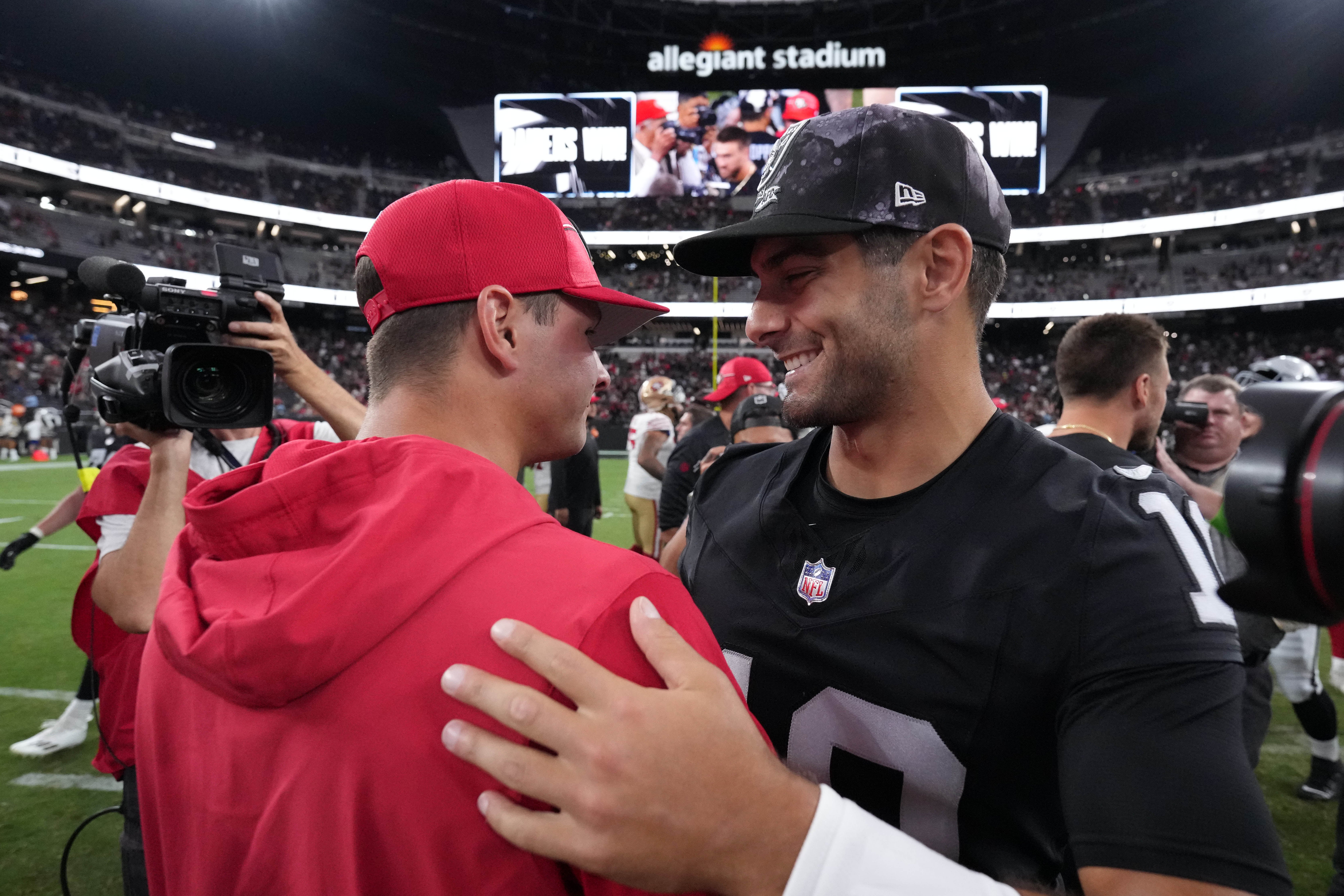
Brock Purdy inadvertently confirms a suspicion about Jimmy Garoppolo that 49ers fans have held for a long time
Quarterbacks spent a year together on the 49ers


