
DeAndre Hopkins' knee injury was actually 'a blessing in disguise' for the Titans
On August 1st, Titans fans learned that DeAndre Hopkins would miss training camp with an MCL strain. Exactly 5 weeks later, Hopkins revealed to Paul Kuharsky of paulkuharsky.com that he had actually torn his MCL, but planned to play through it. True to his word, Hopkins returned to the field in Chicago for Week 1, […]


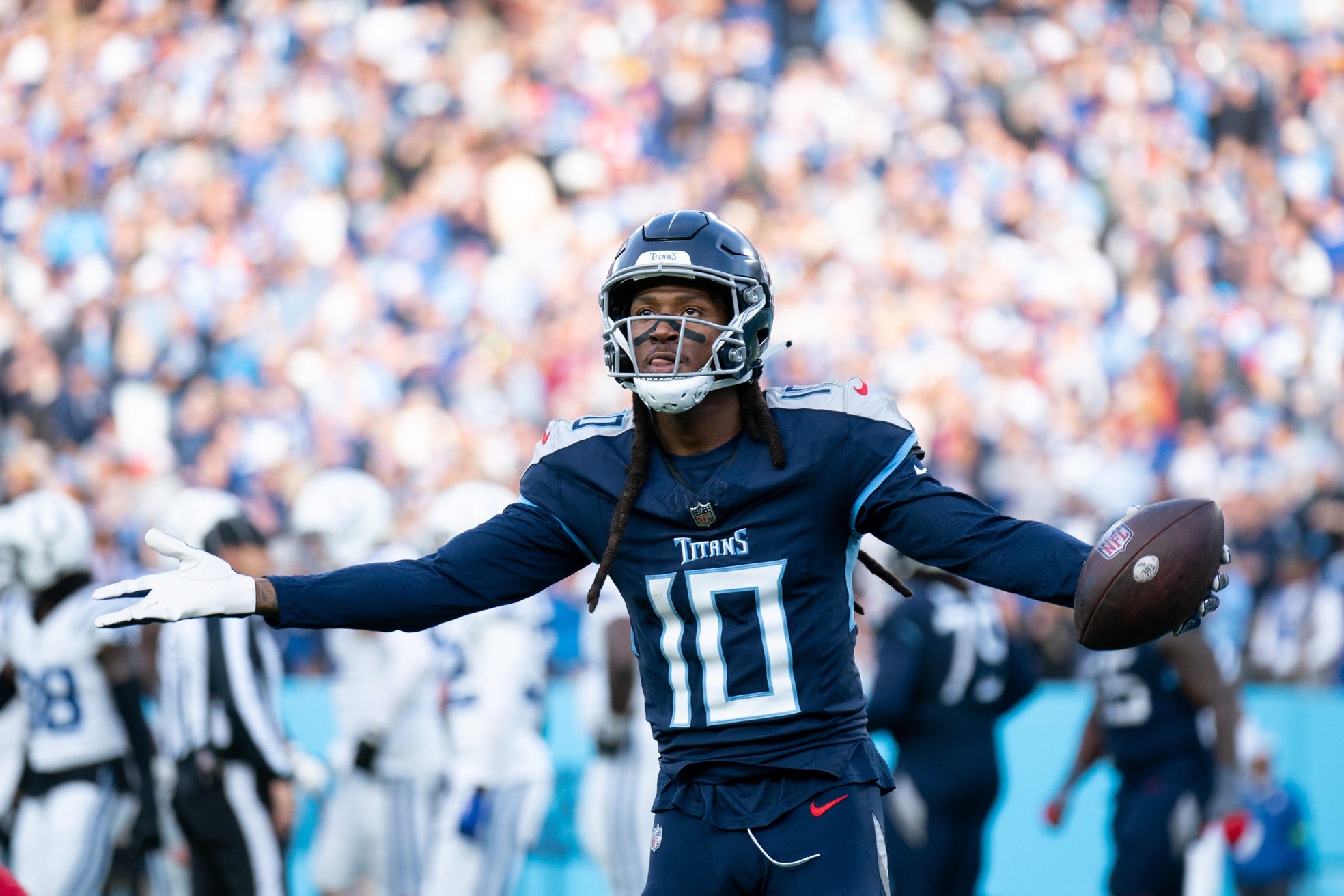
On August 1st, Titans fans learned that DeAndre Hopkins would miss training camp with an MCL strain.
Exactly 5 weeks later, Hopkins revealed to Paul Kuharsky of paulkuharsky.com that he had actually torn his MCL, but planned to play through it.
True to his word, Hopkins returned to the field in Chicago for Week 1, though only in a limited capacity. The future Hall of Famer only played 15 snaps, tallying a single reception in the loss.
Titans fans reasonably have a lot of questions about his health status for the 2024 season. When will he be fully healthy again? What's the difference between a sprain and a tear? Will a torn ligament actually heal in the first place, or is his knee a ticking time bomb?
Fear not: A to Z Sports had an opportunity to sit down with Dr. Colin Looney of the Bone and Joint Institute of Tennessee to answer all of your questions. You can catch the full video interview below:
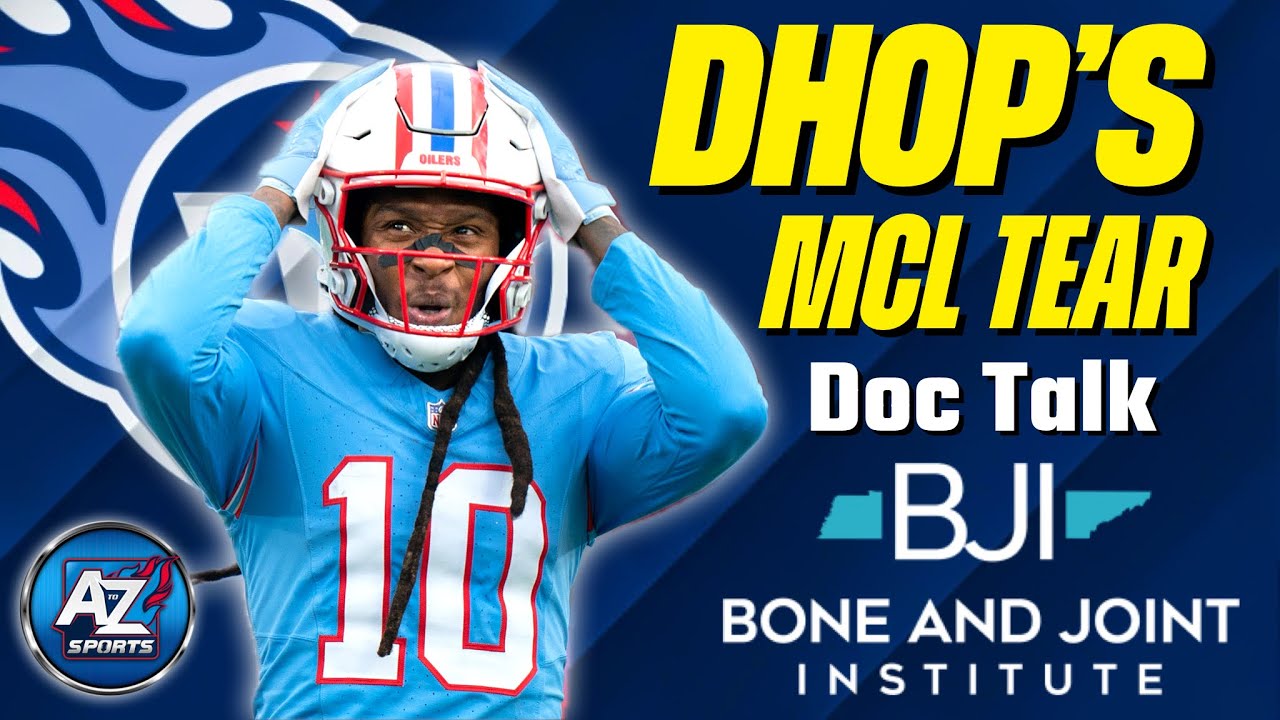
First, Dr. Looney delivered some good news on the nature of this kind of knee injury.
"I tell athletes that when they go down with a significant knee injury and they are then told that they have an isolated MCL injury, it can be some of the best news you can receive. An MCL injury is definitely more favorable than most ligament injuries of the knee."
The reason why an MCL injury is favorable? "Because most MCLs heal on their own", he explained.
"It's a big, broad, flat ligament. It's got a lot of blood supply and it tends to heal on its own. And even a (grade) three typically can heal on its own. And that's a complete tear. A grade one is a small, partial tear where there's no instability. There's not any sloppiness to the knee at all. A grade two has some mild opening. And the grade three is like, you've seen it where they stress the knee from the side and it really opens up like a hinge."
Bottom line, what DeAndre Hopkins is dealing with is entirely dissimilar to something like an ACL injury. "It's not a 'rope' like the ACL. Rope tears, it's done. But this is a big, flat ligament. And even a complete tear can heal in a lot of athletes."
So an MCL can heal itself, even if the ligament is torn completely. That's good to know, and in this case, great news for Hopkins and Titans fans! But how long does the healing process take? And can you expect to heal while participating in full-contact NFL games every week?
No, rest is a must according to Dr. Looney. But the timeline for healing can be surprisingly quick:
"On average, a grade one… it's about a five to seven day injury. Like, I'll hold an athlete out about a week with a grade one, a football player. And then a grade two… it's about a two to four week injury… And then a grade three, that's about a six to eight week in-season injury."
Based on these general recovery times, Dr. Looney agreed that it's reasonable for us to assume he's suffering from a grade two or three sprain.
Hopkins reportedly spent a couple of weeks in August rehabbing his knee with specialists in California. Dr. Looney provided some insight on what MCL rehab looks like.
"As soon as an athlete hurts their MCL on the field… we take them off the field. They're not playing that night. But then we start immediate rehab on it. So like quad sets, getting your quad stronger, straight leg raises, getting your abductors, the muscles around your hip and your core strong, that helps protect it. And we also want to get the motion and swelling back (down), because if you don't get that down and you put the athlete back on the field, they're going to get hurt again and they may hurt something worse than their MCL. They may tear their ACL or other ligaments. And so we need to get their motion back and the swelling down. And so therapy is critical."
As Hopkins continues to get back up to speed, his involvement on Sunday's may continue to be limited. And the way he is used could also be limited based on which types of routes are most likely to be dangerous and/or difficult for him to run, Dr. Looney confirmed:
"You're going to keep a guy who's not 100% on an MCL, you're going to keep him on straight inline routes. And it's the cutting and side-to-side stuff that's going to put stress on it… so starting out, it's just straight inline running."
Hopkins previously dealt with an MCL sprain (on his other knee) during his time with the Cardinals. At first, he tried to heal on his own to preserve his chances of playing in the postseason. But once Arizona was eliminated, he opted to get surgery.
So when does an MCL tear actually need surgical intervention to heal? How is this tear supposedly different from the surgically-repaired tear to his other knee?
There are two situations in which surgery becomes necessary, said Dr. Looney. Almost all MCL tears occur near the top of the ligament. But in the instance of a tear further down on the shin bone, it flips over on itself and won't heal without surgical intervention.
But this "Stener" variety of MCL injury can be identified immediately, so we can reasonably rule that out in the case of Hopkins.
"The second time we fix it is kind of what you're alluding to" Looney explained. "If we have a guy who is a grade three, and it just never heals completely, and he feels unstable on the football field… So that's now become a chronic unstable knee. And so for him to perform better, we're going to reconstruct his MCL."
This is the situation Hopkins is trying to avoid. Whether or not his knee restabilizes itself, only time will tell. But Dr. Looney made sure to re-emphasize the encouraging reality of this type of knee injury:
"But like I say, I always think an MCL is kind of a blessing in disguise really, because that's, you know, it's the season ending injuries that are hard when you're sitting down and talking to an athlete. And at least we're talking weeks and not a season when we're talking MCLs generally."


