
Titans players identify what makes offensive line development different than every other position in the NFL
The Titans offensive line underwent a serious overhaul this summer. They added two shiny new starters, and most notably, the best offensive line coach in the league in Bill Callahan. But in Week 1, their debut performance left a lot to be desired. Folks who know how offensive line development works knew to come into […]


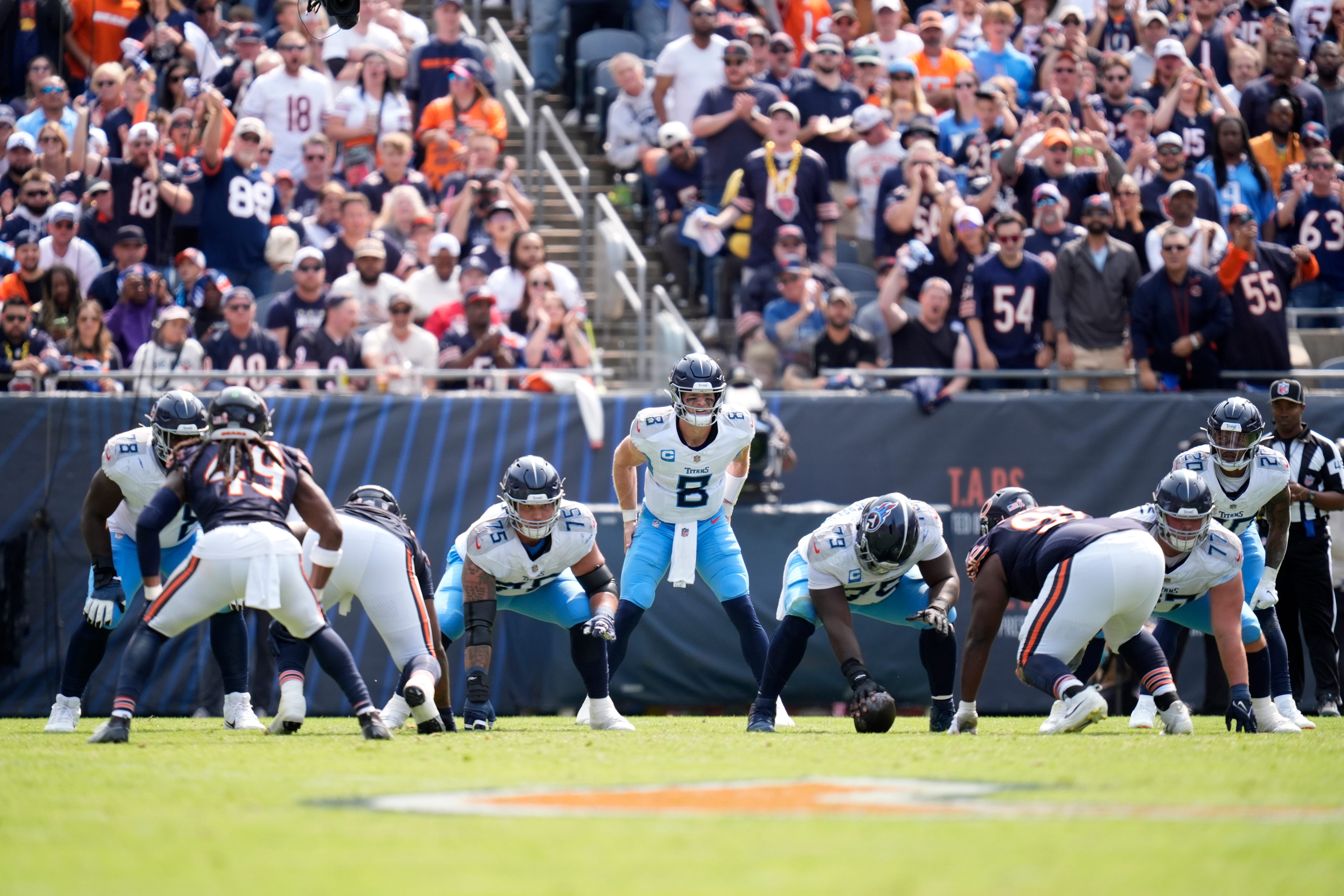
The Titans offensive line underwent a serious overhaul this summer. They added two shiny new starters, and most notably, the best offensive line coach in the league in Bill Callahan. But in Week 1, their debut performance left a lot to be desired.
Folks who know how offensive line development works knew to come into this season with patience. And cooler heads know that despite a 29% pass block win rate in their first outing (by far the worst in the league!), patience is still the right tack.
Knowing OL success takes time is one thing. But knowing why it takes time is another thing entirely.
To most fans, OL play and development is this complicated, amorphous concept that is hard to pin down. I asked Titans players and coaches what they think is the biggest reason why linemen take time to acclimate to the NFL, and sometimes even longer to gel as a unit.
Titans Offensive Coordinator Nick Holz gave a couple of reasons. "There are no subs. Those guys get 70-75 game reps… It is a trial by fire. And those guys keep getting thrown in there. I also think you go back to young linemen, you know, college football is played very differently than the NFL. So the physicality and the speed of these grown men… it's a lot different. So it does take time."
Lineman Daniel Brunskill echoed the idea that NFL defensive talent is leaps and bounds more difficult. "In college you might face two guys that have the speed the NFL has in a year… so like when you get to the NFL, every single guy, even the backup's backup, is that type of speed… so now that's a huge difference, so now you're against these guys every single play."
So the talent jump is a big part of it. Fair enough! Why, though, is that any different for linemen as compared to a skill player or defensive back?
Well for starters, those players more often find themselves operating in a more singular role. A wide receiver is one-on-one with a cornerback. A running back has to beat a linebacker. Every snap for offensive linemen, they're operating as a collective up against a choreographed defensive front.
The biggest element that the players emphasized, however, is as basic as it gets: the fundamentals.
"I think the biggest element would be basic fundamentals" Brunskill explained, "because at the end of the day you got drafted because you're a tremendous athlete. And like, especially those first round picks, they have all the measurables. So like it's not like they don't have the ability to do it. It's just kind of learning those fundamentals and then being able to film study on top of that and to be able to use that to your advantage."
So do we, the fans and the media, overestimate the level of fundamental polish of even the most "pro-ready" linemen who come into the league? The players I spoke to think so.
"Yeah, no doubt about it. Yeah I think, like, very rarely do you see guys in college use their hands. Because like I said, like they're not going against top rushers. They don't really need to. So half the time they can just catch these defensive ends and if they get another body on them, it's done… So like that's where it's like… in the NFL, you can't do that with guys. You do that to a guy you're gonna get wrecked all game."
I wanted to see if one of these young talents who was touted as "pro-ready" coming out of college felt the same way as the veteran Brunskill did.
Luckily, Peter Skoronski's locker was two paces away.
"I think it's so technical" said Peter. "It's the most technical position in my mind, the offensive line. And it's hard. It's hard to just come in and be a freak and you know, be that guy. Even if you are considered like a technically sound guy, it's still really difficult because you're going against way better competition. So I would agree with that. It takes time to learn techniques and get better. And, you know, as you age, you get better at it."
So your technical polish means everything to make it on an NFL offensive line. But again, how is this any different from the other positions on the field? How do we see "pro-ready" pass rushers enter the league and regularly pop as rookies?
"I think, you know, it's not necessarily like… a receiver or a defensive end. (for them) I feel like it's a lot easier to come in and just kind of use your use traits and you'll be good."
So the bottom line seems to be this: offensive linemen, no matter how naturally gifted, have to be the most technically sound players on the field to succeed at the highest level. And that transition to facing NFL-caliber defensive linemen, all across the front, on every snap of the game is a particularly brutal learning curve.
So adjusting to that speed shift while simultaneously trying to perfect the techniques you likely leaned on your natural gifts to get by without in college; well, it just takes time.


