How the Nashville Predators' penalty kill got its swagger back
Once a doormat, the Preds’ top ranked penalty kill has sparked a late season turn around.

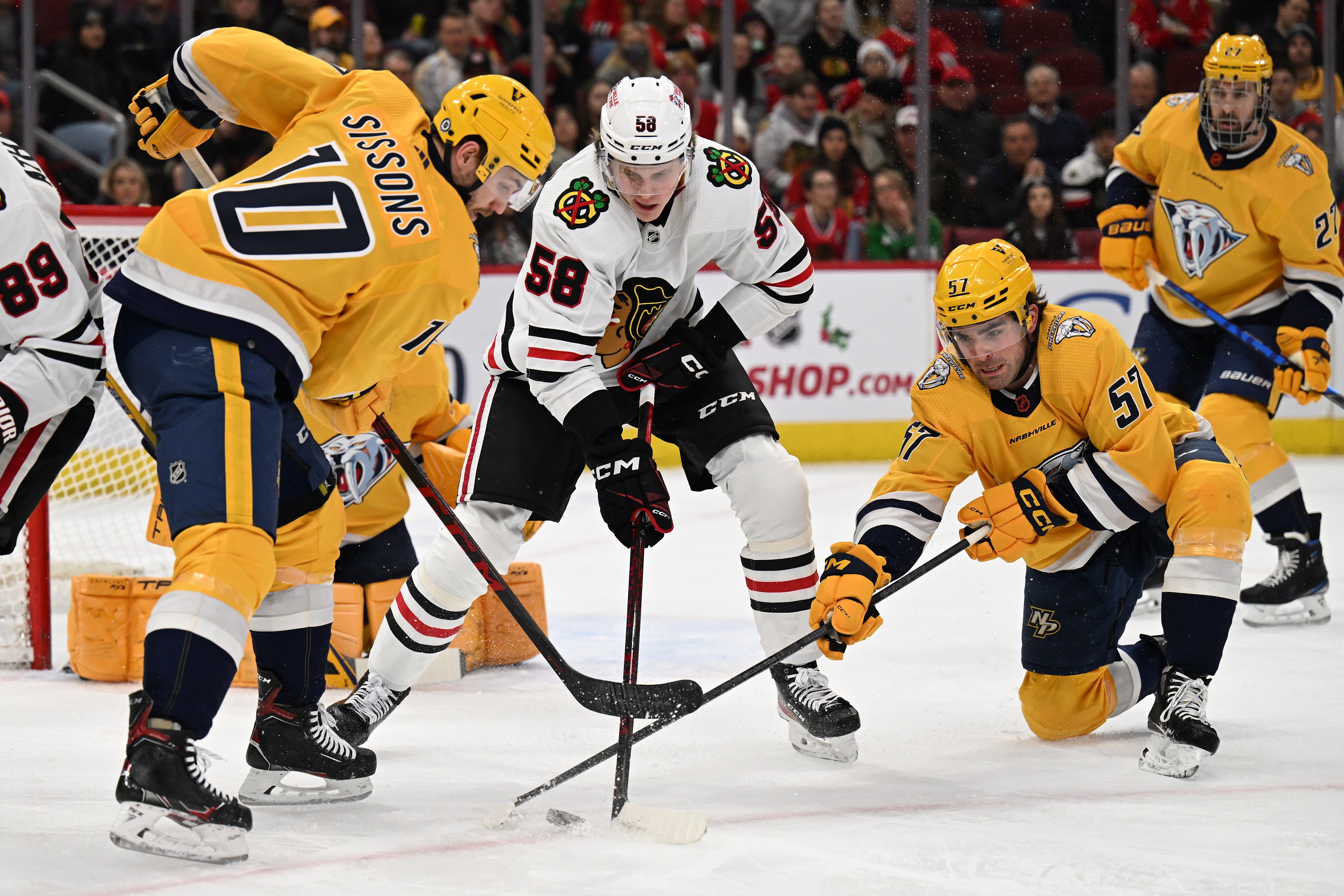
There was a time, not long ago, when the Nashville Predators' penalty kill was a doormat. By the end of the Peter Laviolette era, it had fallen to the 29th ranked unit in the league, stopping only 74% of power play chances.
But in a few short years, fueled by a group of tough, fast, mentally focused players and led by "can-do" part-time cheerleader, full-time assistant coach Dan Hinote, the Preds' once meek penalty kill has grown into a stalwart force in the NHL.
"When we take a penalty, we're not scared out there," Cole Smith put it. "We have complete confidence in each other to go kill it off."
"A commitment to kill the right way"
Since January 1st, the Nashville Predators have the 3rd best penalty kill in the NHL. They've killed 83 out of 97 penalties in that span, an impressive 85.6% rate. Carolina and Boston are the only two penalty kill units with better rates than Nashville since January 1st.
"Overall, there's a good mindset with that group." John Hynes said about the team's penalty kill unit.
"We've gotten good goaltending from both goaltenders. But what you really see is a commitment to kill the right way. The attention to detail is very strong. Our willingness to block shots is big. And guys are coming over the board's with some swagger."
That swagger, as Hynes put it, has given the team confidence to shut down opposing power plays all season, but it's been especially strong over the last three months. It's a big reason why the Preds have 19 wins since January 1st, which ranks 4th most in the league, and it's why they find themselves surprisingly on the doorstep of a playoff spot.
"When guys come over the boards, it's to kill. It's not to take on heat, but to attack the other teams power play. I think it's a combination of there's good talent on it, it's well coached, and there's a good commitment level to it."
The talent Hynes is referring to focuses on the team's lesser skilled, higher energy players. Yakov Trenin, Cole Smith, Colton Sissons have led the way from the forward position, playing in front of Ryan McDonagh, Dante Fabbro, and Jeremy Lauzon mostly. Departures of Tanner Jeannot and Mattias Ekholm affected the depth of the unit, but not the effectiveness.
"Even though we lost [Tanner Jeannot] and [Mattias Ekholm], we felt like we've had really good depth from a penalty kill perspective," Hynes said. "Our forwards, all the guys that kill, are all very good killers. Even though Tanner left, Trenin's stepped up in that role. Smith is getting a little bit more there, Sissons has always been really good."
Dan Hinote's penalty killers getting the job done
The work put in by assistant coach Dan Hinote cannot be ignored when tracking the progress of the unit over the last three years.
Hinote, a nine year player with Colorado and St. Louis between 2000 and 2009, was hired in September 2020. One of his duties was to improve the team's penalty kill, which had fallen to 3rd worst in the league in the 2019-20 season.
Since his hire, the Preds have gradually improved their kill unit, currently ranked 11th in the league this year. They've accomplished that through constant work and patience with an aggressive system that maximizes the skill of their penalty killers.
"We're in an aggressive system," Hinote says about the penalty kill unit. "And when you're in an aggressive system, there's a lot of variables that change game to game. You're never going to see the same play twice in an aggressive system."
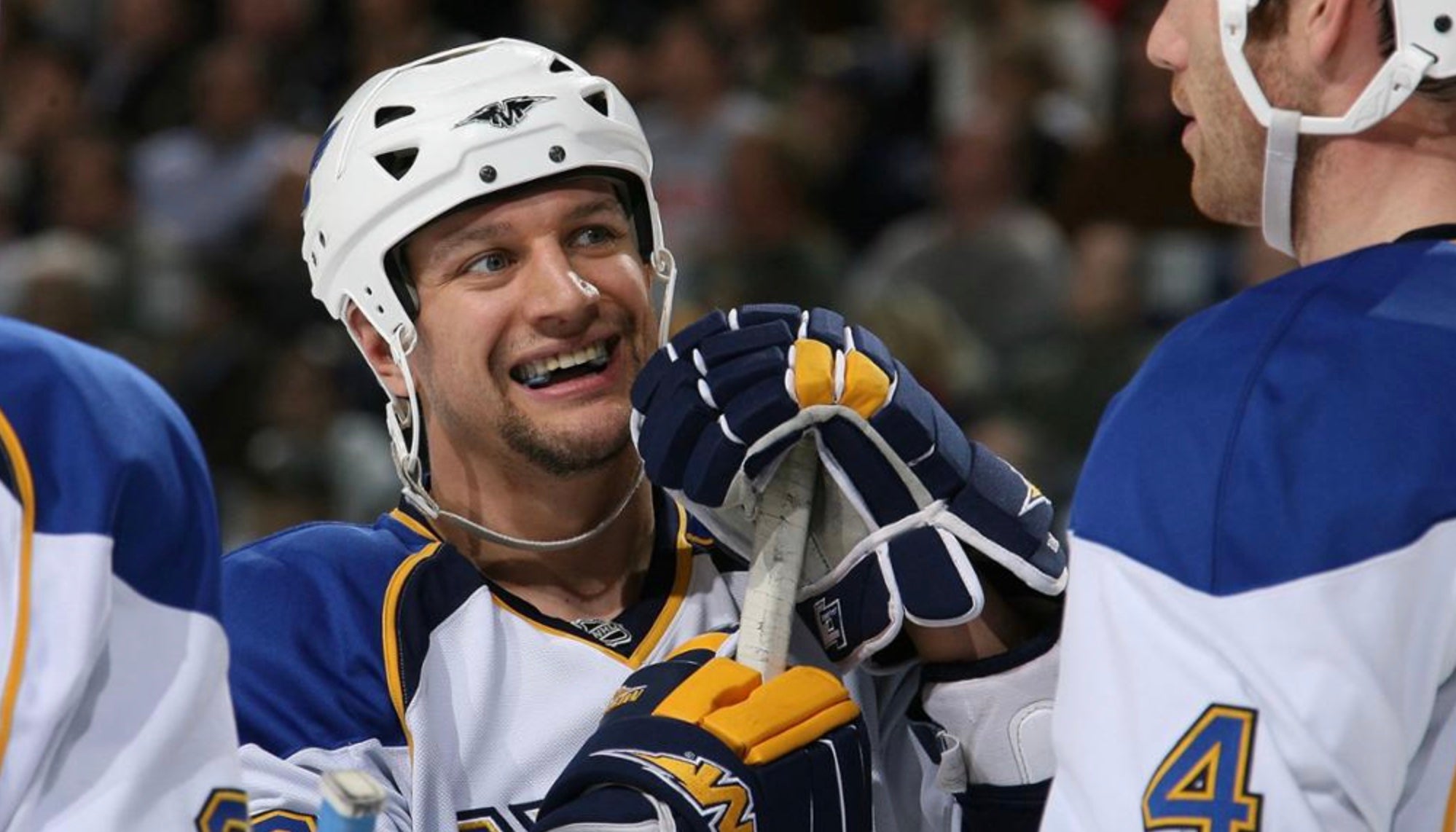
Hinote says the work he and the other coaches have put in is finally starting to pay off. That work comes in practice, but he's also quick to point out that penalty kill practice is dependent on power play practice.
"[John Hynes] practices our special teams a lot. So a lot of guys get looks, but the problem is a lot of those guys play on the power play in practice. So the only time they can get practice is in the game and then, depending on the situation, they may not get a lot of looks."
One such example is Mattias Ekholm. For years, Ekholm manned the Preds' second power play unit, which meant he would run it in practice as well. But Ekholm also played a truckload of penalty kill minutes over the years.
As Hinote notes, that worked out well for Dante Fabbro, now a staple of the Preds' penalty kill in the wake of the Ekholm trade.
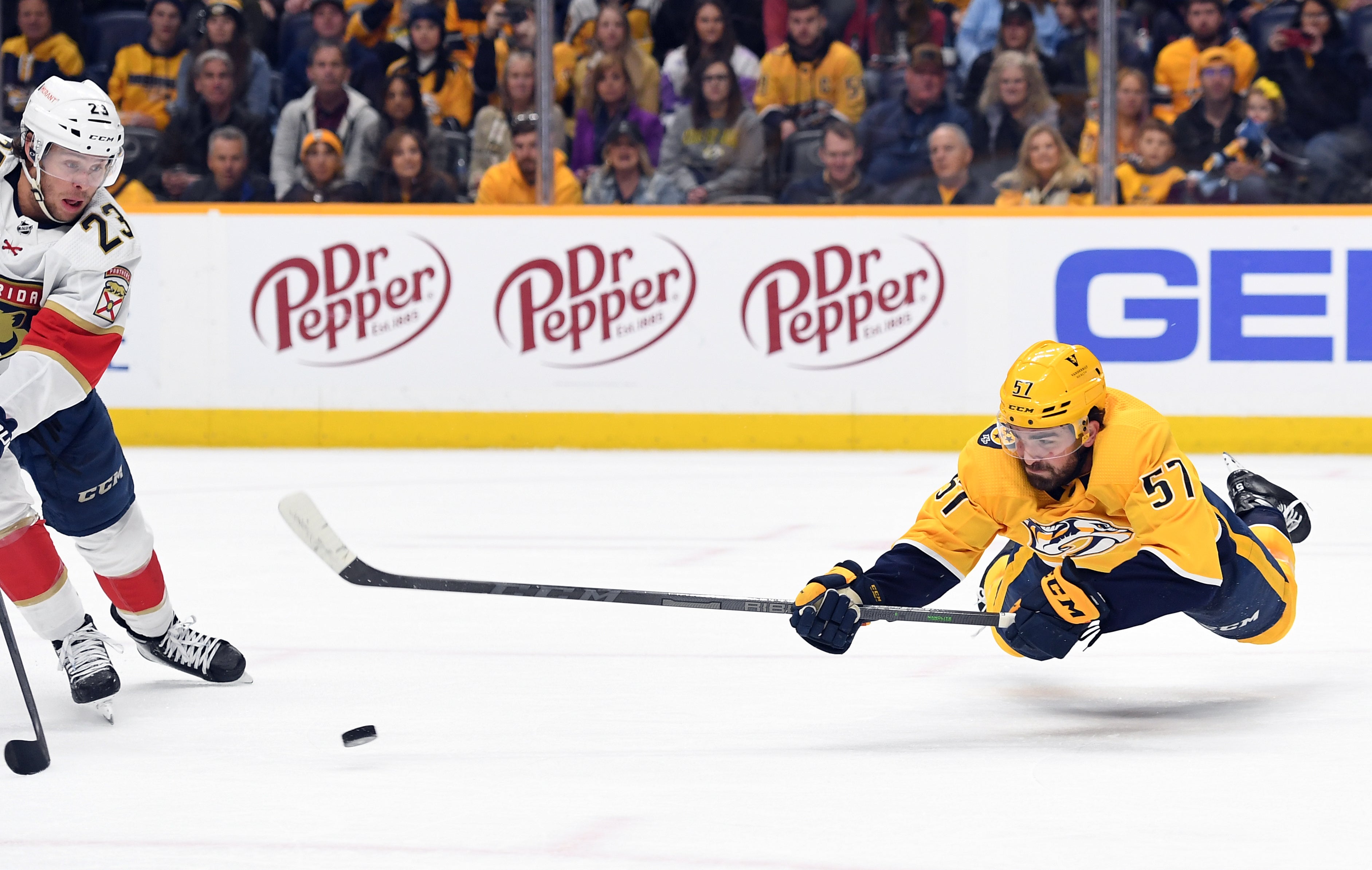
"[Mattias] Ekholm would practice with the power play a lot," Hinote said. "So another person like [Dante] Fabbro or whomever would have to play D on the penalty kill. A lot of the guys that have filled in [like Fabbro] were already getting some practice time against our power play. They just weren't on the penalty kill during games. So when they leave, they are already used to doing the kill in practice every day. They just didn’t get a lot of game time."
This quirk of the way the Preds practice (and the way all NHL teams practice, with PP practicing against the PK) has made the loss of Ekholm more manageable for the penalty kill.
"As soon as Ekholm goes out, then Fabbro gets more playing time or whomever. The guys have had an easy time stepping in because they were already kind of practicing it. They're smart players. The [other] guys helped them too. In between whistles and in between periods and on practice days. It's ‘Hey, remember that play?’ They're really good about that and especially [Colton] Sissons and [Ryan] McDonagh. Those two are the Captains of the kill."
That last point hints at the the biggest improvement for the penalty kill this year: communication.
"As a group we communicate so much better than we did at the beginning of the year," Hinote said. "That just makes everything so much easier on the kill, because then you have eyes in the back of your head. When you have that, then everything's a little bit quicker, and you're not really killing anymore. That's how I look at it."
The keys to the Preds' penalty kill
As one of the "Captains of the penalty kill", Colton Sissons has been an important part of that unit for several years. He takes almost every defensive zone faceoff and is an integral part of the high forward pressure.
As of March 14th, Sissons leads the league in shorthanded faceoffs won with 120. He led in that statistic last year as well, winning 156 shorthanded faceoffs.
Every penalty kill begins with a defensive zone faceoff. There's no one better in the NHL over the last three years at winning those than Colton Sissons.
But that's not all he does.
Sissons works the middle of the ice beautifully, both on entries and in pressuring the opposing power play in the zone. His positioning is near perfect, such that he rarely finds himself stretching to make a play. He reads offensive instincts well, anticipating passes and jumping routes just when he needs to.
He can also provide a nice counter attack up the ice when possible, scoring five shorthanded goals in his nine year NHL career.
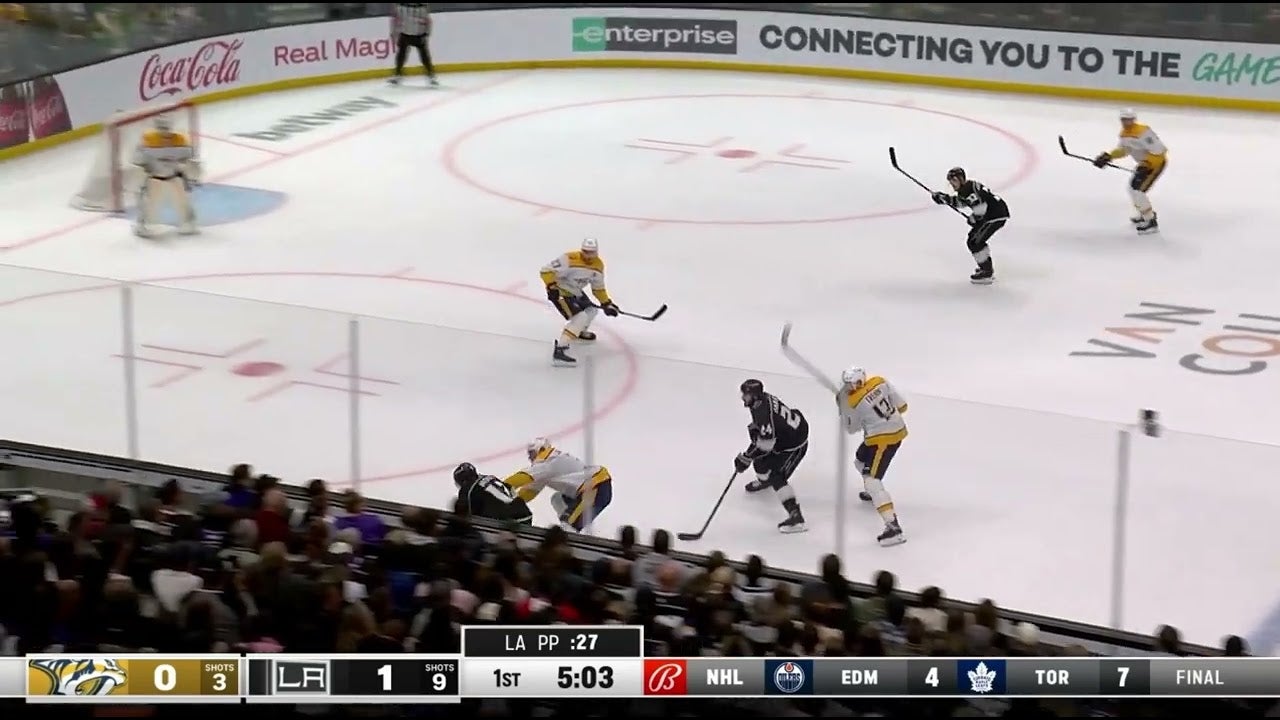
But as important as Colton Sissons is to the Preds' penalty kill unit, there may be no better natural penalty killer on the team than Yakov Trenin.
Trenin is feisty. He's a menace at both ends. He's fast, physical, tenacious, and pesky. Everything you want in a penalty killer. When John Hynes talk about guys that "come over the boards ready to kill penalties" he's talking about guys like Trenin.
Cole Smith has also been crucial. His underrated speed and stick work to get the puck out of the zone has been consistent all year.
This shorthanded play from Tuesday's game against Detroit is a good example. His timing and awareness to hold the puck for as long as he can, eventually drawing a penalty in the process, is essential for penalty killing.
"We're all buying in together," Smith said of the unit. "If you look at our penalty kill, it's pretty fast and it pressures. That fits well to our identity."
Of course, no penalty kill unit would be as strong without a solid pair of defensemen. McDonagh, Fabbro, Lauzon, as well as newcomer Cal Foote, have all carried the way from the back end.
"Our d-corps is pretty solid back there," Smith added. "They're all great players, willing to block shots, so that part didn't change too much."
Aggressive, but not overextending
The outcomes of the Preds' pressure system on the penalty kill can be seen in the statistics above. But how does it work from a tactical perspective?
Hinote describes it as a matter of balancing pressure with purposeful action.
"It's a matter of not overextending for no reason," Hinote puts it.
"If you can keep the puck on one half of the ice, then we give them the freedom to overextend and over exaggerate their route to keep the puck on that side of the ice. If you can't do that, then you're just extending for no reason. Because if he's in the middle of the ice and you're extending out, all you're doing is creating a gap underneath you."
In other words, if your position can force the power play to work twice as hard to keep the puck, or to force a tough next decision, then it's purposeful. If it doesn't make the power play work hard, then don't extend and waste that energy.
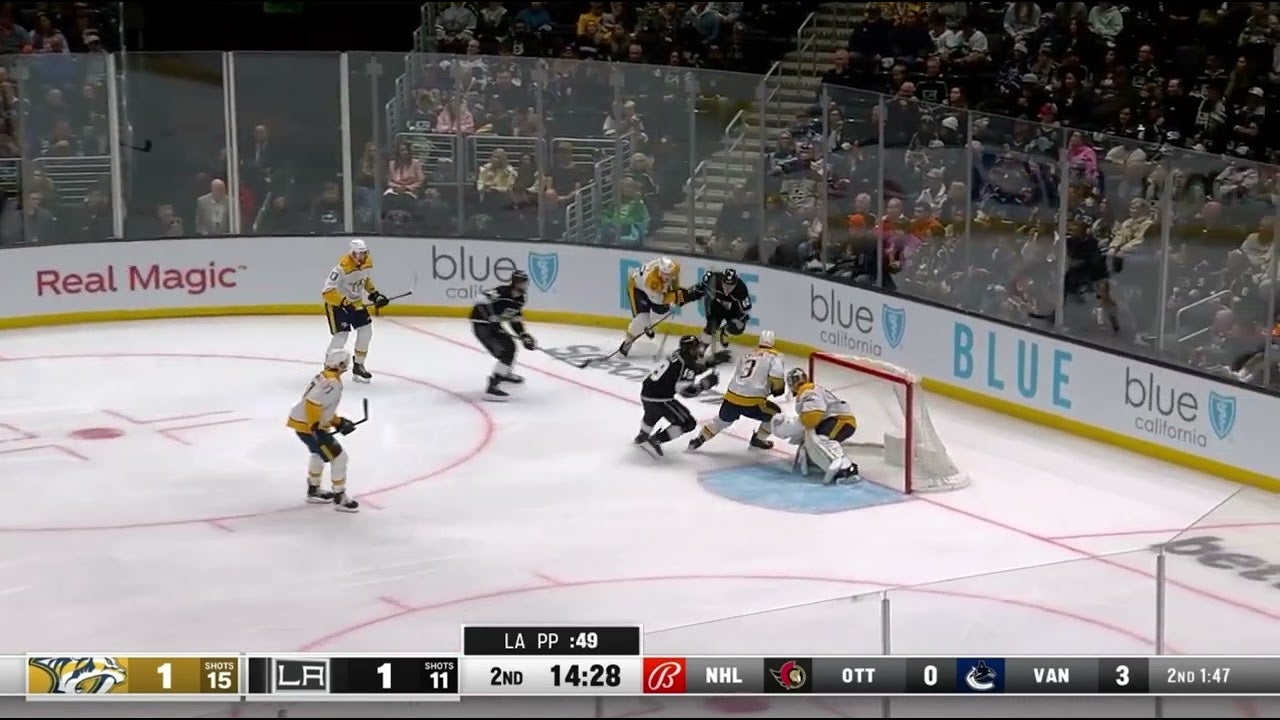
"If it makes sense to extend out, then extend out, but the only time it makes sense to do that is if you can manipulate the next play. If you're extending out and don't manipulate the next play, then it doesn't make sense because then you're screened out."
That philosophy of "manipulating the next play" is what forwards like Sissons, Trenin, and Smith do best. They play physical, they finish checks, and they don't give up on a puck.
And with those forwards committing to that play disruption, the defenders' job behind them becomes simpler.
"That's how we're able to stay in the passing and in the shooting lane. Discerning those two things. Then we have a failsafe in place for if a forward is extending to manipulate the next play. He's going to abandon the shooting lane, so somebody else has to take up that job. That ends up being the D-men and they know that. So they know that if a shot comes from here to here, they have to eat it. If it comes from here to here, that's a forward’s job."
Then there's the guy at the heart of every defensive system: the goaltender.
Juuse Saros, league's best penalty killer
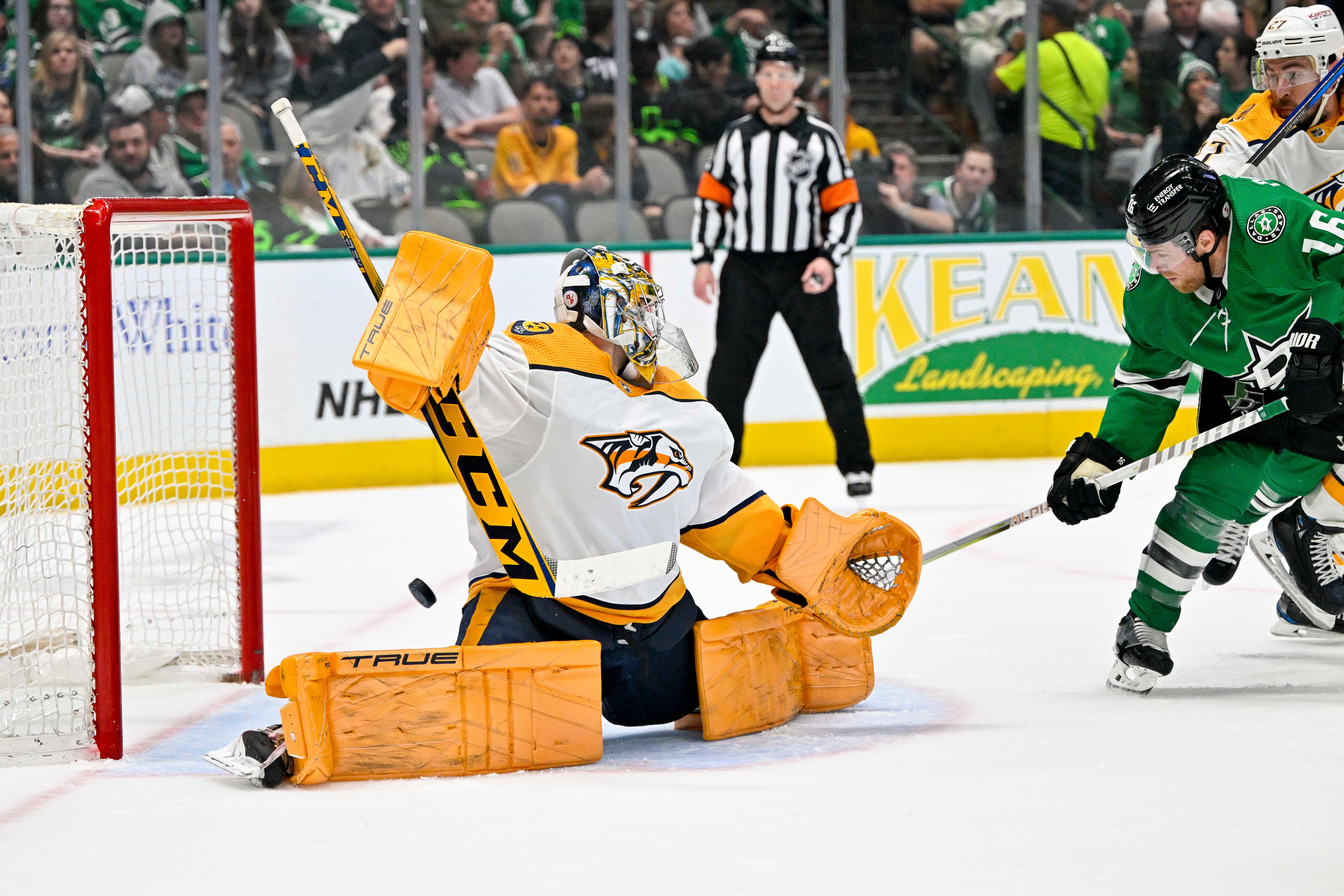
As John Hynes has said before, the most important penalty killer on the ice is the goaltender. And the Nashville Predators have the single best penalty killing goalie in the NHL this year.
According to Natural Stat Trick, Juuse Saros has faced the 2nd most shots, made the most saves, and has the 3rd best save percentage in the league. His Goals Saved Above Average (GSAA) ranks 1st, saving 9.50 goals all by himself.
That's an incredible number and no doubt it's a big reason why the unit has been so successful. Without aggressive work from the guys in front of him, Saros would have even more work to do, but it certainly doesn't hurt to have world class goaltending in the net when fighting off attackers.
The turn around of the Preds' penalty kill really comes down to two things: hard work in practice and time spent getting the system right.
"I just think it's trial and error and communication," Hinote said of the turn around.
"The more aggressive your system is, the longer it takes to get used to it. We've gotten faster, we've gotten more comfortable, we're better at communicating as a team. All of those things make you a little bit quicker. Each time you get quicker, it's harder on the power play."