
Understanding why Bengals QB Joe Burrow threw 49 passes on a bad calf
Last week felt like a month for the Cincinnati Bengals. An 0-2 record hanging over their heads and total uncertainty with quarterback Joe Burrow made every minute of those eight days go slow. Then the game began, and Burrow was out there throwing the ball nearly 50 times. Just like that. The Bengals defeated the […]


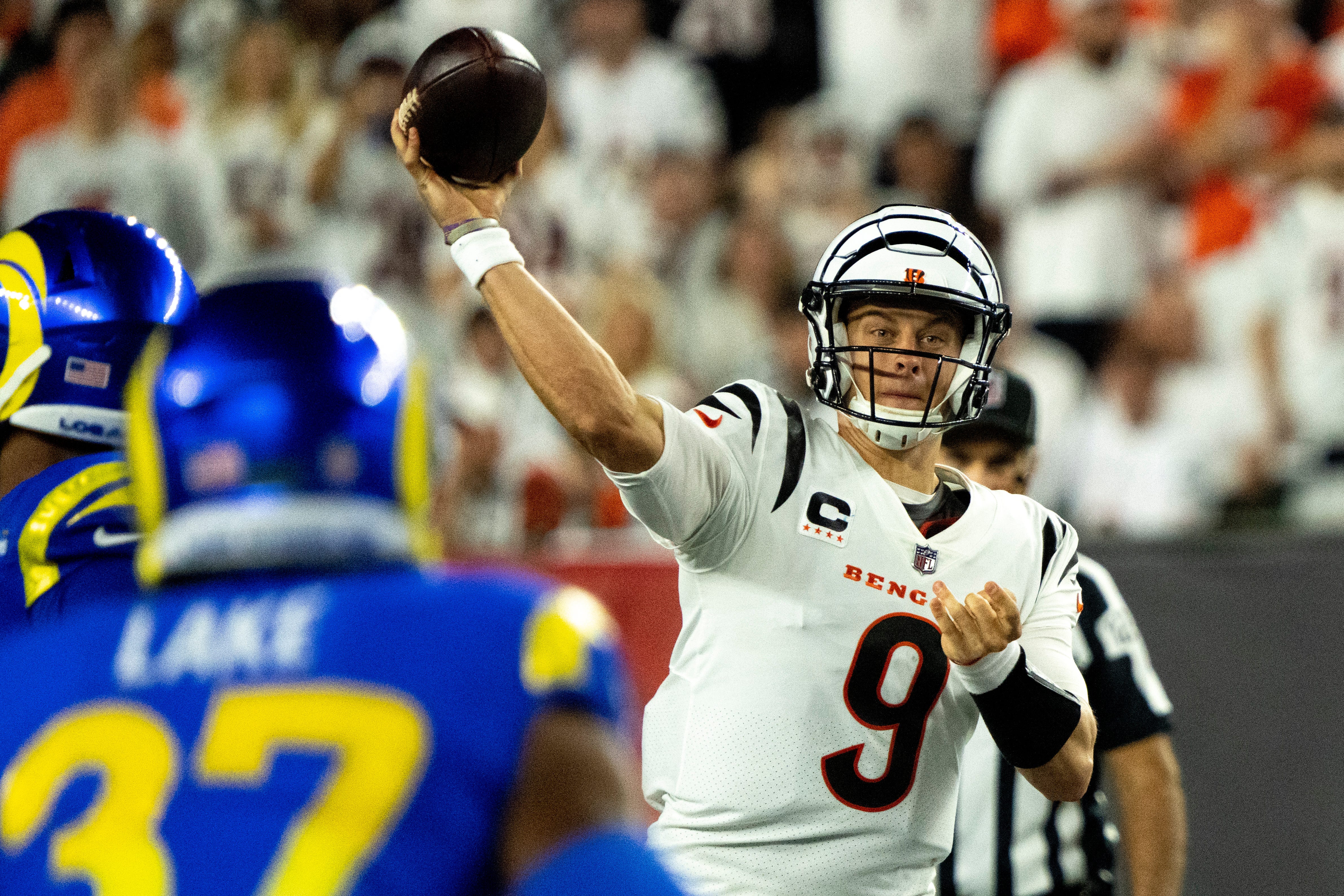
Last week felt like a month for the Cincinnati Bengals. An 0-2 record hanging over their heads and total uncertainty with quarterback Joe Burrow made every minute of those eight days go slow.
Then the game began, and Burrow was out there throwing the ball nearly 50 times. Just like that.
The Bengals defeated the Los Angeles Rams, and Burrow exited the field with a smile and a sore-but not aggravated-right calf. The relief of it all quickly translated to one question: Why was Burrow dropping back to pass so often with a bad calf?
And that could where it ends. We can just look at a single number with the context of his injury and leave it at that. But let's do better than local radio hooligans and actually use some critical thinking.
Why did the Bengals have Burrow throw the ball 49 times against the Rams? It comes down to three reasons.
Bengals' run game remains spotty
If the Bengals gained five or six yards every time they ran the ball, then Burrow would never have to drop back again. That was far from what the Bengals' run game produced on Monday night.
Let's not even focus on the three kneel downs from Joe Burrow at the end of the game or the three combined rushes from Joe Mixon and Trayveon Williams to just kill clock. That leaves us with 17 attempts, all from Mixon.
He gained more than four yards on just five attempts. 12 of his attempts went for four or less, 10 resulted in negative EPA, and 10 came on first down.
What is the point of running the ball if you are still left with a second-and-long, a universally not great place for any quarterback? The answer doesn't exist outside of establishing the run for the sake of establishing the run. Mixon found success on his touchdown drive, carrying the ball four times for 29 yards and the offense's lone score of the day. 27 of those yards came on two rushes alone.
Did they magically happen because the Bengals had ran the ball earlier in the game, or was the blocking just right for him? Your brain knows the real answer despite your heart telling you otherwise.
Outside of a couple plays on one drive, the Bengals' run game was holding back the offense just as much as the passing game. That's why it wasn't featured more. Plain and simple.
Short passes are an extension of run game
The run game, if nothing else, does keep a pass rush honest. The chance of the ball being handed off prevents the defensive line from pinning its ears back every single down. But it's not the only way.
With their rushing offense proving to be inconsistent on early downs (22% success rate this week), the Bengals opted for RPOs and other quick passing concepts to get the ball out of Burrow's hands with haste and pick up equal or better yardage. Burrow's average time to throw stayed below 2.3 seconds for the third consecutive week, and his average depth of target was just seven yards.
The quarterback getting the ball out quickly will nullify most pass rushes, and force defenses to hang back or even drop more into coverage. The end result of a less aggressive defensive front is the same. That's the goal with "establishing the run," only this way puts the ball out into space for the chance of bigger yardage.
Clearly, the Bengals still need work here as just as many quick and short passes were incomplete as they were completed. But the idea that the Bengals had Burrow fighting off a vicious pass rush for three or four seconds 50+ times is disingenuous at best.
Lack of explosive plays = longer drives = more passes
This equation is pretty straight forward. Moving the ball a few yards at a time, whether by passing or running, will lead to longer drives, or drives that stall quicker. The Bengals ran just over 70 real plays, and two of them were considered explosive. That elongates drives, and for a team that can't run the ball with consistency, it puts more pressure on the passing game.
But don't just take my word for it. Ask the quarterback.
"Yeah those obviously make it a lot easier," Burrow said of explosive plays after the game. "But we've played three really good defenses that know that's what we're good at, and are good at taking that away. And then, when you're able to extend plays, explosive plays are created in that way. And so I think, going forward, the healthier I get, the more we'll be able to do that."
Two of the Bengals' three scoring drives that started behind their own 40-yard line took at least 10 plays. The only one that didn't happened to feature an explosive play. That is not a coincidence.
Burrow's health has created a trickle down effect in how it's limiting the offense. Being in shotgun or the pistol 100% of the time prohibits creativity in the run game and long-developing pass plays; both make a defense's life easier.
Until the Bengals find consistent ways around these limitations, Burrow's attempts will naturally be inflated. And their play calling will continue to protect him for 95% of the game.
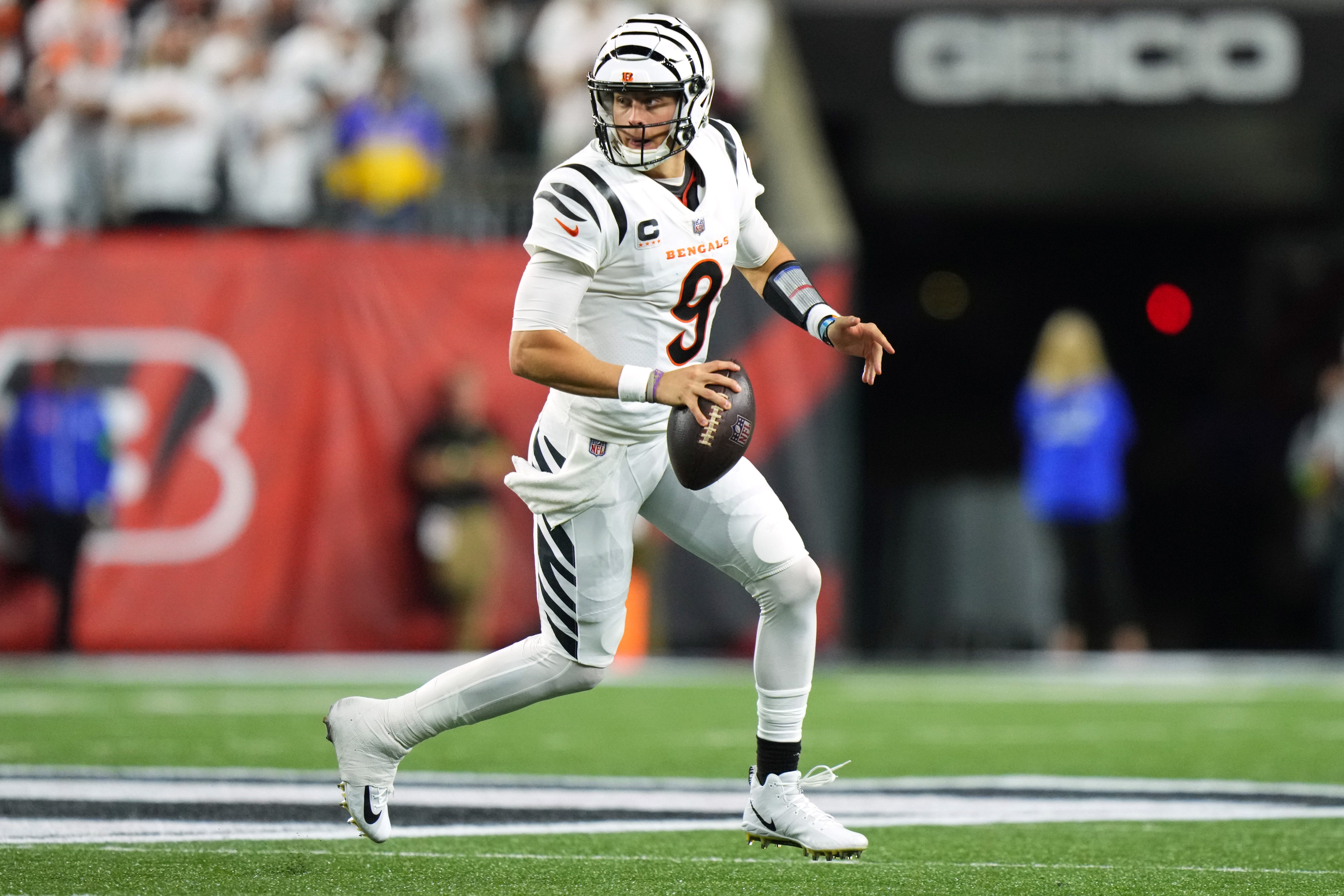
Aaron Rodgers texted Bengals QB Joe Burrow following gutsy win over Rams
“That’s what great competitors do.”


